Day 7: Lake Kawaguchiko
With this being my first trip to Japan, I followed the classic Tokyo–Kyoto–Osaka itinerary, but I knew I wanted to add one more stop that would allow me the chance to see Mount Fuji up close. I chose the Fuji Five Lakes region, as the area is known for offering some of the most spectacular and unobstructed views of the mountain.
The Fuji Five Lakes (Fujigoko) region consists of Lake Kawaguchiko, Lake Yamanakako, Lake Motosuko, Lake Saiko, and Lake Shojiko. Formed by past volcanic eruptions, the lakes sit at the northern base of Mount Fuji and are known for their scenic beauty, outdoor activities, and relaxing hot springs. Of the five, Lake Kawaguchiko is the most accessible without a car from Tokyo, making it the best fit for my itinerary.
Shinjuku in Tokyo to Chureito Pagoda in Lake Kawaguchiko
On Friday, November 28, I took the 7:10am Highway Bus from the Shinjuku Expressway Bus Terminal (South Exit) to Chuo Expressway Shimoyoshida, arriving at 8:50am. I had purchased my ticket on November 11.
I chose to get off at Chuo Expressway Shimoyoshida so I could begin my Lake Kawaguchiko visit at Chureito Pagoda, home to one of the most iconic views of Arakura Sengen Shrine framed by Mount Fuji. I wanted to capture that iconic view for myself.
I had hoped to snag a window seat on the left side of the bus, since that side offers the best views of Mount Fuji as you approach. However, by the time I booked, those seats were already taken. Instead, I chose an aisle seat on the right near the front, which ended up working out perfectly. As we approached, I could still see Mount Fuji rising in the distance through the windshield.
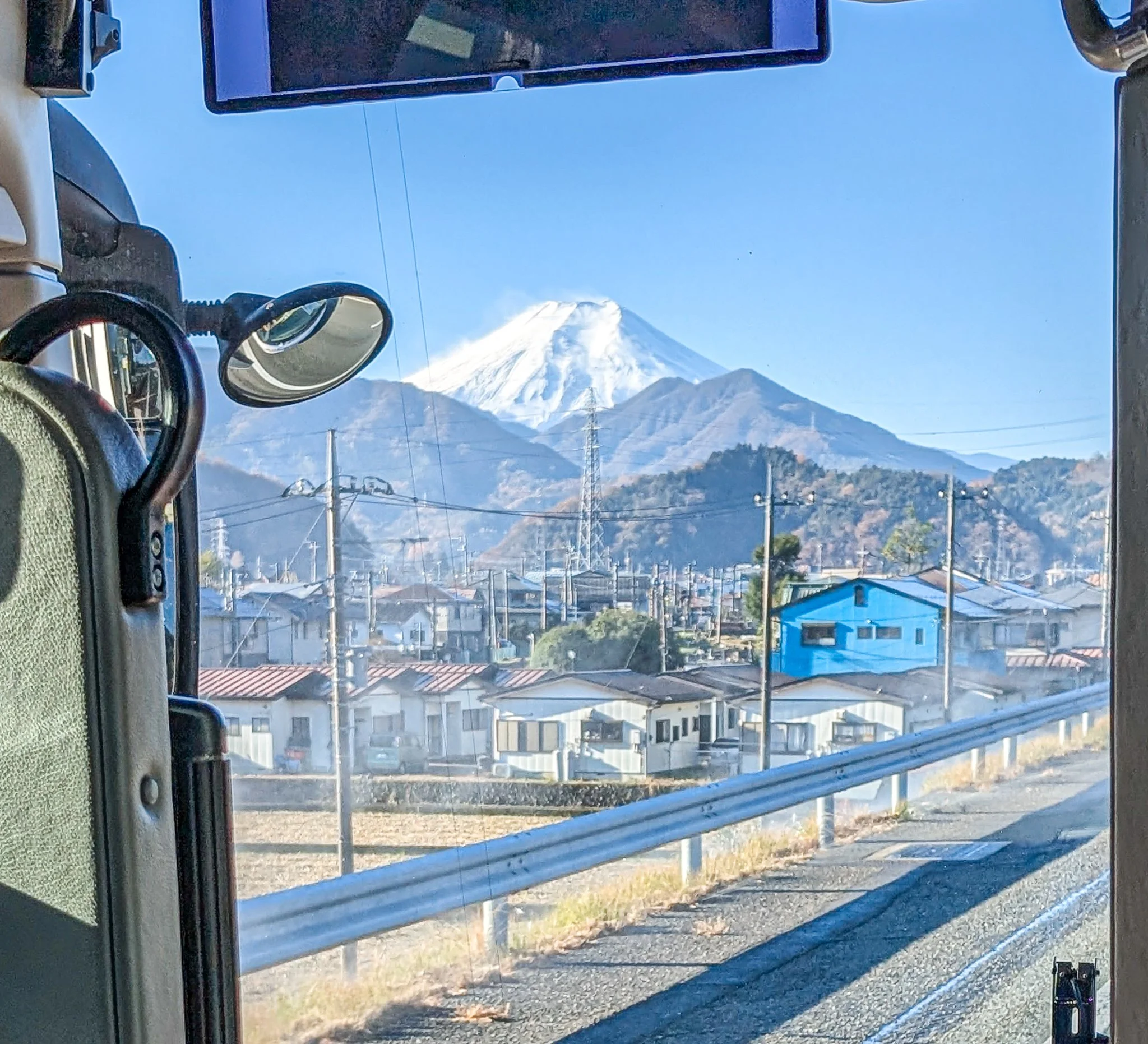
Seeing it so clearly felt incredibly lucky. Mount Fuji is only fully visible around 70–80 days per year due to frequent cloud cover and humidity. Visibility is generally best from November through March, when the air is dry and crisp. I was so grateful that the mountain remained visible for my entire time in Lake Kawaguchiko.
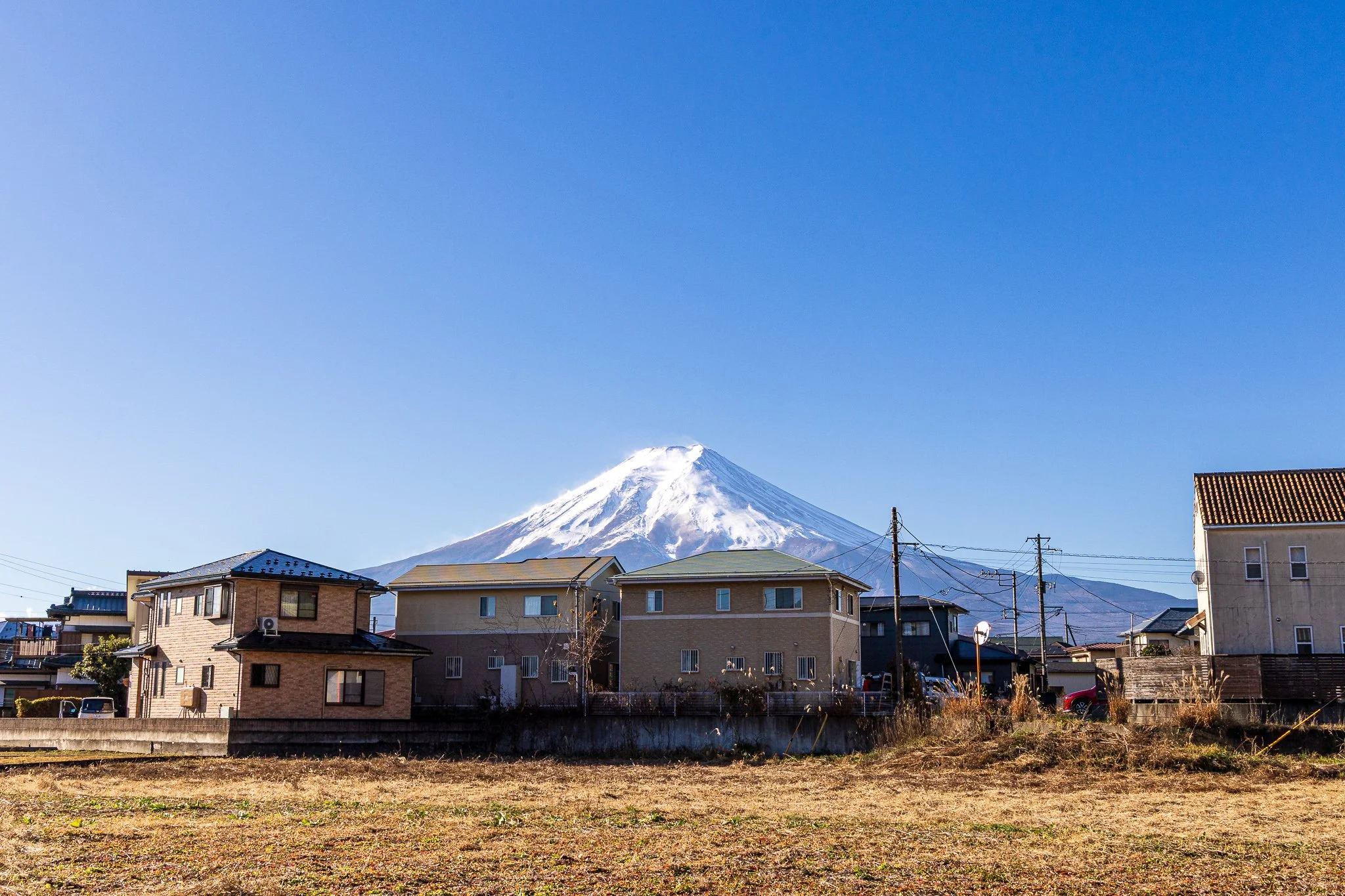
From the bus stop, it was about a 10-minute walk to Shimoyoshida Station, where I had even more beautiful views of Mount Fuji.
I stored my 40L backpack in a luggage locker just outside the Shimoyoshida station at Shimoyoshida-benri-ten, an unmanned 24-hour convenience store. The lockers come in multiple sizes (¥400 for medium, ¥600 for large) and accept 100-yen coins. I didn’t have enough coins on me, but I did have cash. Thankfully, someone working at a nearby stand was able to exchange my bills for coins so I could use a locker without issue.
Once my larger bag was safely tucked away, I walked about 20 minutes to Chureito Pagoda.
Chureito Pagoda at Arakurayama Sengen Park
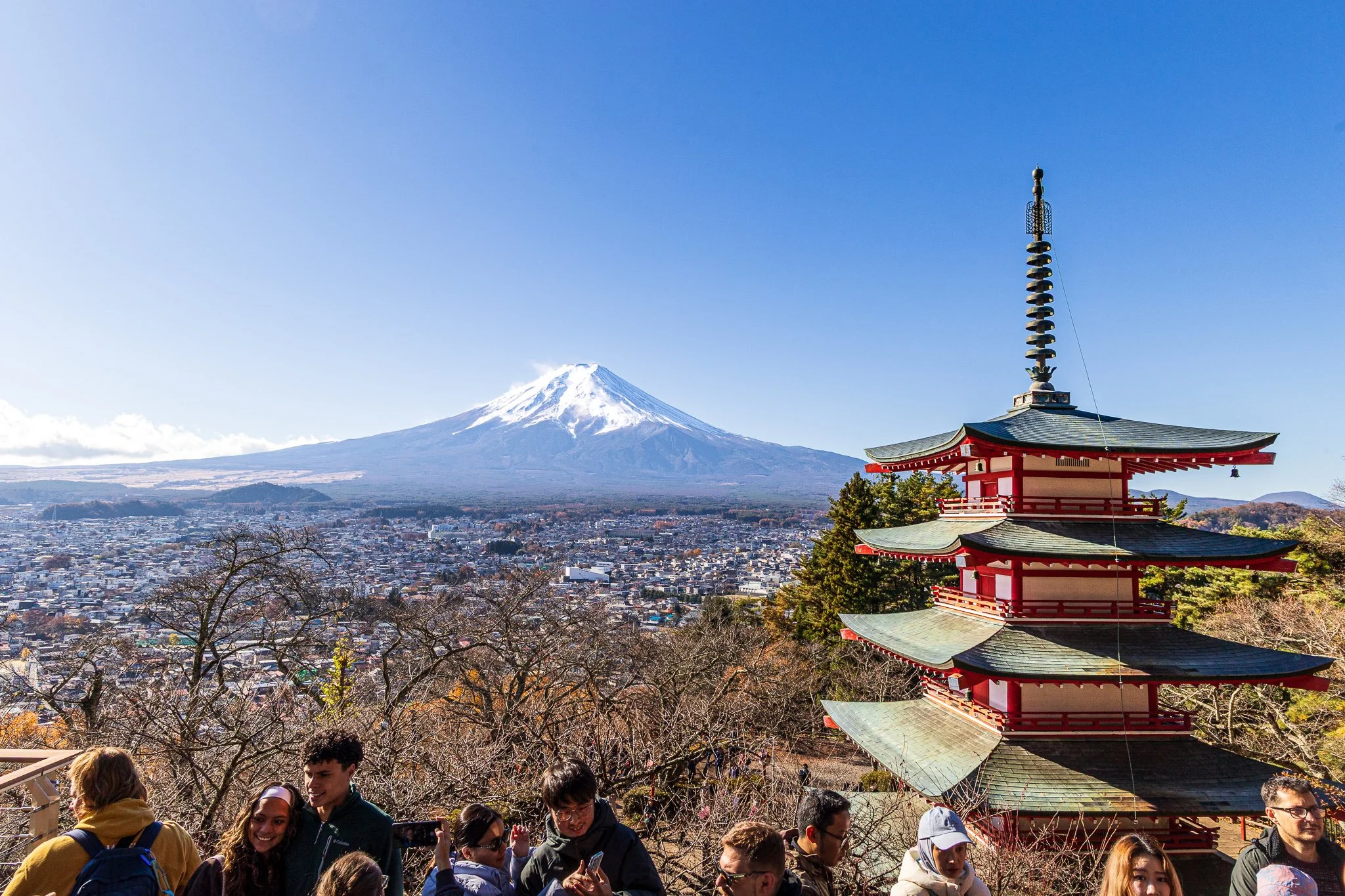
Chureito Pagoda at Arakurayama Sengen Park is one of the most famous Mount Fuji viewpoints in Japan. Located in Fujiyoshida City, the five-storied pagoda sits nearly 400 steps above Arakura Sengen Shrine and was built in 1963 as a peace memorial.
The viewpoint is famous for its quintessential “Japan” composition, with the pagoda in the foreground and Mount Fuji rising behind it, especially during cherry blossom season in mid-April and autumn foliage in November. It’s truly a dream location for photographers. That popularity, however, also means it can get quite crowded during peak seasons.
I reached the top at 9:33am. There were definitely quite a few people there, but everyone was incredibly kind and helpful, taking turns photographing one another. I spent nearly an hour capturing photos from different angles and reviewing them on the benches nearby (since who knows when I’ll be back!).
I had read that walking another 10 minutes uphill leads to a quieter viewpoint with an unobstructed view of Mount Fuji, no pagoda, but fewer tourists. I decided to skip that and focus my time at the main observation deck instead.
Around 10:30am, I made my way back down the steps. At the base, several small food stalls were set up, and I treated myself to a grilled meat skewer that absolutely hit the spot.
Commuting from Chureito Pagoda at Arakurayama Sengen Park to Fuji Lake Hotel
Afterward, I walked back to Shimoyoshida Station to retrieve my backpack. From there, I took the train to Kawaguchiko Station to continue my Lake Kawaguchiko adventure. After arriving, I walked about 12 minutes to Fuji Lake Hotel, where I would be staying for the night.
I chose to stay at Fuji Lake Hotel because it’s within walking distance of Kawaguchiko Station, sits right on the lakefront, includes breakfast, and offers a hot-spring bath. At $257 for one night, it was a bit more than I typically like to spend, but when I was looking in the springtime, it was one of the few available options for that Friday night in a convenient location near both the station and Cooliya, the restaurant/bar where I planned to have dinner. I kept coming back to it while searching, so I decided why not splurge a little.
I arrived at Fuji Lake Hotel around 12:00pm, which was too early to check in. Fortunately, the person at the front desk kindly allowed me to leave my 40L backpack so I could start exploring right away.
Tenku-no Torii
My first stop in Lake Kawaguchiko was Tenku-no Torii (Torii Gate in the Sky). According to Google Maps, it would take about 40 minutes by bus compared to just 15 minutes by taxi, so I opted for a taxi instead. I was grateful the front desk staff was able to call one for me so I could get there as efficiently as possible.
Tenku-no Torii is a striking red torii gate perched on a hillside above Lake Kawaguchiko, offering dramatic views of Mount Fuji. Built in 2019 as part of the Kawaguchi Asama Shrine complex, it serves as a remote worship site and has quickly become a popular photography spot thanks to its elevated, unobstructed perspective of the mountain.
The gate sits up a narrow mountain road and requires either a 30-minute uphill walk or a short drive. I was incredibly grateful that my taxi driver navigated the winding roads and dropped me off near the top. A small entrance fee of ¥500 is required, and there was a sign noting that tripods are not allowed.
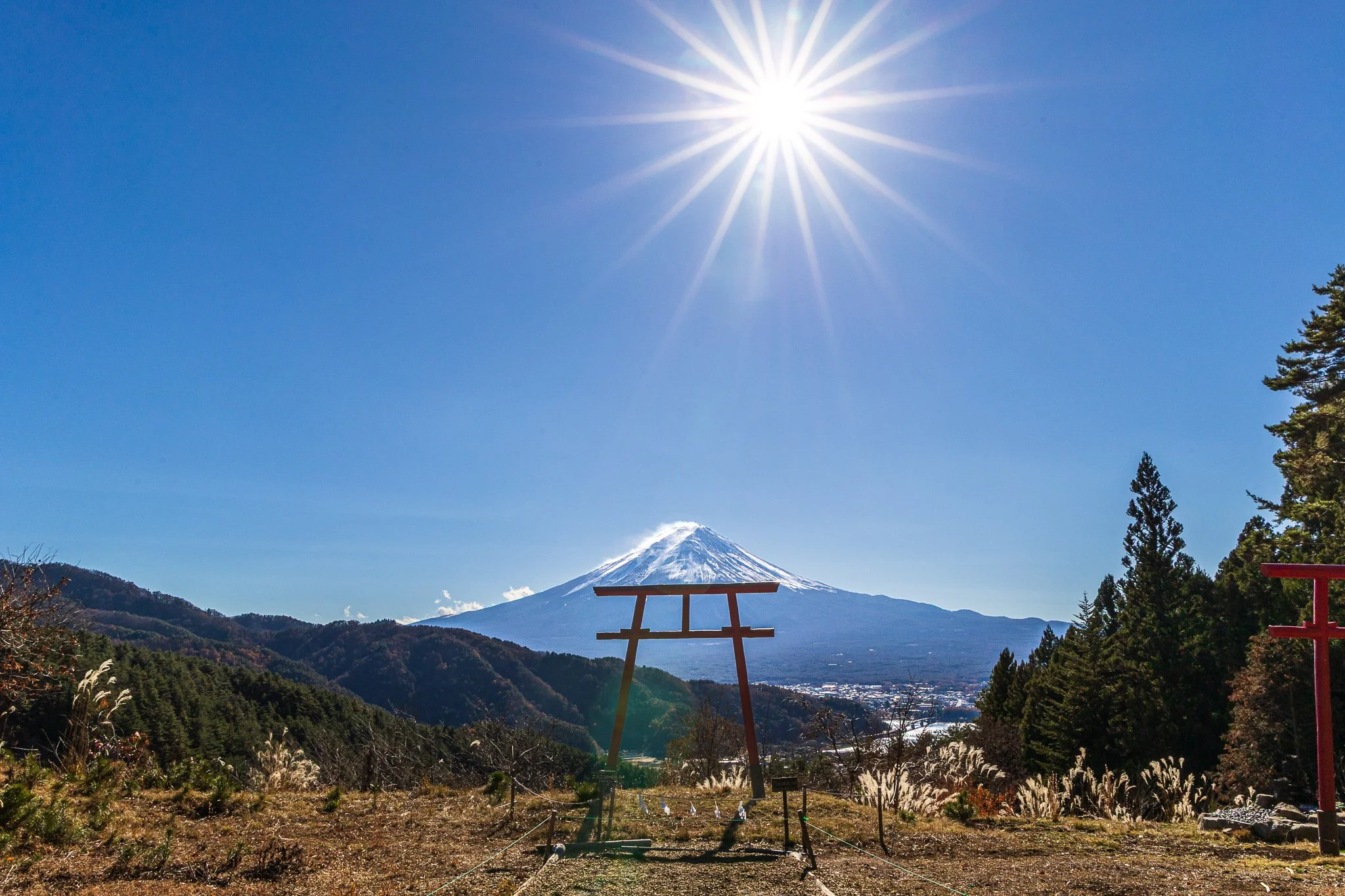
I arrived around 12:30pm, and there were only two other people there, which was a pleasant surprise, after the crowd I saw at Chureito Pagoda! The couple was kind enough to take a photo of me, and we chatted for a bit. They mentioned they knew of a small waterfall located about a 10-minute walk further down the road.
After spending about 20 minutes taking photos from different angles, I decided to walk down to the waterfall to check it out. As I was leaving around 12:50pm, a small group began to arrive. The timing worked out perfectly. It was such a peaceful and beautiful spot to experience with Mount Fuji towering in the background.
Haha-no-Shirataki Waterfall
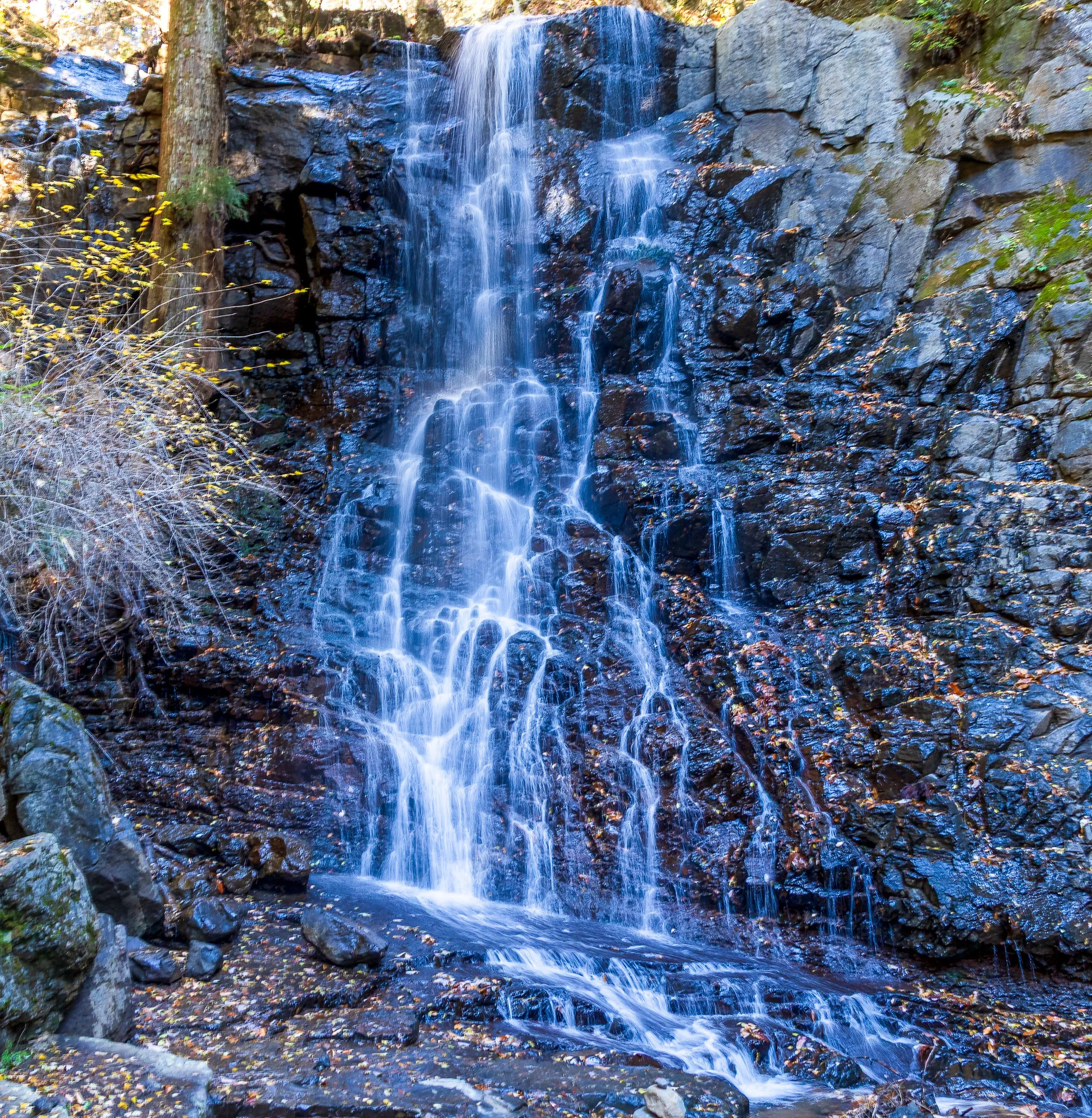
Haha-no-Shirataki Waterfall (Mother’s White Waterfall) is a hidden gem nestled in the forest, about a 10-minute walk from Tenku-no Torii. It wasn’t originally on my list of places to visit in Lake Kawaguchiko, but after chatting with the couple I met at Tenku-no Torii, I figured I might as well check it out, especially since it was so close.
For centuries, the waterfall has been revered as a spiritual “power spot,” believed to invigorate both mind and body. Since the Heian period (794–1185), worshippers preparing to climb Mount Fuji would purify themselves here before continuing on their journey.
It was such a peaceful contrast to the more popular Fuji viewpoints earlier in the day. After taking a few photos and soaking in the quiet, I made my way back down past Tenku-no Torii and began my walk along Lake Kawaguchiko, starting with the 50-minute trek to Lake Kawaguchi Maple Corridor.
Lake Kawaguchi Maple Corridor
Lake Kawaguchi Maple Corridor (Momiji Kairou) is a popular autumn foliage spot along the northern shore of Lake Kawaguchiko. The approximately 150-meter (492-foot) pathway is lined with maple and ginkgo trees, creating a vibrant tunnel of reds and golds in late October through mid-November. It’s an easy, flat stroll and completely free to visit.
During peak season, the area hosts the Momiji Festival, with food stalls and evening illuminations that light up the leaves after sunset. I was especially grateful for the food stalls, as I was quite hungry after the long walk from Tenku-no Torii. After grabbing something to eat, I wandered through the corridor to take photos.
I arrived around 2:30pm. It was a little crowded, but manageable. While the colors were still beautiful, many of the leaves had already fallen by November 28. A week earlier may have meant fuller trees, but then again, I might not have had such clear views of Mount Fuji. You can’t have it all!
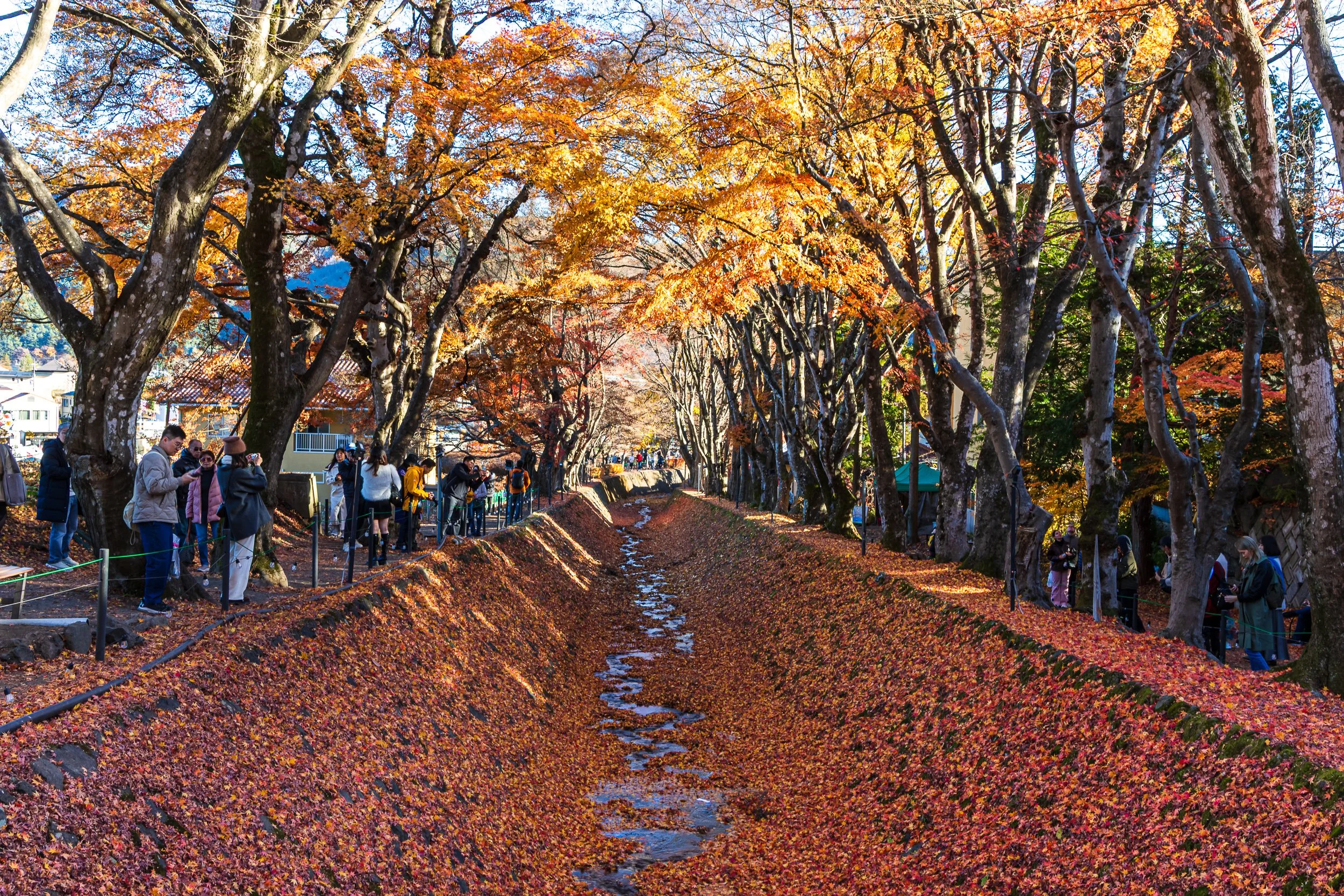
Even so, I felt incredibly grateful to experience both autumn colors and Mount Fuji on the same day.
After about 20 minutes, I continued on, walking 12 minutes to Nagasaki Park, the next stop on my Lake Kawaguchiko stroll.
Nagasaki Park
Nagasaki Park sits directly along the shores of Lake Kawaguchiko and offers beautifully unobstructed views of Mount Fuji. There are no benches, restrooms, or parking, just quiet shoreline and open views, which makes it feel especially peaceful.
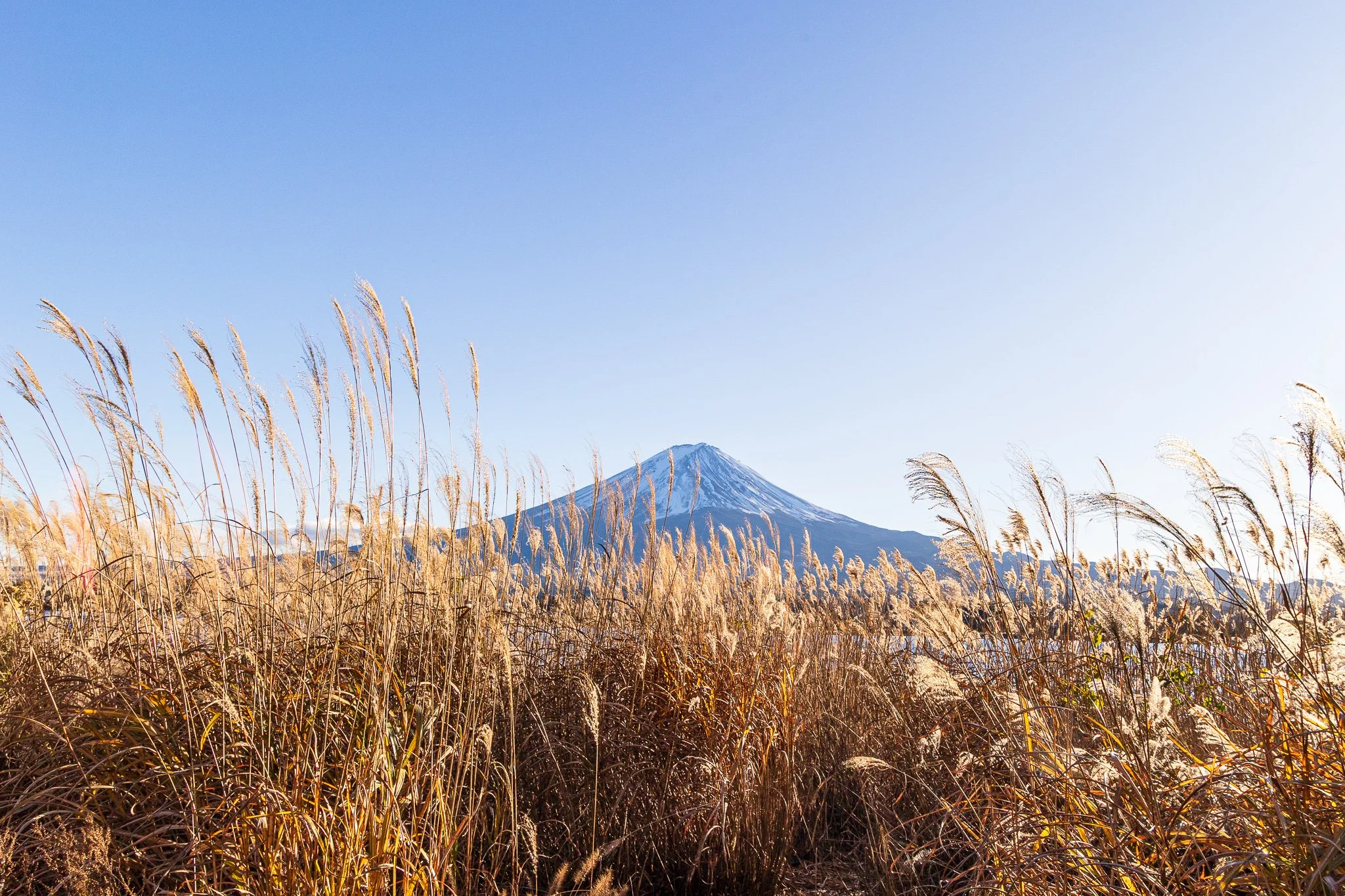
I stayed about 10 minutes snapping photos before walking another 18 minutes toward Kawaguchiko Natural Living Center and Oishi Park.
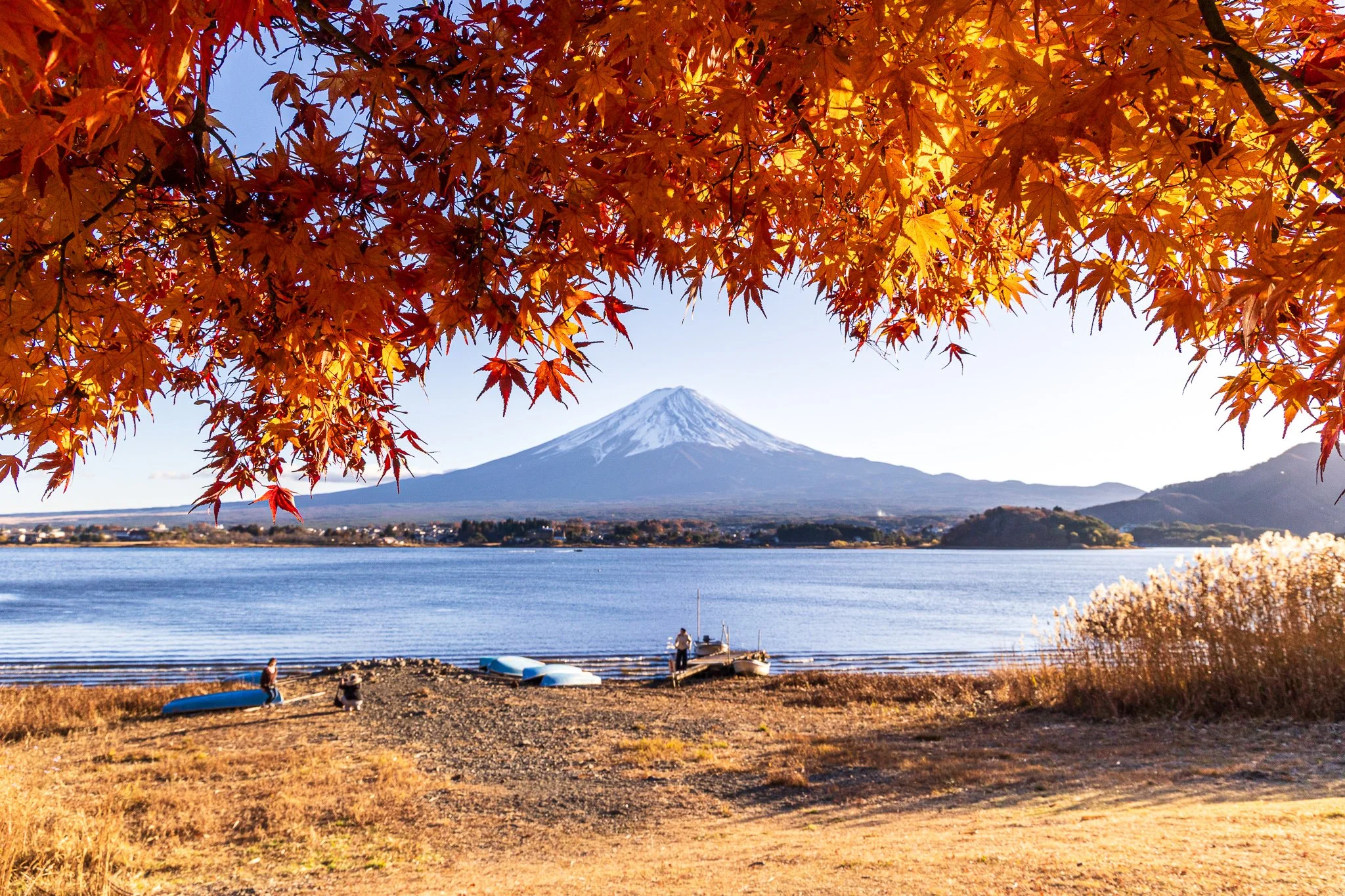
Along the way, I spotted one lone tree glowing with brilliant orange leaves. Many of the other trees had already lost theirs, so this one drew a small line of photographers waiting to capture Mount Fuji framed by its branches. Thankfully, the line moved quickly.
Kawaguchiko Natural Living Center and Oishi Park
I arrived at Oishi Park a little after 3:30pm. Located along the northern shore of Lake Kawaguchiko, the park is known for its iconic, postcard-worthy views of Mount Fuji and its 350-meter floral promenade.
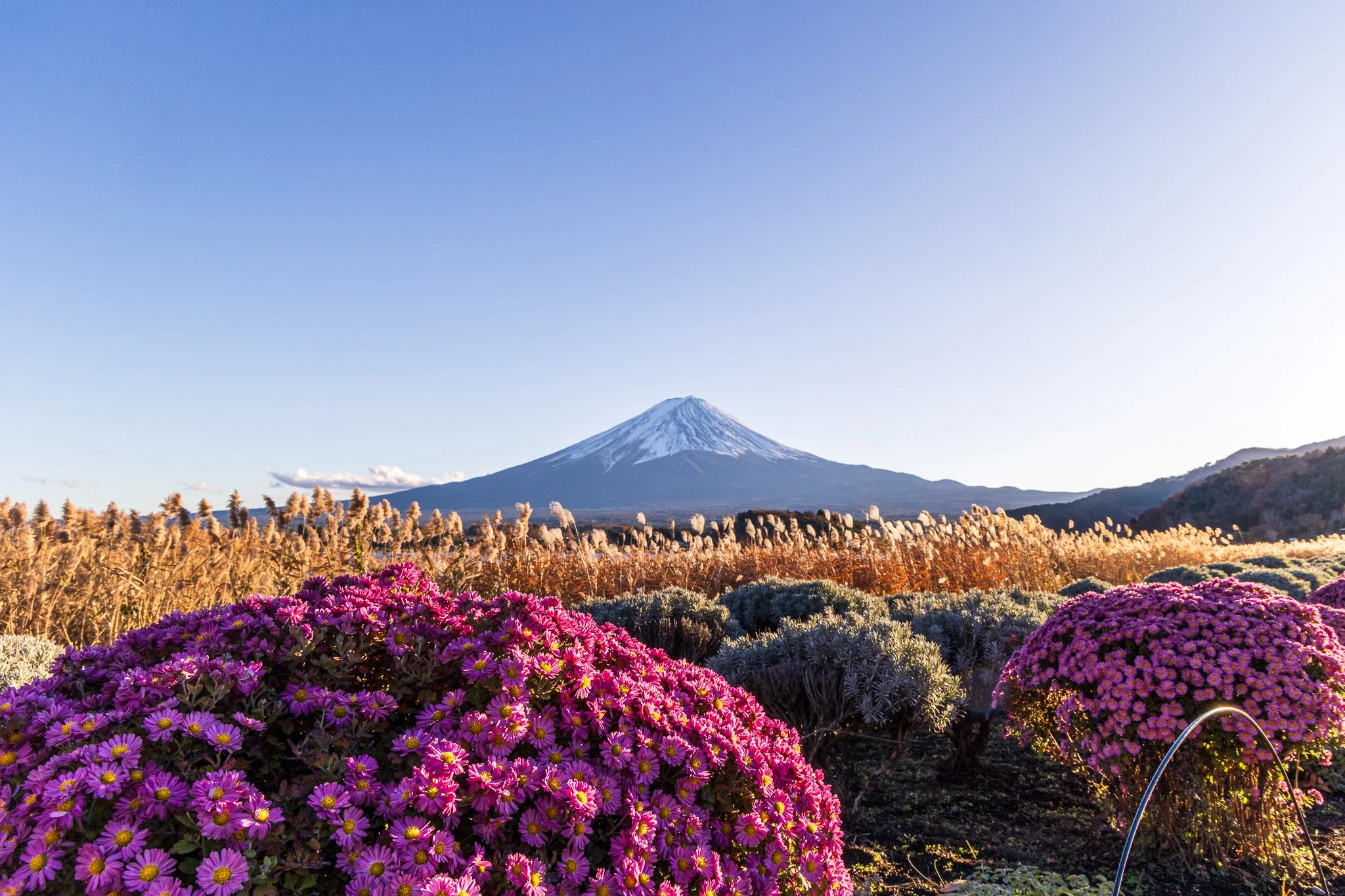
Adjacent to the park is the Kawaguchiko Natural Living Center, which houses a café, small restaurant, gift shop, and restrooms, a very convenient stop after a long afternoon of walking. It’s a great place to grab a snack, warm drink, or souvenir (I, of course, bought a magnet) while enjoying indoor views of Mount Fuji through large panoramic windows.
I had originally planned to make this a quick stop before walking 20 minutes to Momiji Tunnel for photos. But after noticing how many leaves had already fallen at Maple Corridor, I suspected Momiji Tunnel would offer similar views, possibly with even barer trees. With sunset scheduled for 4:30pm, I didn’t want to gamble my final golden-hour light on foliage that might already be past peak. Instead, I stayed at Oishi Park and took in the views before heading back to Fuji Lake Hotel.
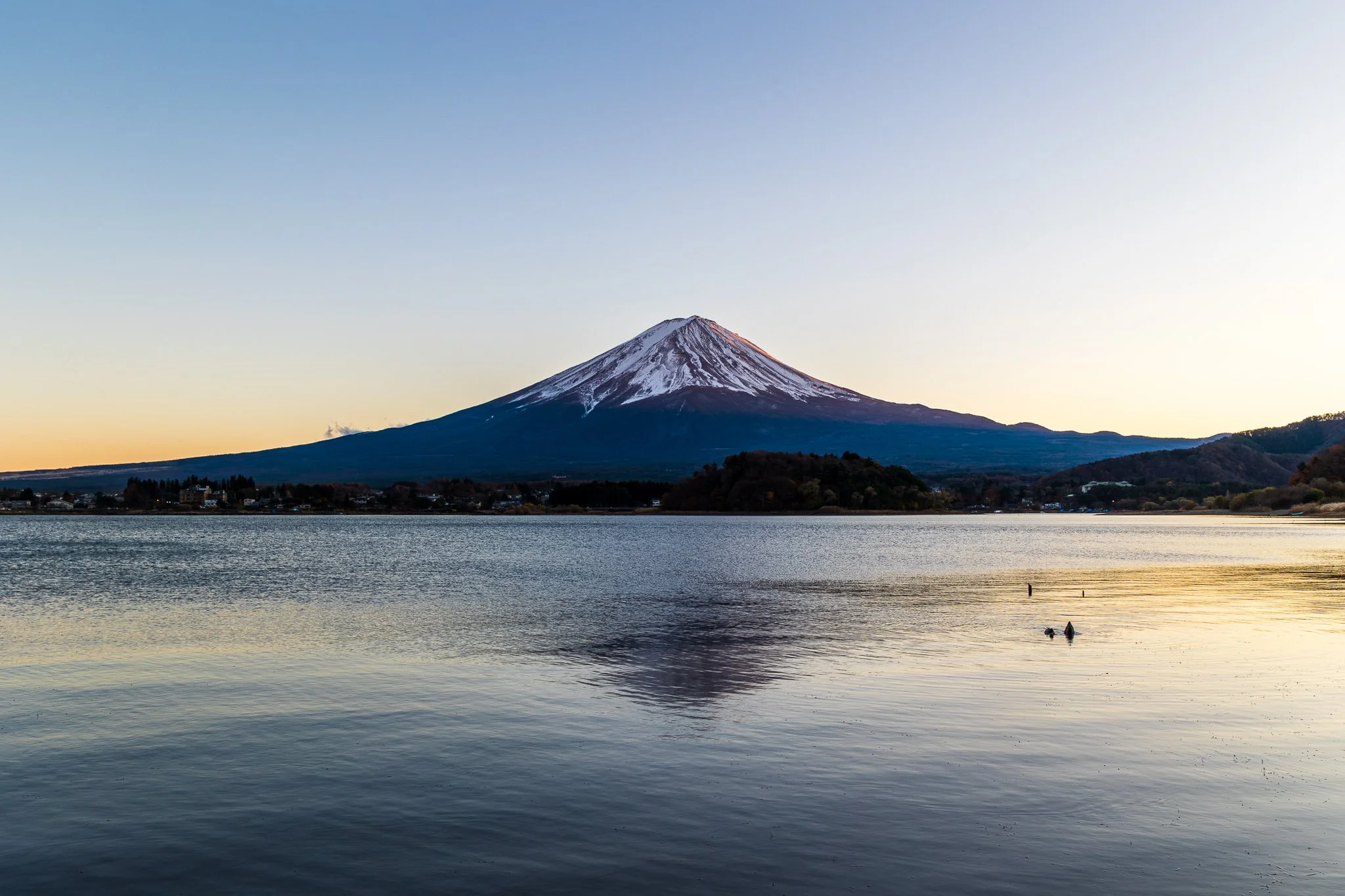
Commute from Oishi Park to Fuji Lake Hotel
The easiest ways to get around Lake Kawaguchiko are by using the Kawaguchiko Sightseeing Bus (Red Line), renting an electric bike, or taking a taxi. The Red Line runs between major attractions but only goes as far as Oishi Park before turning back toward the Mount Fuji Ropeway.
Another reason I decided not to continue on to Momiji Tunnel was logistical. Visiting would have meant a 20-minute walk there, plus time for photos, and maybe a 20-minute walk back to pick up the bus from Oishi Park, as I wasn’t confident I’d be able to easily get a taxi from Momiji Tunnel. Since my hotel had arranged my earlier taxi to Tenku-no-Torii, I didn’t want to assume I could quickly hail one in a more remote area.
After finishing at Oishi Park and stopping inside the Kawaguchiko Natural Living Center for a magnet, I was relieved when the Red Line bus pulled up. I tapped my PASMO card and hopped on. While another bus would have arrived about 20 minutes later (the line runs roughly 9:00am–6:00pm), I was tired after a long day of walking and more than ready to head back to the hotel to officially check in and grab dinner.
Dinner at Cooliya
I arrived back at Fuji Lake Hotel around 5:30pm to pick up my room key and sit down for a few minutes before heading out to dinner.
While researching Lake Kawaguchiko, I quickly realized that nightlife here is quiet and relaxed. Most restaurants and bars close around 8:00–9:00pm, and options are generally limited to cozy local bars, traditional izakayas near Kawaguchiko Station, and the occasional karaoke spot. It’s much more of a peaceful, scenic evening destination than a bustling nightlife hub.
Cooliya kept appearing in my search results as a solid, reasonably priced option near the hotel, so I decided to give it a try, and I’m so glad I did.
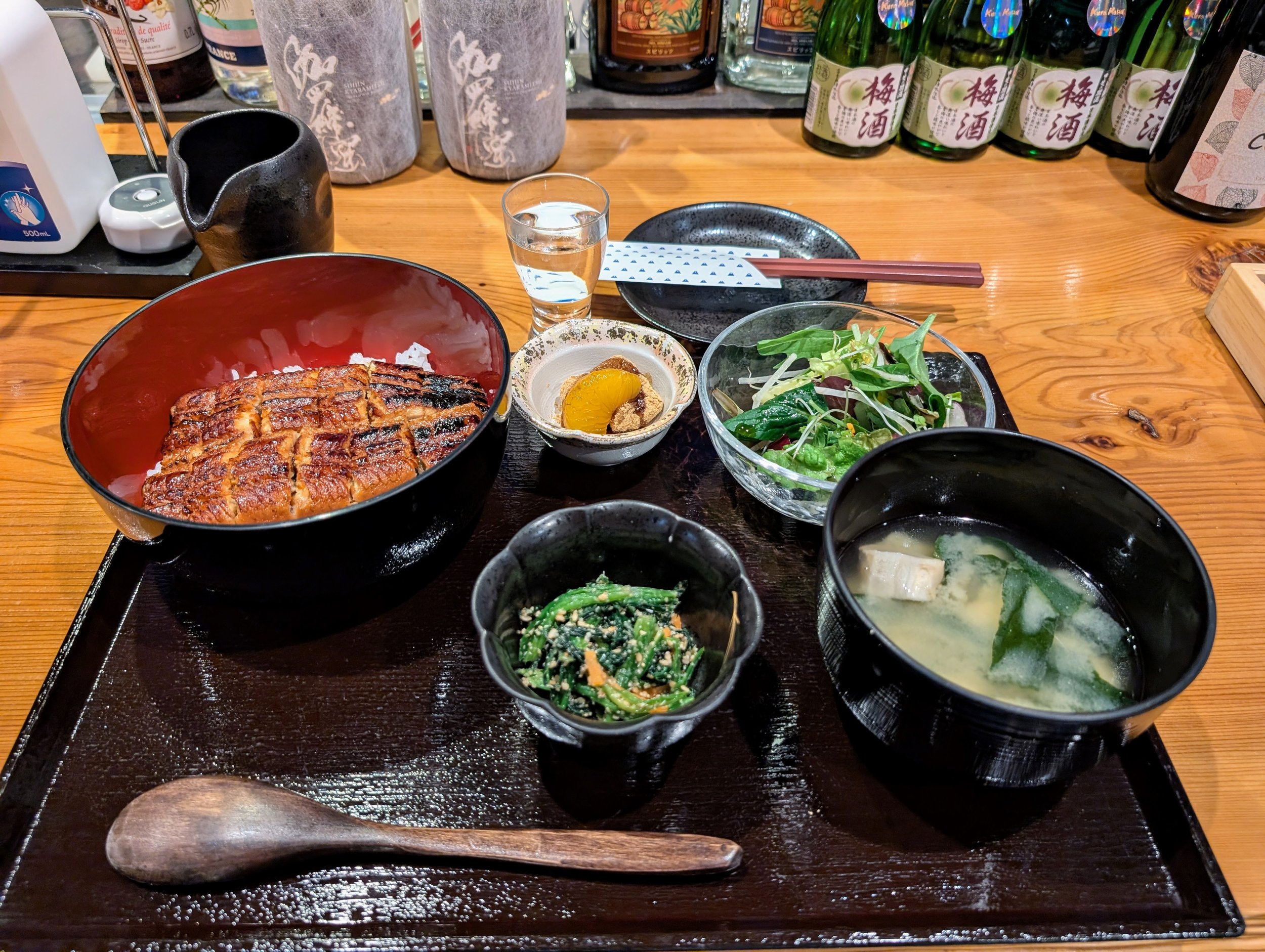
I was happy to see they offered set meals, similar to what I had enjoyed earlier in Tokyo. A traditional Japanese set meal typically includes a main dish (meat or fish), steamed rice, miso soup, pickles (tsukemono), and a small side dish, all served together on one tray. It’s a balanced, satisfying way to enjoy a full meal without having to choose individual sides, which felt perfect after a long day of walking. I wound up walking 27,241 steps that day!
For dinner, I ordered the dried right-eye flounder set meal, a piece of Ginza Bansuke original rare dried octopus, and a glass of Koshu Japanese wine. Everything was simple, beautifully prepared, and incredibly flavorful.
I headed back to the hotel around 8:00pm to relax and turn in after a long day of walking, grateful for clear skies and a full day with Mount Fuji.