Day 6: Day 5 in Tokyo - Shinjuku and Shibuya
On Thursday, November 27, 2025, I explored Meiji Jingu Gaien, Shinjuku Gyoen National Garden, Yoyogi Park, MEGA Don Quijote Shibuya and Tower Records, Shibuya Scramble, and Shibuya Sky Observation Deck.
This was my last full day in Tokyo before heading to Lake Kawaguchiko, so I decided to take things a bit slower, stick to the Shinjuku and Shibuya neighborhoods, and have an early night.
Meiji Jingu Gaien Ginkgo Avenue
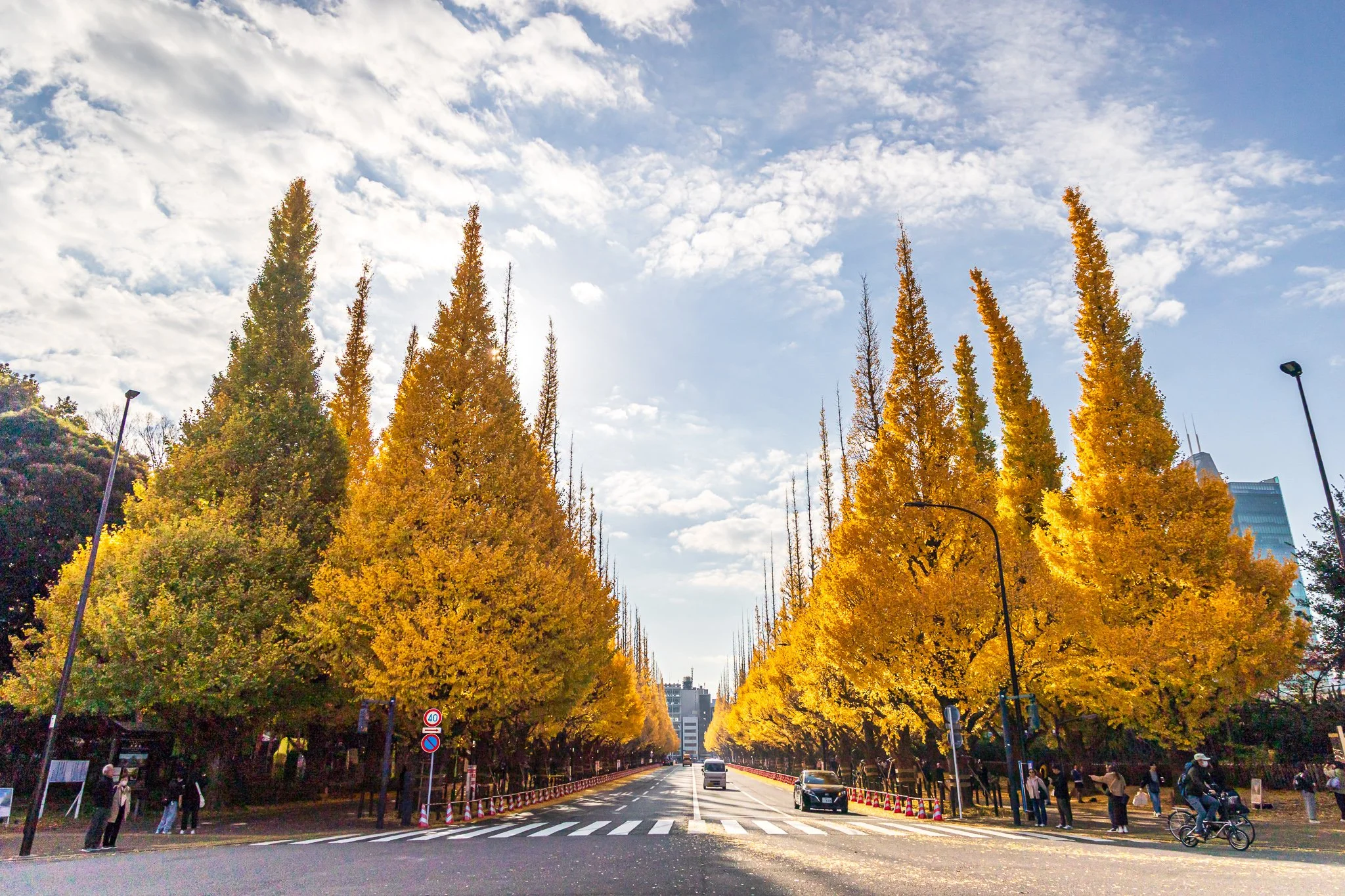
After another breakfast from FamilyMart, I headed out to Meiji Jingu Gaien Ginkgo Avenue, one of Tokyo’s most iconic fall foliage spots. The avenue is about 300 meters long and lined with 146 ginkgo trees, planted roughly 9 meters apart. The trees were intentionally positioned using perspective, taking into account the gentle slope of the road and the height of the trees, which creates the effect of a glowing golden tunnel when viewed from either end. By late November, the leaves turn a vibrant yellow, making it one of the most photographed autumn scenes in the city.
To get there, I walked to Shinjuku Station and took the Ōedo Line, arriving around 8:45am. I started on the east side of the street, taking photos from the sidewalk as I walked north toward the end of the avenue. Once there, I turned around to capture the quintessential shot of the ginkgo trees towering over the street, then crossed to the west side and headed back down, stopping for more photos along the way.
I left around 9:20am and walked about 20 minutes to Shinjuku Gyoen National Garden.
Shinjuku Gyoen National Garden
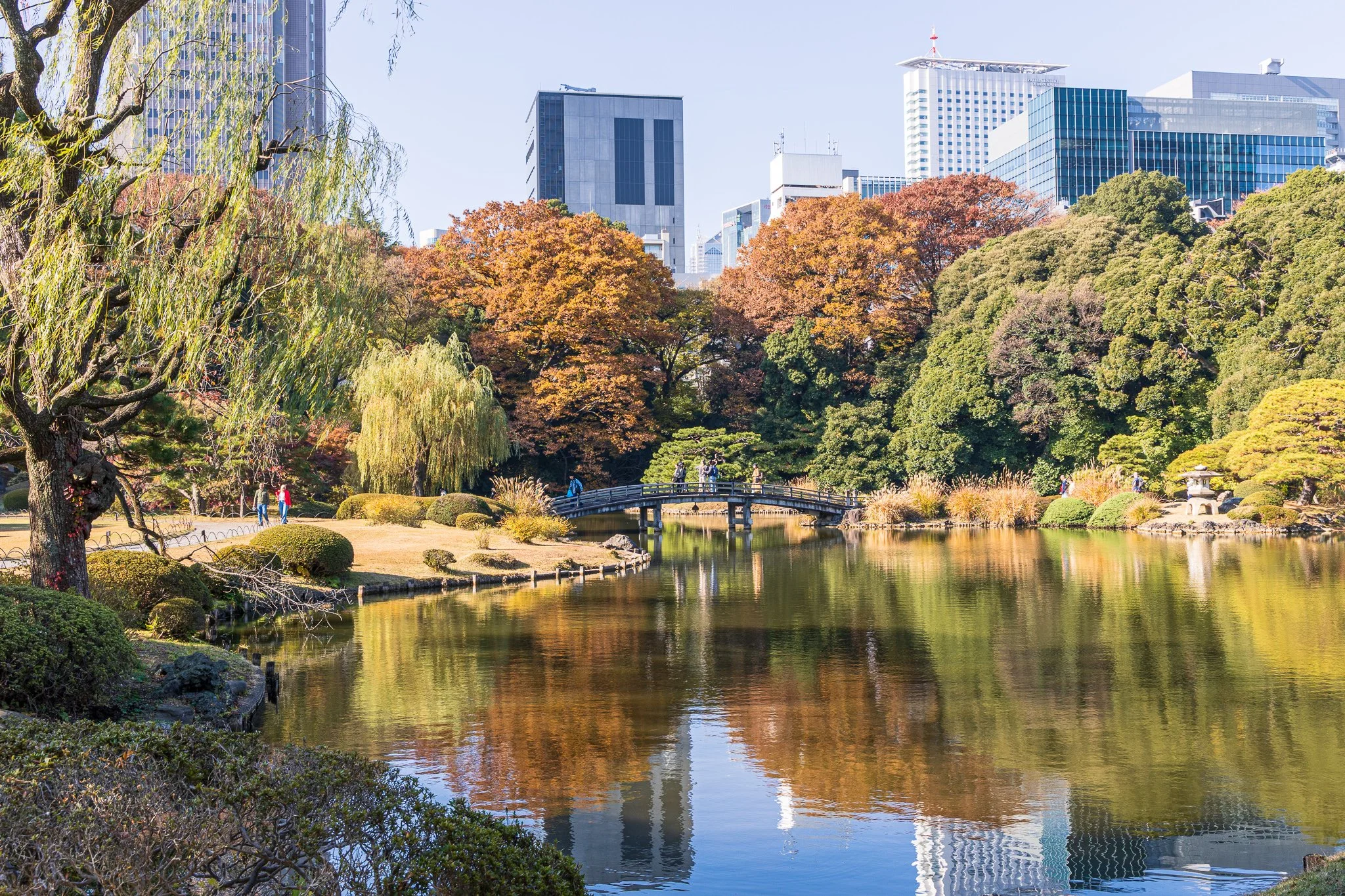
Shinjuku Gyoen National Garden is one of Tokyo’s largest and most peaceful parks, covering 58.3 hectares (144 acres) in the heart of the city. What makes the garden especially unique is its blend of three distinct styles: a traditional Japanese landscape garden, a formal French garden, and a wide-open English landscape garden.
The garden is open Tuesday through Sunday starting at 9:00am, and admission costs ¥500 for adults.
I arrived around 10:00am and stayed until 12:00pm, spending the morning wandering the grounds and capturing photos. The Japanese garden was especially beautiful, and I found myself spending most of my time there. Despite being surrounded by the city, the garden feels incredibly peaceful.
There are a couple of cafés inside the garden, which is very convenient. I treated myself to some Ujimatcha ice cream, which felt like the perfect mid-morning snack. Even so, by noon I was starting to get hungry, so I left the garden and took the train to Seafood Misaki Shibuya East Exit for lunch.
Seafood Misaki Shibuya East Exit
Seafood Misaki Shibuya East Exit is a kaiten (conveyor belt) sushi restaurant located in Shibuya, Tokyo, offering a variety of fresh, seasonal seafood. The restaurant is open from 11:00am to 10:00pm, with last orders accepted 30 minutes before closing, and is easily accessible via Shibuya Station’s New South Exit.
I arrived around 12:30pm, and there was plenty of space available. There aren’t any servers. Instead, orders are placed on a touchscreen at each table. I found it especially helpful that the screen highlights monthly recommendations, manager’s picks, featured items of the week, and fresh fish sourced from Toyosu Market. As someone who loves asking servers for recommendations, but doesn’t speak Japanese, having those suggestions clearly displayed in English made ordering incredibly easy.
I ordered chawanmushi, the five-piece winter sushi selection, and a SUI Gin Red Shiso Plum Soda to drink. Everything was fresh and satisfying, exactly what I needed after a full morning of walking.
After lunch, I made my way to Yoyogi Park, stopping at Tower Records on the way.
Tower Records
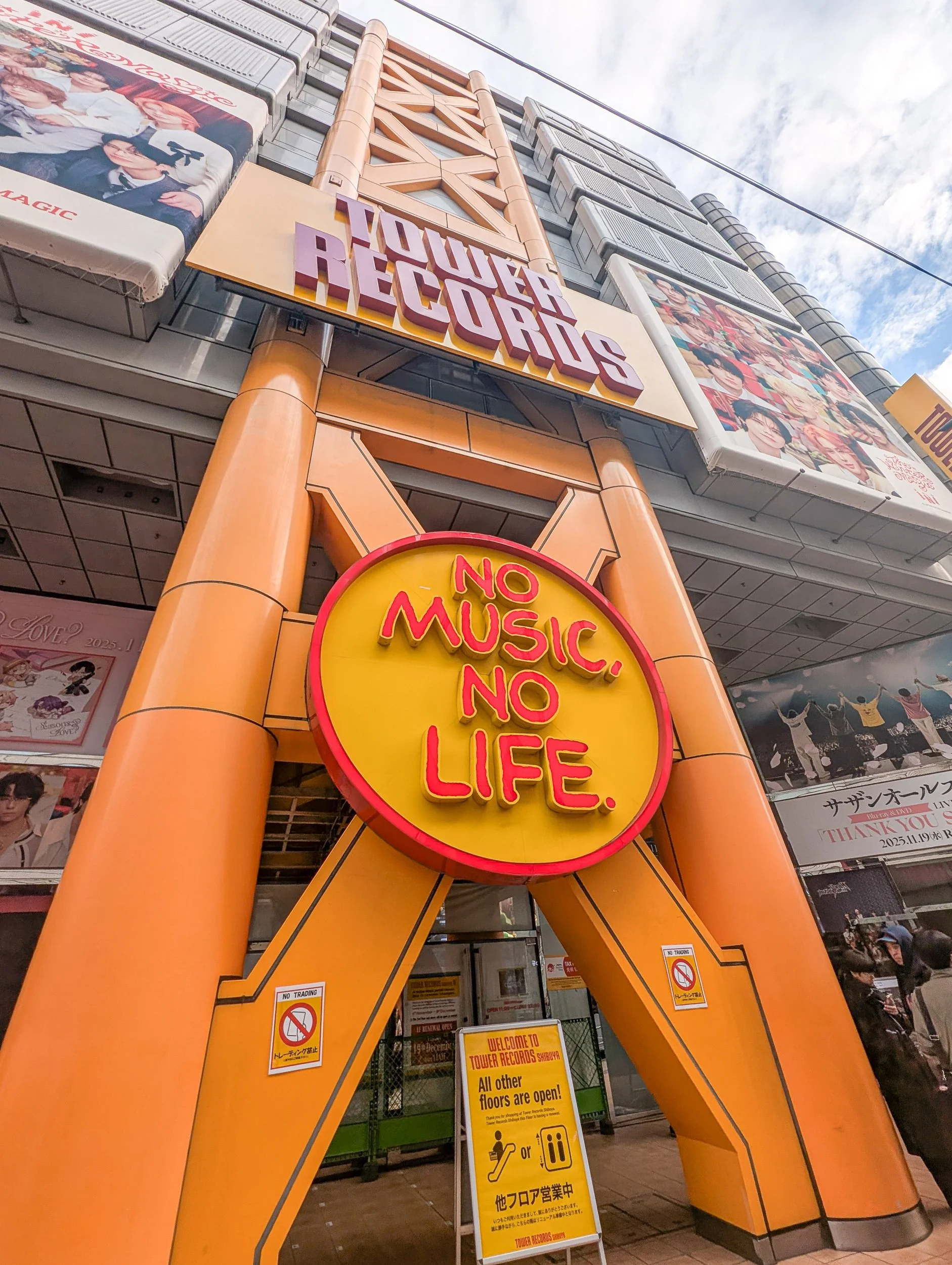
Tower Records was so fun to explore. If you’re not familiar with it, the store originated in Sacramento, California in the United States but still operates independently in Japan, where it remains incredibly popular. I didn’t even realize there was a location in Tokyo until I was researching places to visit in Shibuya!
The store spans eight floors, each dedicated to different genres and themes. I loved browsing through the J-Pop, J-Indie, J-Hip-Hop, and City Pop sections, along with the K-Pop floor, Tower Vinyl, and the Rock and Soul departments. As someone who loves music (I volunteer at CHIRP Radio in Chicago, make my own playlists, and have been to 331 concerts from 2009 to 2026) it was such a fun experience to see the incredible range of albums and artists highlighted throughout the store.
I spent about 30 minutes wandering through the different floors before continuing on to Yoygoi Park.
Yoyogi Park
Yoyogi Park is one of Tokyo’s largest parks, known for its wide lawns, forested paths, and seasonal foliage. Located near Harajuku Station, it’s a popular place for locals to jog, picnic, and relax.
In late November, the park transforms with fall color. Zelkova, ginkgo, and Japanese maple trees create a beautiful mix of red, yellow, and green throughout the grounds.
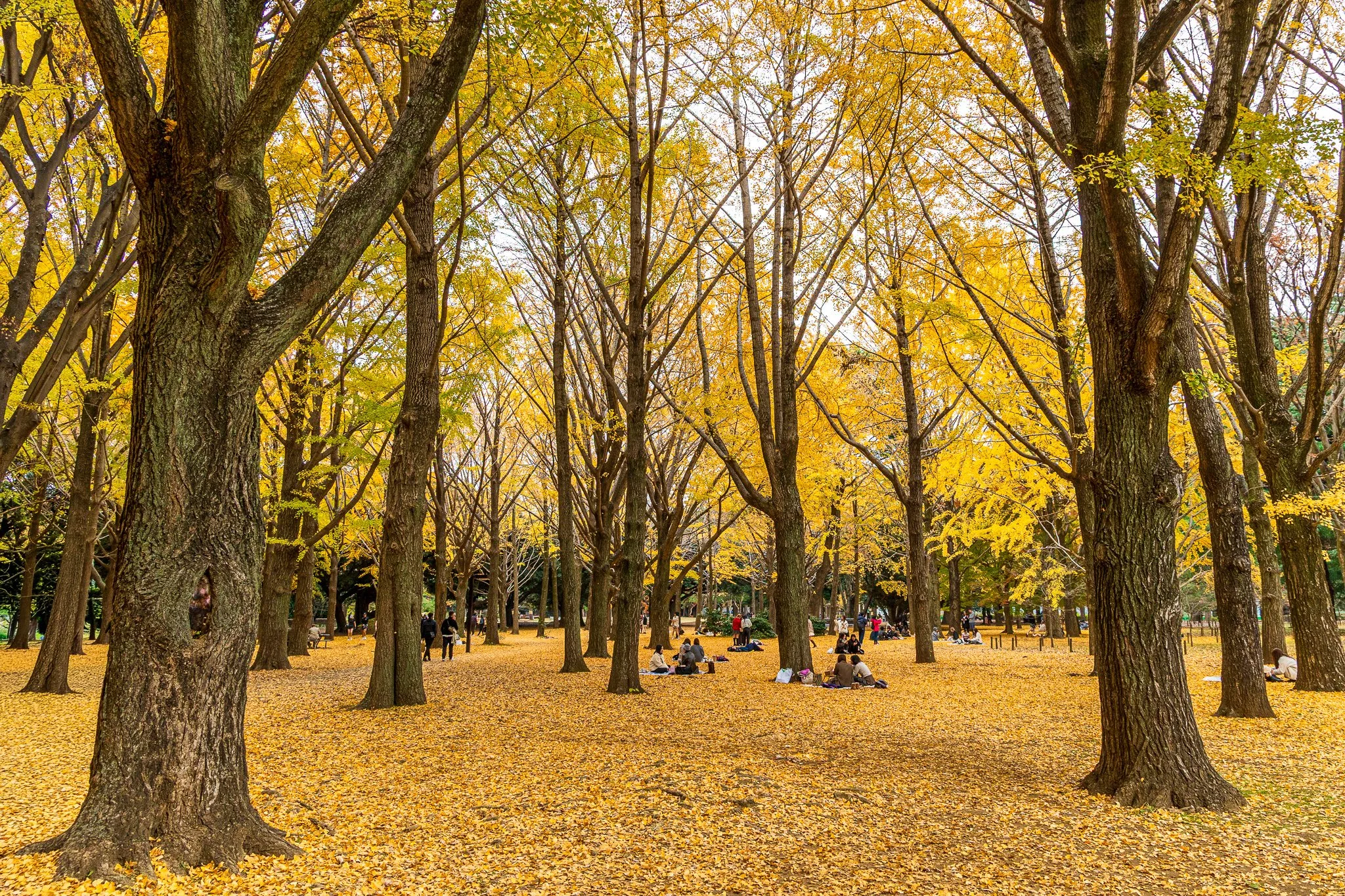
I was there from about 2:30pm to 3:00pm, taking photos before sitting on a bench to read for a bit. By that point, I had already walked around 20,000 steps (and would end the day at 30,924), similar to the 30,000-plus days I’d had throughout the trip. I was definitely starting to lose steam, so it felt really nice to slow down, read for a bit, and recharge.
It started to rain a bit around 3:00pm, so I decided to head back toward the shops while waiting for my 5:20pm time slot at Shibuya Sky.
MEGA Don Quijote Shibuya
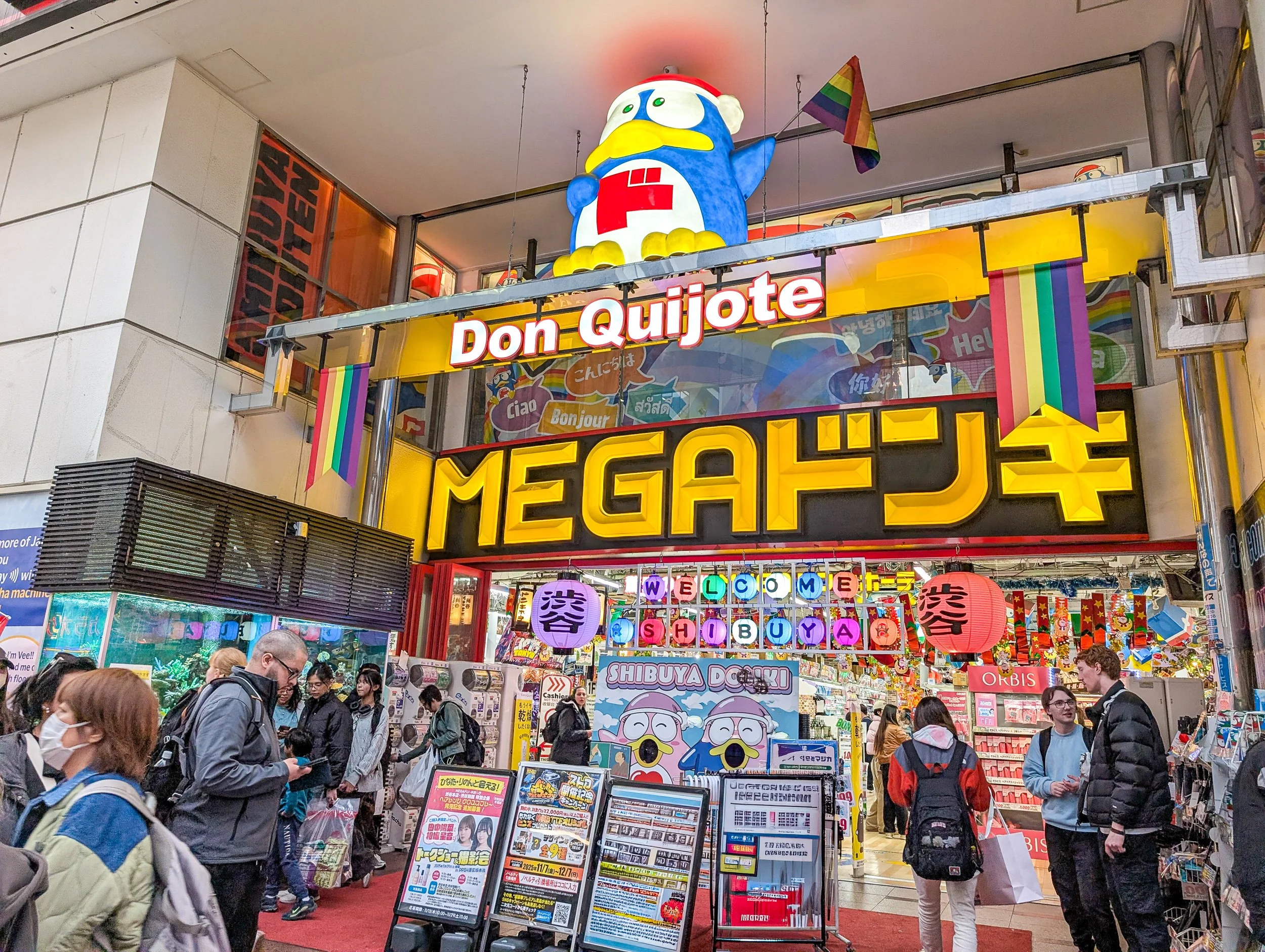
MEGA Don Quijote Shibuya is a massive, eight-floor discount store located in the heart of Shibuya. Open 24 hours, it’s known for tax-free shopping and sells everything from electronics and cosmetics to snacks and souvenirs.
Everyone talks about doing a “Japan haul” when visiting the country, but I’m not much of a shopper while traveling. Still, I figured I should pick up a few things. I knew I wanted magnets from each city, a pair of chopsticks, and maybe some Japanese skincare. With eight floors to explore, it seemed like the perfect place to find it all.
In reality, I found the store a bit overwhelming. I located the skincare section, but without knowing exactly what I was looking for, I decided to skip it. In the end, I left with just a magnet, and honestly, that felt like enough.
After leaving Don Quijote, I still had about an hour before my Shibuya Sky entry time. I walked over to the Hachikō Statue, crossed Shibuya Scramble, and spent time at MAGNET by SHIBUYA109 for photos before heading up to the observation deck.
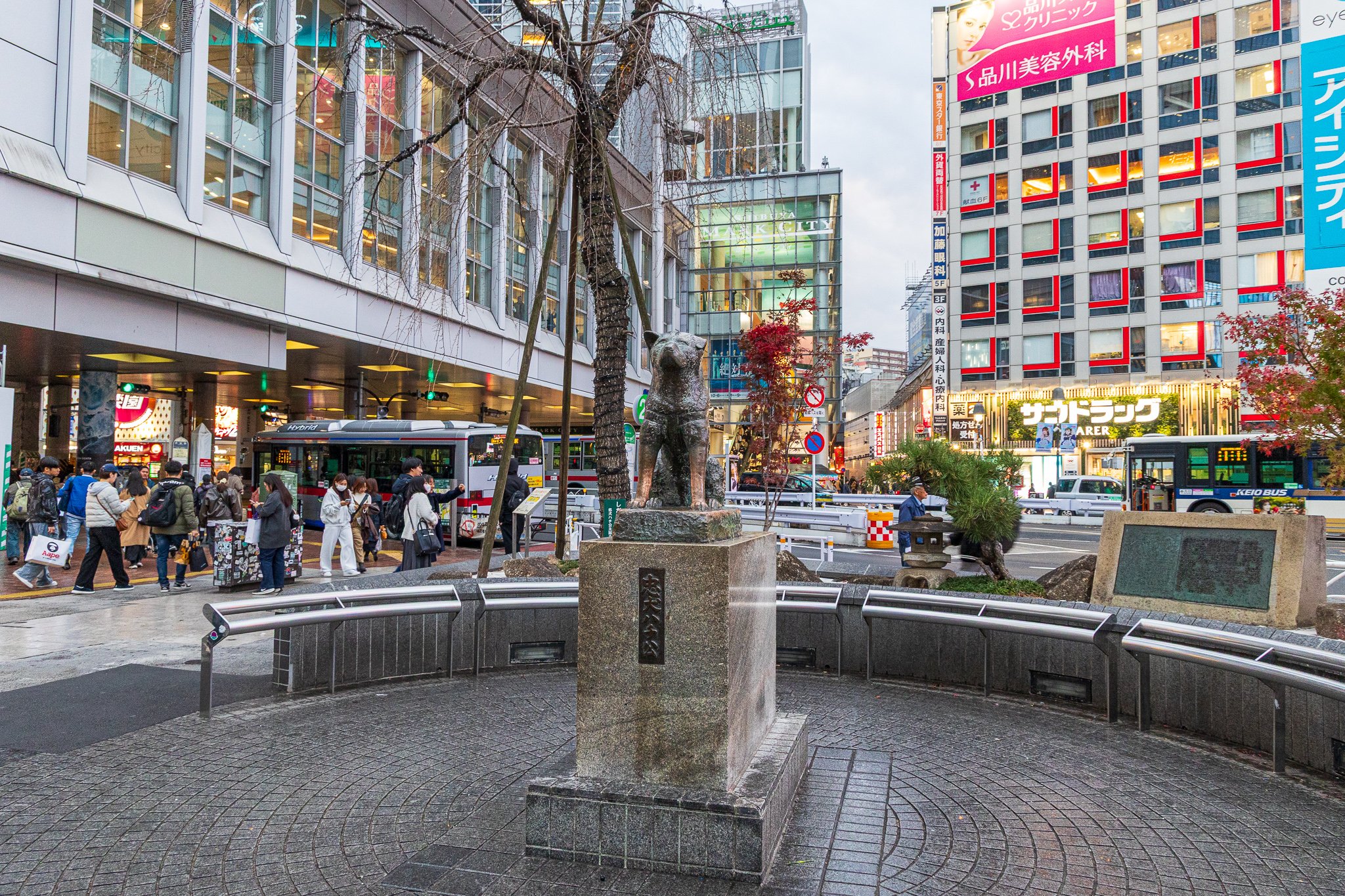
Hachiko Statue & Shibuya Scramble Crossing
The Hachikō Statue is one of Tokyo’s most beloved landmarks, located just outside Shibuya Station’s Hachikō Exit. The bronze statue honors Hachikō, an Akita dog who waited at the station every day for his owner, Professor Hidesaburō Ueno. Even after the professor suddenly passed away in 1925, Hachikō continued returning to the station daily for nearly ten years, waiting until his own death.
Today, the statue stands as a symbol of loyalty and devotion and is one of Tokyo’s most popular meeting spots, just steps from the famous Shibuya Scramble Crossing.
I absolutely love dogs (someday I’ll get one of my own), so visiting a statue dedicated to such a loyal dog felt like a must.
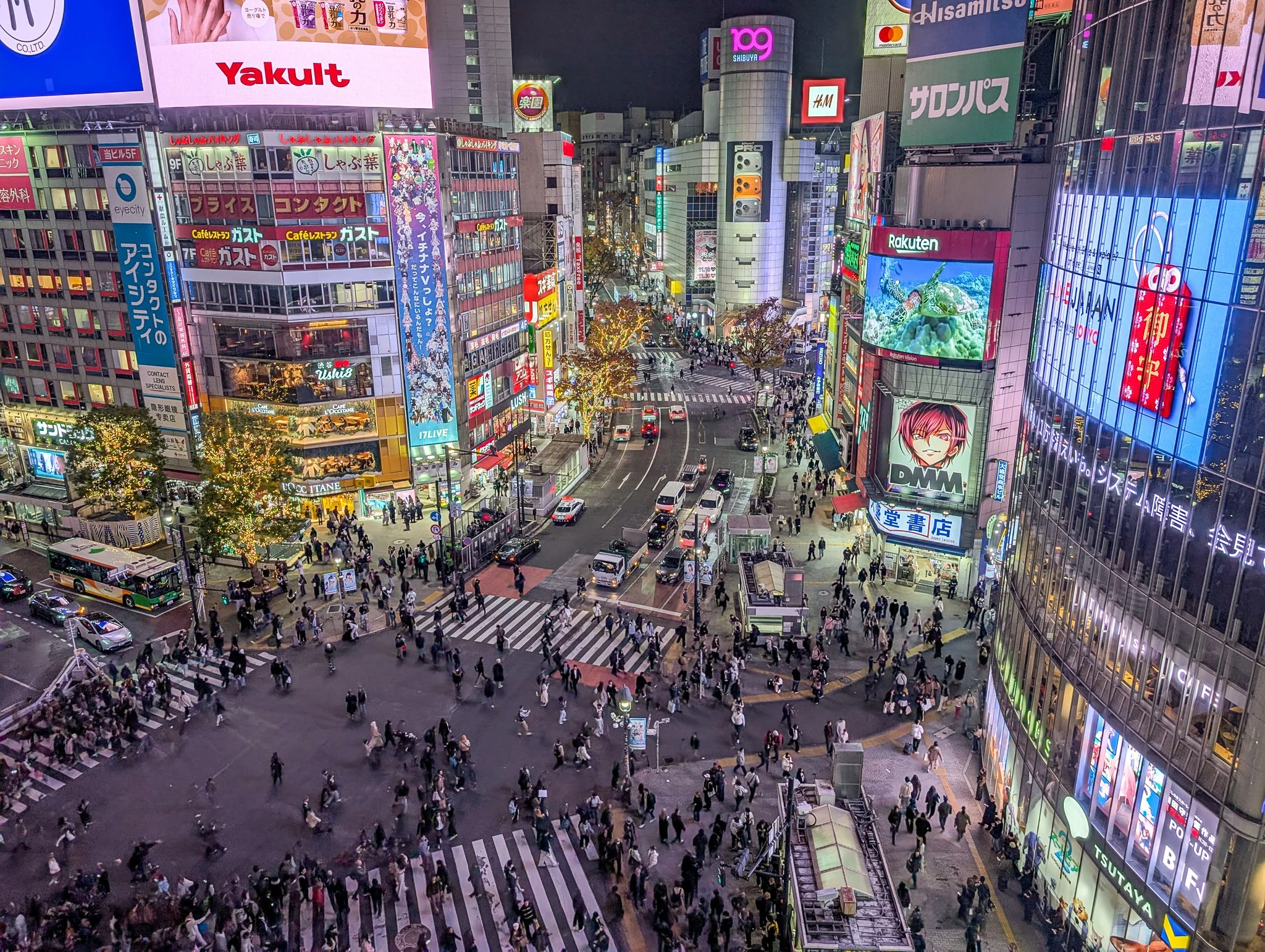
After snapping a few photos of the Hachikō Statue, I walked through Shibuya Scramble Crossing a couple of times to capture photos and videos from different angles.
Shibuya Scramble is a “scramble crossing,” meaning all vehicle traffic stops at once, allowing pedestrians to cross in every direction, including diagonally. With up to 3,000 people crossing during a single light cycle, it’s considered one of the busiest pedestrian intersections in the world and has become a symbol of Tokyo’s vibrant, organized chaos.
It was so fun to experience it firsthand. I had read that the busiest time is typically between 6:00–7:00pm, but even at 4:00pm it was impressively busy.
Since I still had time before my Shibuya Sky entry slot, I headed up to MAGNET by SHIBUYA109.
MAGNET by SHIBUYA109 is a modern shopping complex filled with trendy shops and restaurants. Two floors offer some of the best views of Shibuya Scramble Crossing, the 7th and 8th floors.
The 8th floor features an open-air rooftop bar with panoramic views, while the 7th floor has an indoor restaurant and bar overlooking the crossing. Since I had already been outside all day, and would be heading back outside soon for Shibuya Sky, I opted for the 7th floor. What really sealed the deal was snagging a seat right next to the window with a perfect view of the scramble below!
Admission was ¥1,800 and included a drink. It was a wonderful way to relax and pass the time before my Shibuya Sky entry.
Shibuya Sky Observation Deck
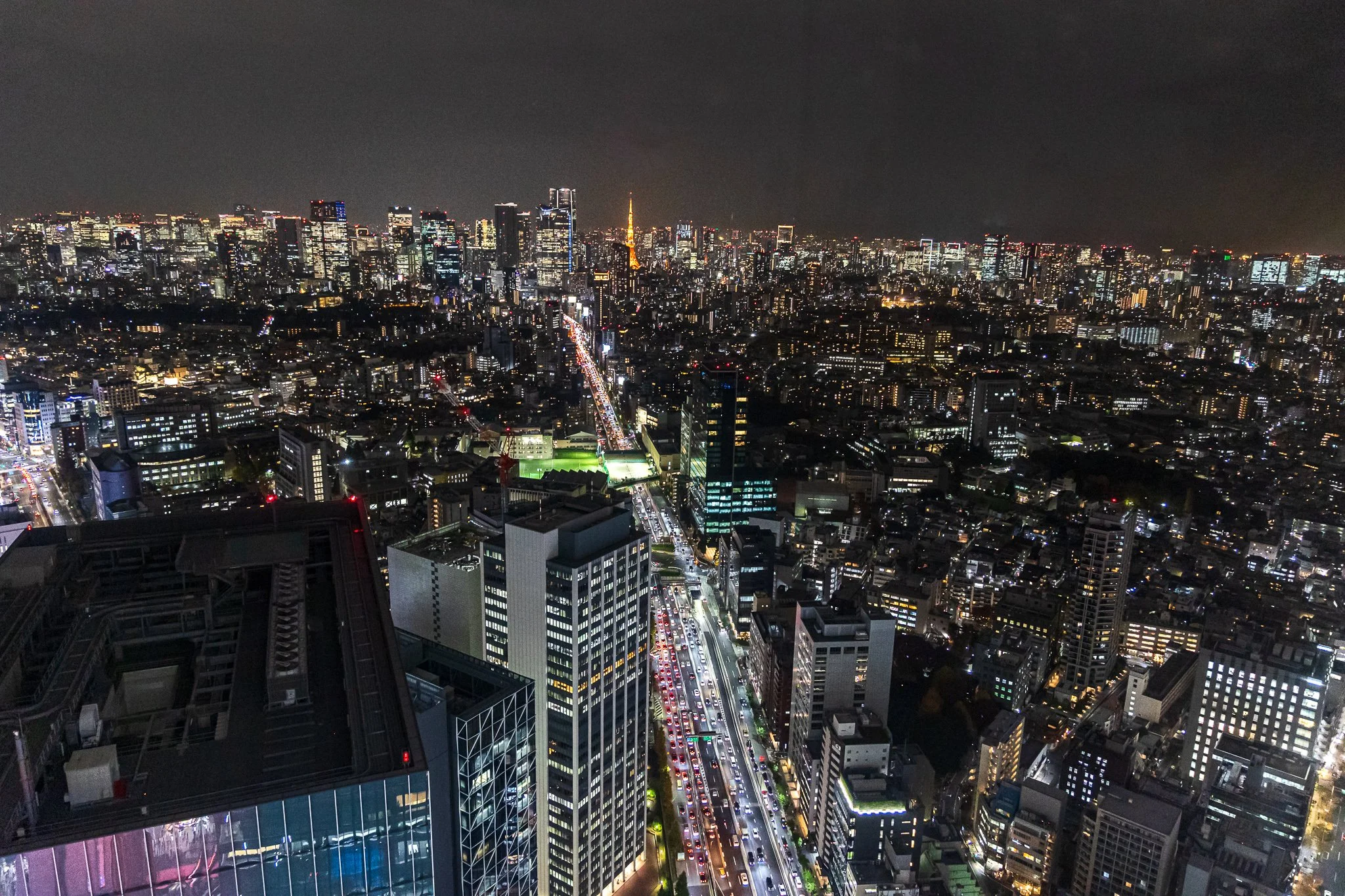
Shibuya Sky is a 751 feet (229-meter)-high open-air observation deck atop Shibuya Scramble Square, offering 360-degree panoramic views of Tokyo, including Mount Fuji (on clear days), Tokyo Skytree, and the iconic Shibuya Scramble Crossing below. Located directly above Shibuya Station (Exit B6), it’s one of the city’s most popular, and often crowded, attractions.
The complex includes the open-air “Sky Stage” rooftop, an indoor Sky Gallery, a café, and a gift shop. Shibuya Sky is open daily from 10:00am–10:30pm (last entry 9:20pm). Booking online in advance is highly recommended, especially for sunset time slots, which often sell out weeks ahead. I purchased my November 27 ticket on November 12 for ¥3,400.
There are a few important rooftop restrictions: all bags, hats, loose items, selfie sticks, and cameras without neck straps must be stored in lockers provided to you. Only phones and cameras with neck straps are allowed outside.
I arrived right at my 5:20pm entry time and stayed until about 6:15pm. It was such a wonderful way to see the city. I especially loved photographing Shibuya Scramble Crossing from above as the city lights began to glow.
When I felt like I had my fill of photos, I headed to Ginza Bansuke in the Times Square Building for dinner.
Dinner at Ginza Bansuke Shinjuku Takashimaya Times Square
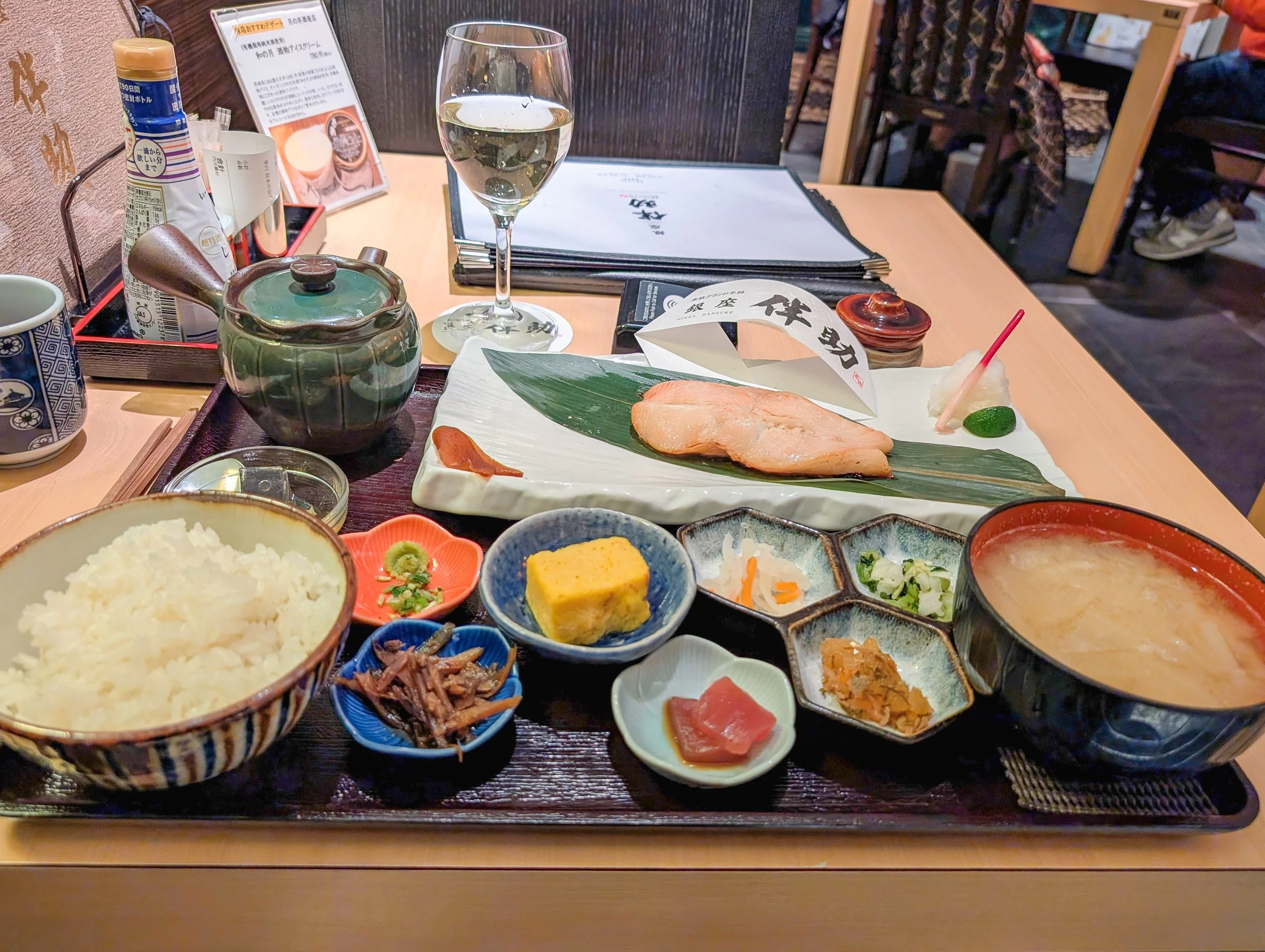
Takashimaya Times Square is a prominent department store in Shinjuku featuring designer boutiques, home goods, gourmet restaurants, and even a theatre. The restaurants are located on the 14th floor, where I chose to dine at Ginza Bansuke, a traditional Japanese restaurant known for its premium “Bansuke” dried fish, carefully grilled to enhance its rich umami flavor and typically served with specialty rice and seasonal side dishes.
I wasn’t entirely sure what I wanted to eat, but I noticed they offered set meals. A traditional Japanese set meal typically includes a main dish (meat or fish), steamed rice, miso soup, pickles (tsukemono), and a small side dish, all served together on one tray. It’s a balanced, satisfying way to enjoy a full meal without having to decide on individual sides. I was relieved to see that option, as everything was thoughtfully paired, so I didn’t have to overthink my order.
I ordered one of their signature set meals featuring the specialty Bansuke dried fish, served with the Ginza Bansuke exclusive rice. Since that’s what they’re known for, I figured I had to try it! I paired it with a glass of white wine. The food was simple, beautifully prepared, and absolutely delicious.
I left around 8:00pm to walk back to the hotel. On the way, I stopped at FamilyMart to grab breakfast for the next morning and picked up Kyusoku Jikan leg cooling patches. After five straight days of walking over 30,000 steps per day, my legs were on fire. The cooling patches contain lidocaine, and after applying them overnight, they truly helped ease the soreness.
All in all, it was a wonderful way to spend my last day in Tokyo before heading to Lake Kawaguchiko the next day.