Day 10: Day 3 in Kyoto - Arashiyama District
On Monday, December 1, I spent the day exploring Kyoto’s Arashiyama District, starting with an early morning visit to the Arashiyama Bamboo Forest before continuing on to several temples and wrapping up my visit at the Arashiyama Monkey Park Iwatayama and Togetsukyō Bridge area.
Commute to Arashiyama Bamboo Forest
I had read that the Arashiyama Bamboo Forest gets quite crowded, so I wanted to arrive early to capture photos before the crowds showed up.
I left The Machiya Ebisuya around 5:00am and walked to Kyoto Station, where I took the JR San’in Main Line to Saga-Arashiyama Station. From there, I walked about 30 minutes toward the bamboo forest, arriving in the area just after 6:00am.
It was absolutely worth the early wake-up call.
Arashiyama Bamboo Forest
Walking through the Arashiyama Bamboo Forest at 6:00am felt surreal. There were hardly any people around, which made the towering bamboo feel even more peaceful and atmospheric.
Since it was still quite dark in the grove, getting the photos I wanted was a little tricky at first. Instead of staying there right away, I continued through the bamboo forest toward the Arashiyama Park viewpoint.
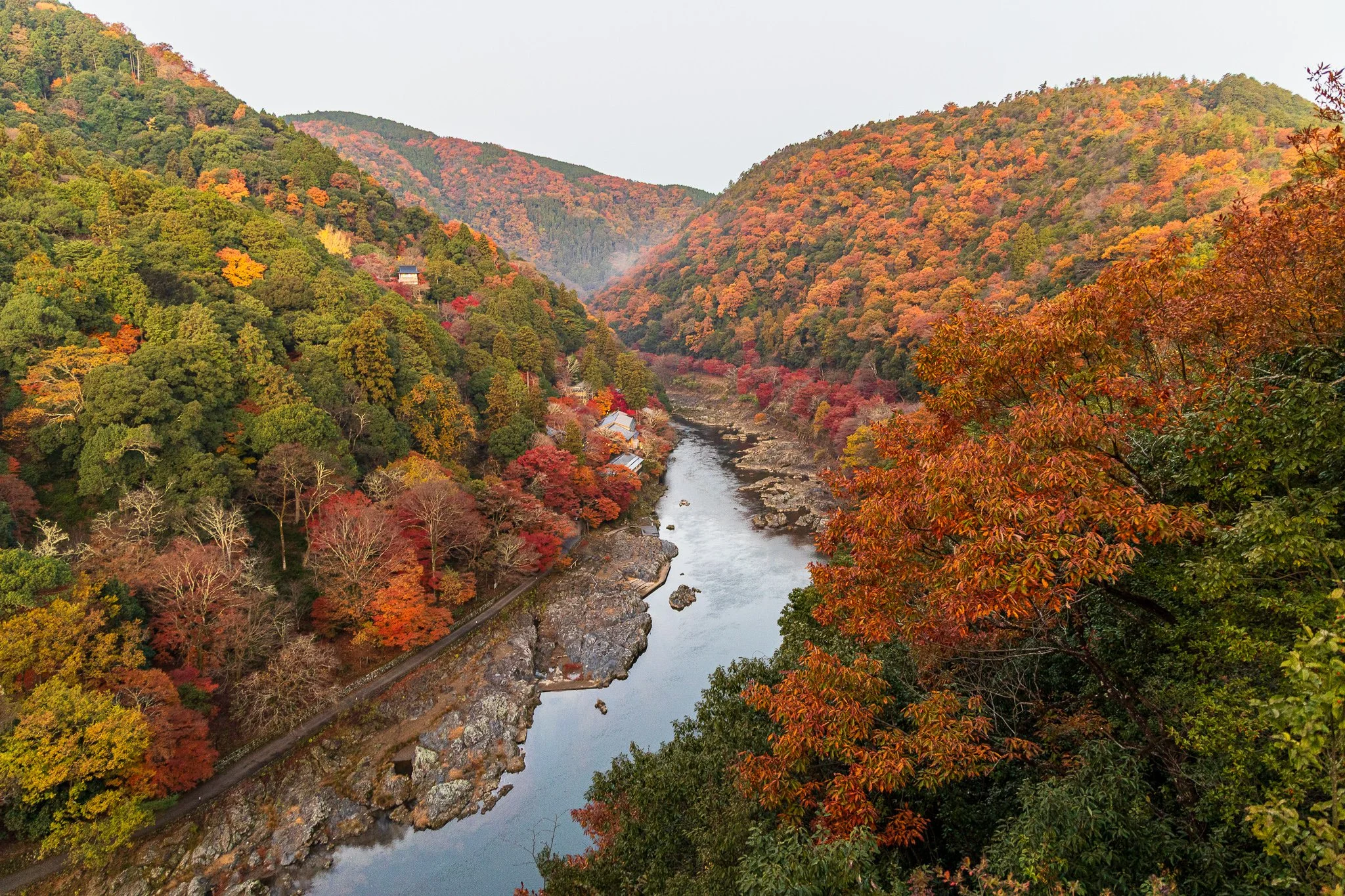
To get there, I walked through the Arashiyama Bamboo Forest, turned left at the T-junction near the top of the hill, and continued into the park. From there, I turned right and walked uphill toward the viewpoint, where I could see the Katsura River winding through the landscape below. It was a beautiful way to begin my morning in Arashiyama.
After taking a few photos from the viewpoint area, I walked back into the bamboo forest, hoping it was light enough for photos but still early enough to avoid the crowds. I returned around 6:30am, which ended up being perfect timing. I walked up and down the grove a few times, taking photos and enjoying how quiet it still felt. As the morning went on, more people started to arrive, but it was still much quieter than it would be later in the day.
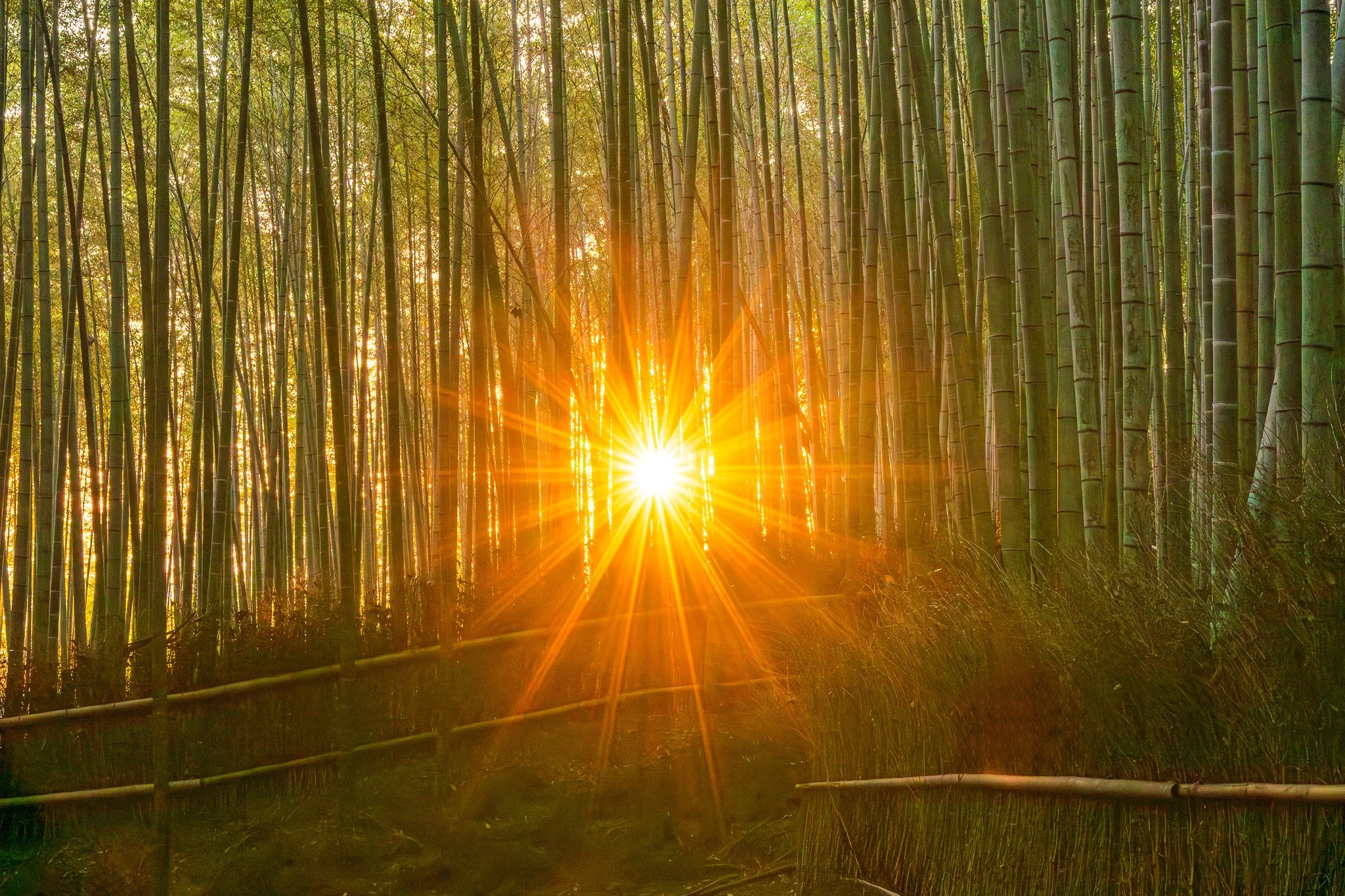
Sunrise that morning was at 6:46am, and around 7:00am, the sun started to peek through the bamboo, allowing me to capture a beautiful sunburst photo. It was such a fun and memorable experience.
All in, I spent about an hour and a half at the Arashiyama Park viewpoint and Arashiyama Bamboo Forest getting photos and taking it all in before beginning my version of a Arashiyama Temple Walk, starting with Tenryū-ji.
Tenryū-ji
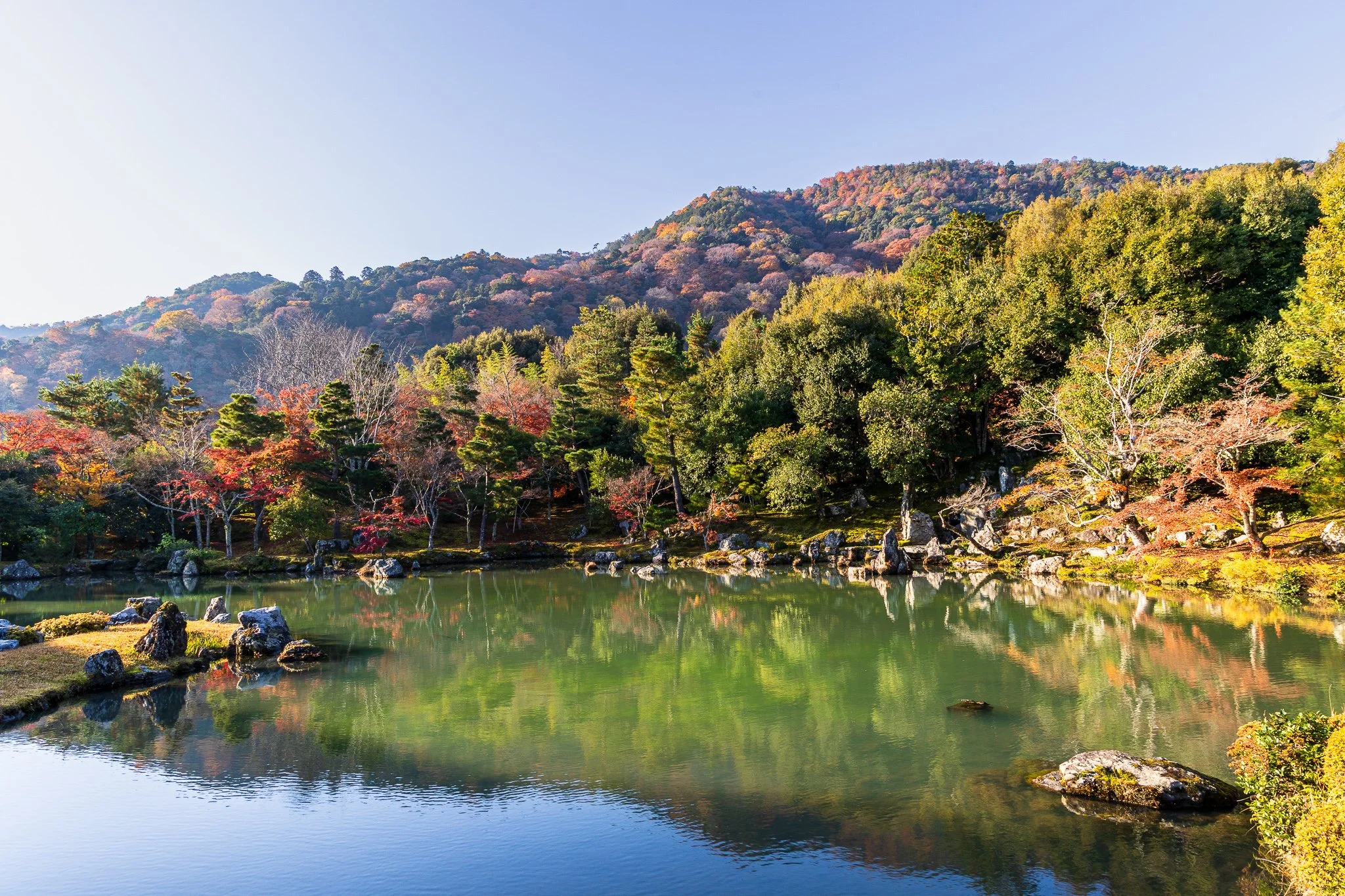
After the bamboo forest, I visited Tenryū-ji, one of the most important temples in Arashiyama and a UNESCO World Heritage Site. It is a head temple of the Rinzai Zen school and is especially known for its beautiful Sōgenchi Garden.
Designed by Zen master Musō Soseki, Sōgenchi Garden is famous for its use of shakkei, or “borrowed scenery,” incorporating the surrounding mountains into the garden’s design. The garden is especially beautiful in spring and fall, when seasonal colors transform the landscape.
The gardens open at 7:30am, while the temple hall opens at 8:30am. Admission is ¥500 for the gardens only or ¥800 for the gardens and temple.
I opted to visit only the gardens. I arrived around 8:00am and spent about an hour wandering the grounds before continuing on to Jōjakkō-ji.
Jōjakkō-ji
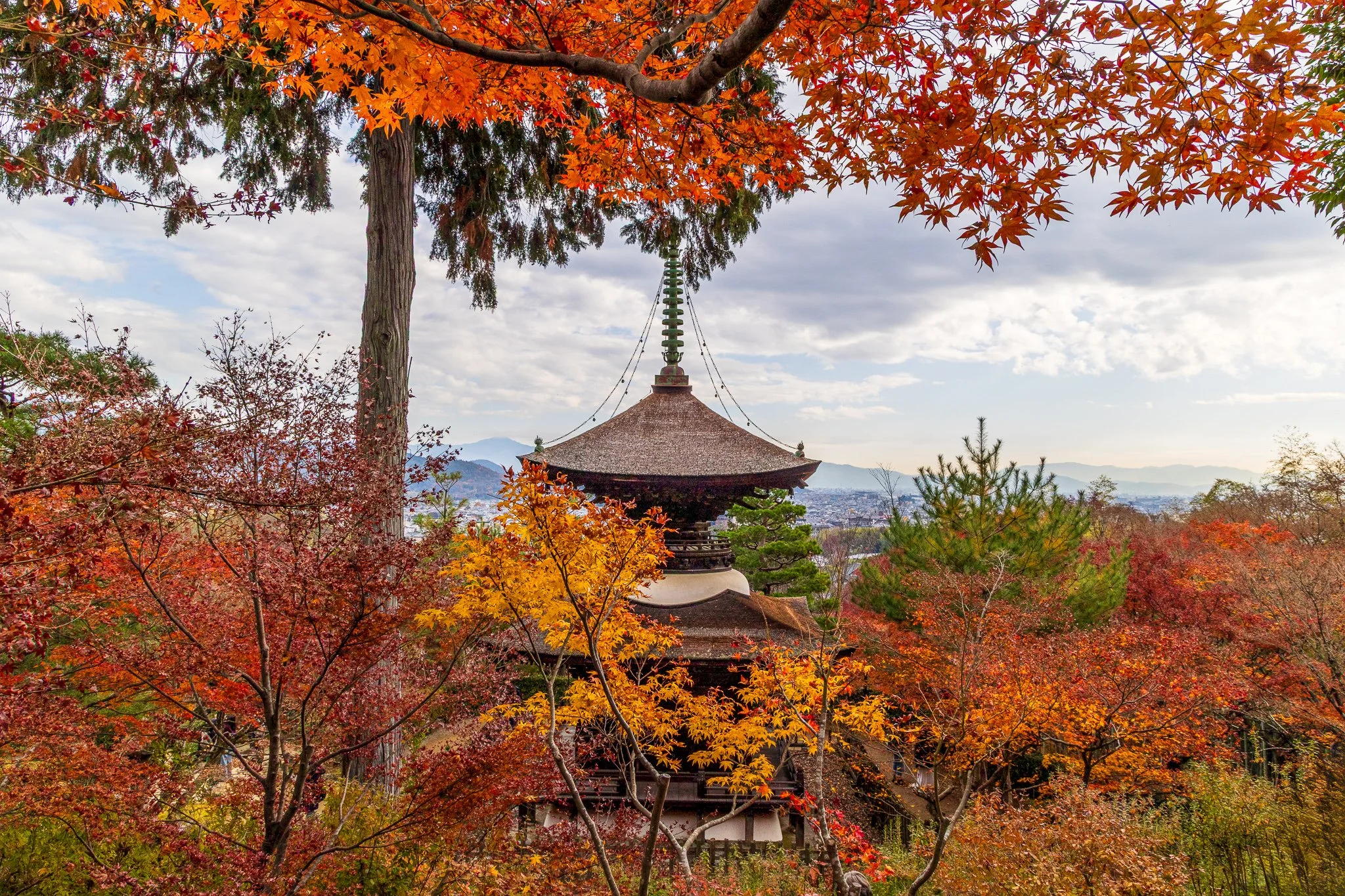
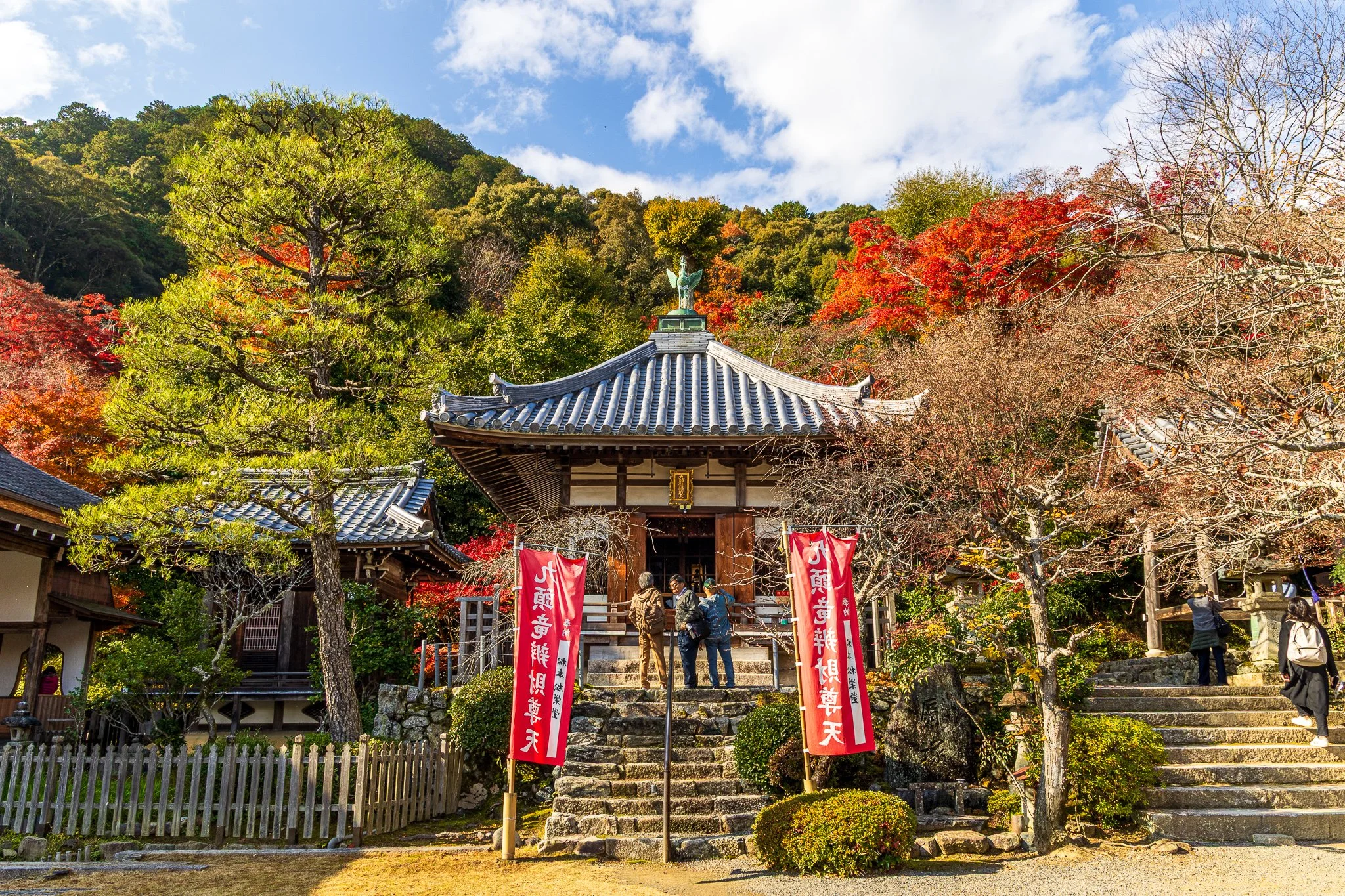
Next, I visited Jōjakkō-ji, located on the slopes of Mount Ogura, about a 10-minute walk from Tenryū-ji. This temple is especially popular in autumn, when the surrounding maple trees turn brilliant shades of red and orange.
The temple is open from 9:00am to 5:00pm, and admission is ¥500.
I arrived around 9:45am and spent about an hour walking through the hillside temple grounds, taking photos, and enjoying the fall colors.
Nison-in
From Jōjakkō-ji, I continued on to Nison-in, another mountainside temple in the Arashiyama area, located about a 5-minute walk away. The name Nison-in refers to the temple’s two principal Buddhist images, and the temple is also known for its peaceful approach and beautiful autumn foliage.
Compared to Jōjakkō-ji, Nison-in has slightly larger buildings and also offers lovely views over Kyoto.
The temple is open from 9:00am to 4:30pm, and admission is ¥500.
I arrived around 10:45am and spent about 45 minutes walking around the grounds.
Giō-ji was next on my temple itinerary walk. Before heading there, I stopped at ucacoceramics for a snack and a short break to rest my feet.
Gio-ji
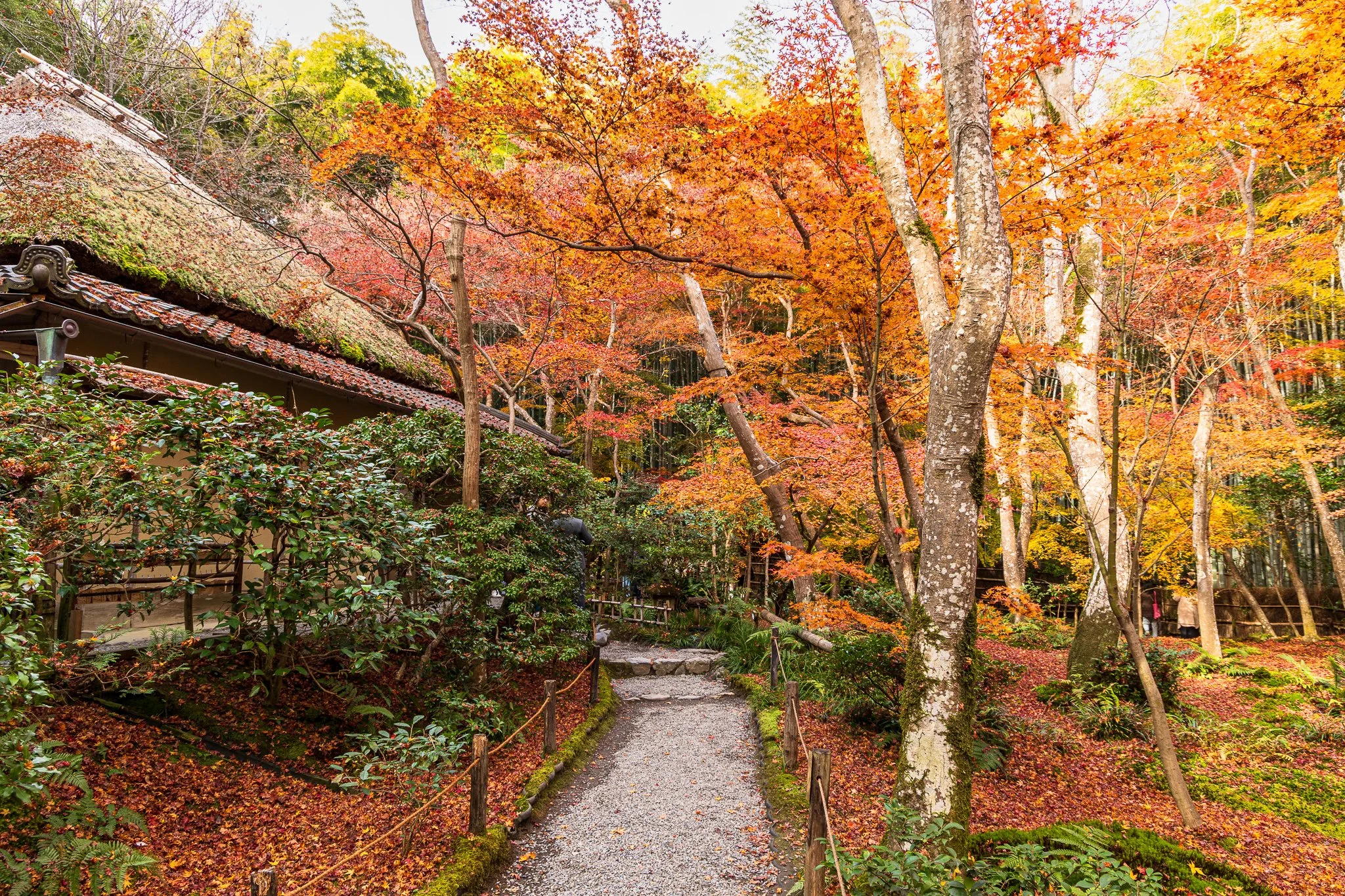
After my much-needed snack break, I visited Giō-ji, a quiet temple tucked into the forest about a 5-minute walk away. It is best known for its lush moss garden, maple trees, and traditional thatched-roof hall, making it feel like a peaceful hidden gem compared to some of the busier temples in Arashiyama.
The temple is open from 9:00am to 5:00pm, and admission is ¥300.
I arrived around 12:20pm and spent about 30 minutes walking the grounds before continuing on to Adashino Nenbutsu-ji.
Adashino Nenbutsu-ji
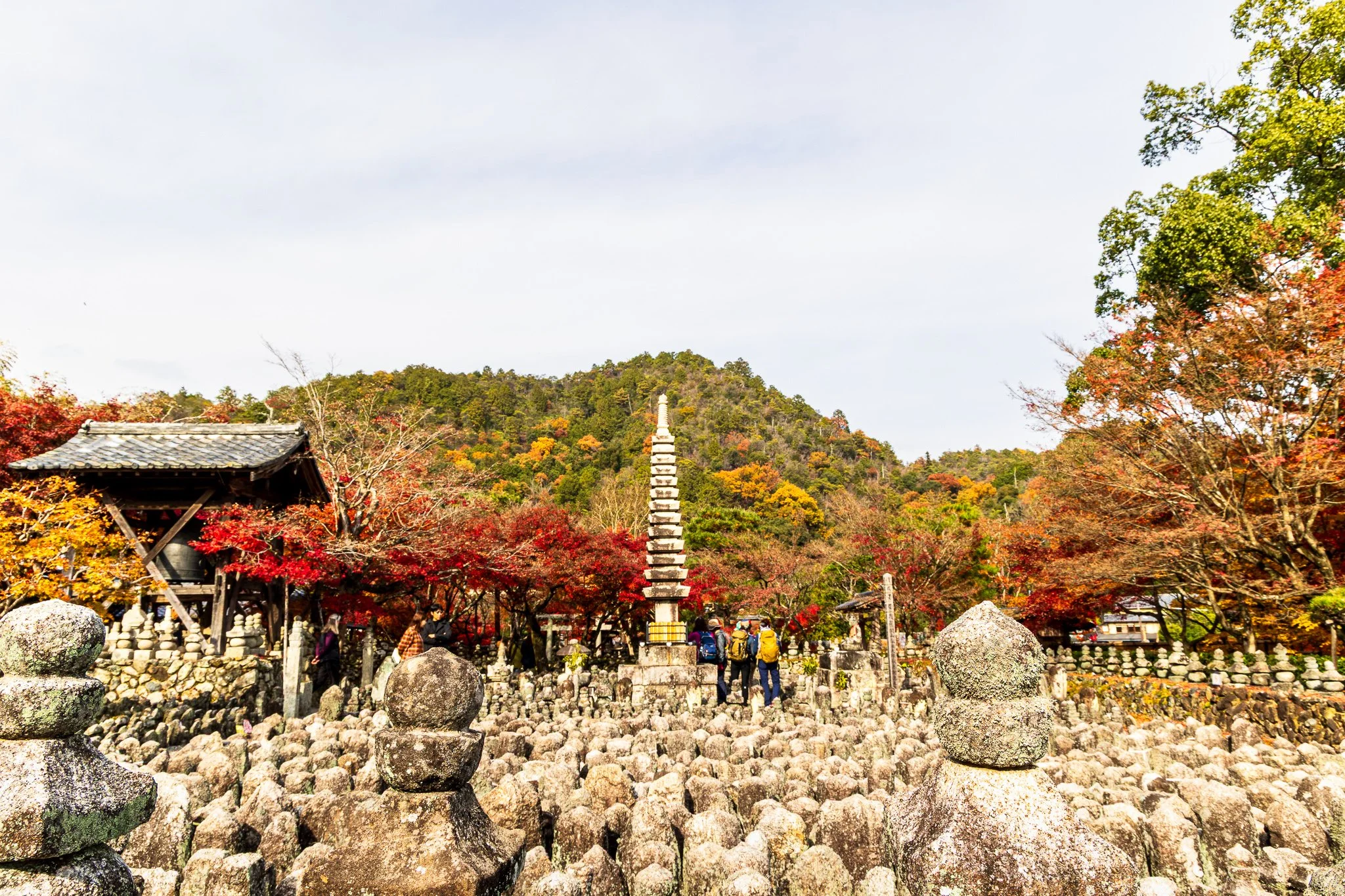
From Giō-ji, I continued on to Adashino Nenbutsu-ji, about a 10-minute walk away. It is a Buddhist temple known for its thousands of small stone Buddhist statues, arranged in rows and dedicated to souls who died without family to remember them. The temple also has a peaceful bamboo grove, which felt much quieter than the famous Arashiyama Bamboo Forest earlier in the morning.
The temple is open from 9:00am to 4:30pm, and admission is ¥500.
I arrived at the temple around 1:00pm and spent about 45 minutes there before continuing onto Otagi Nenbutsu-ji.
Otagi Nenbutsu-ji
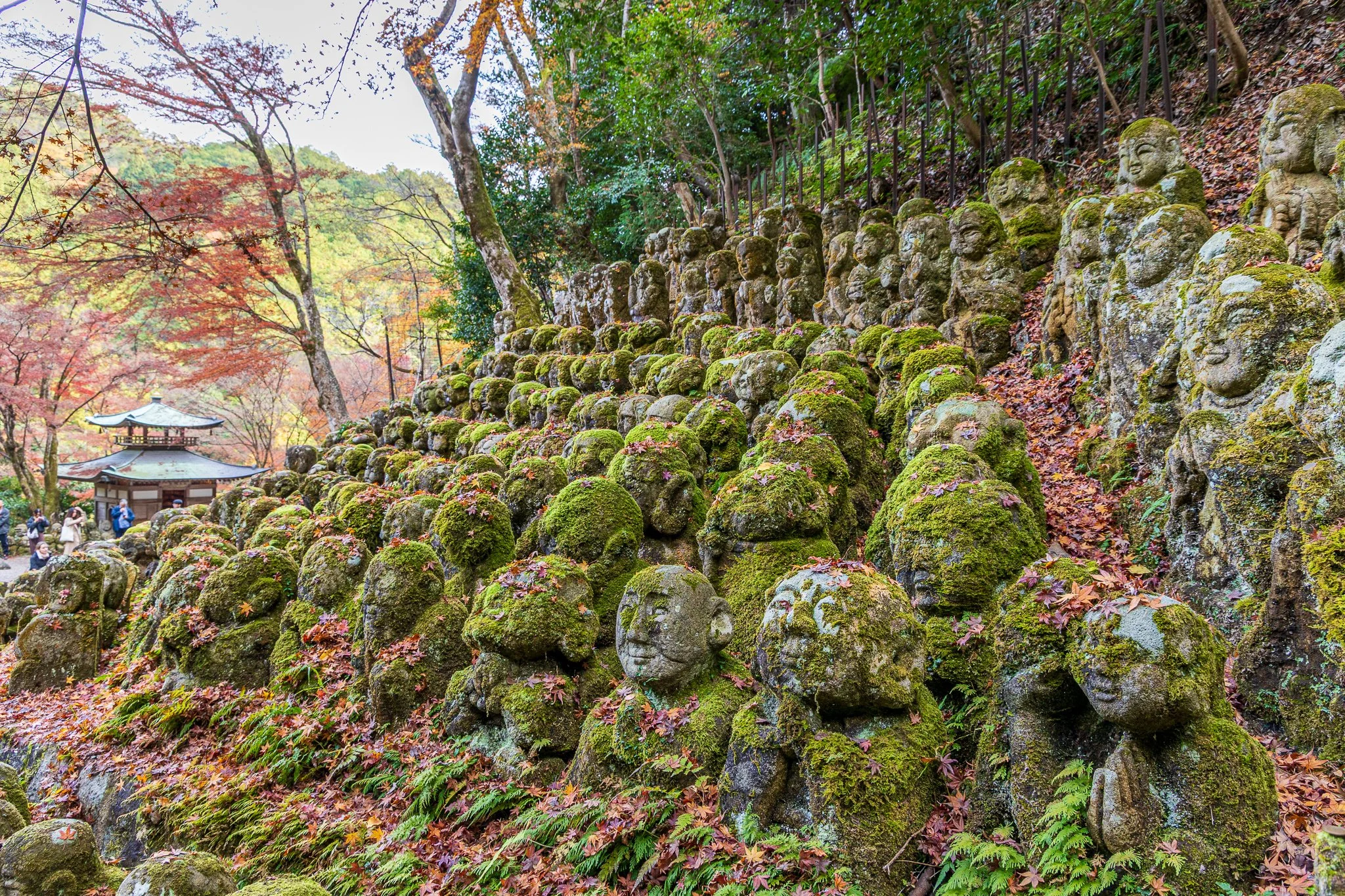
From Adashino Nenbutsu-ji, I walked about 10 minutes to Otagi Nenbutsu-ji, one of the most unique temples I visited in Kyoto. The temple is known for its 1,200 moss-covered rakan statues, each with a different facial expression or pose. The statues were carved by many different people, which explains why each one feels so distinct and full of personality.
The temple is open from 9:00am to 4:00pm, and admission is ¥1,000 for visitors aged 10 and older.
I arrived at the temple around 2:00pm and spent around 30 minutes wandering through the grounds before heading back toward central Arashiyama.
Commuting back to Central Arashiyama area
To get back to central Arashiyama, I took Kyoto Bus Route 90 from a stop across the street from Otagi Nenbutsu-ji. Route 90 runs south toward central Arashiyama, while Route 94 runs north toward Kiyotaki, with stops along the way including Daikaku-ji and Saga Shakadō. Both routes operate on a seasonal schedule, primarily during the spring and autumn peak foliage seasons, so it’s worth checking the current schedule before relying on either bus.
I got off at the Arashiyama Koen stop and walked to Arashiyama Monkey Park Iwatayama. The entire commute took about 20 minutes.
Arashiyama Monkey Park Iwatayama
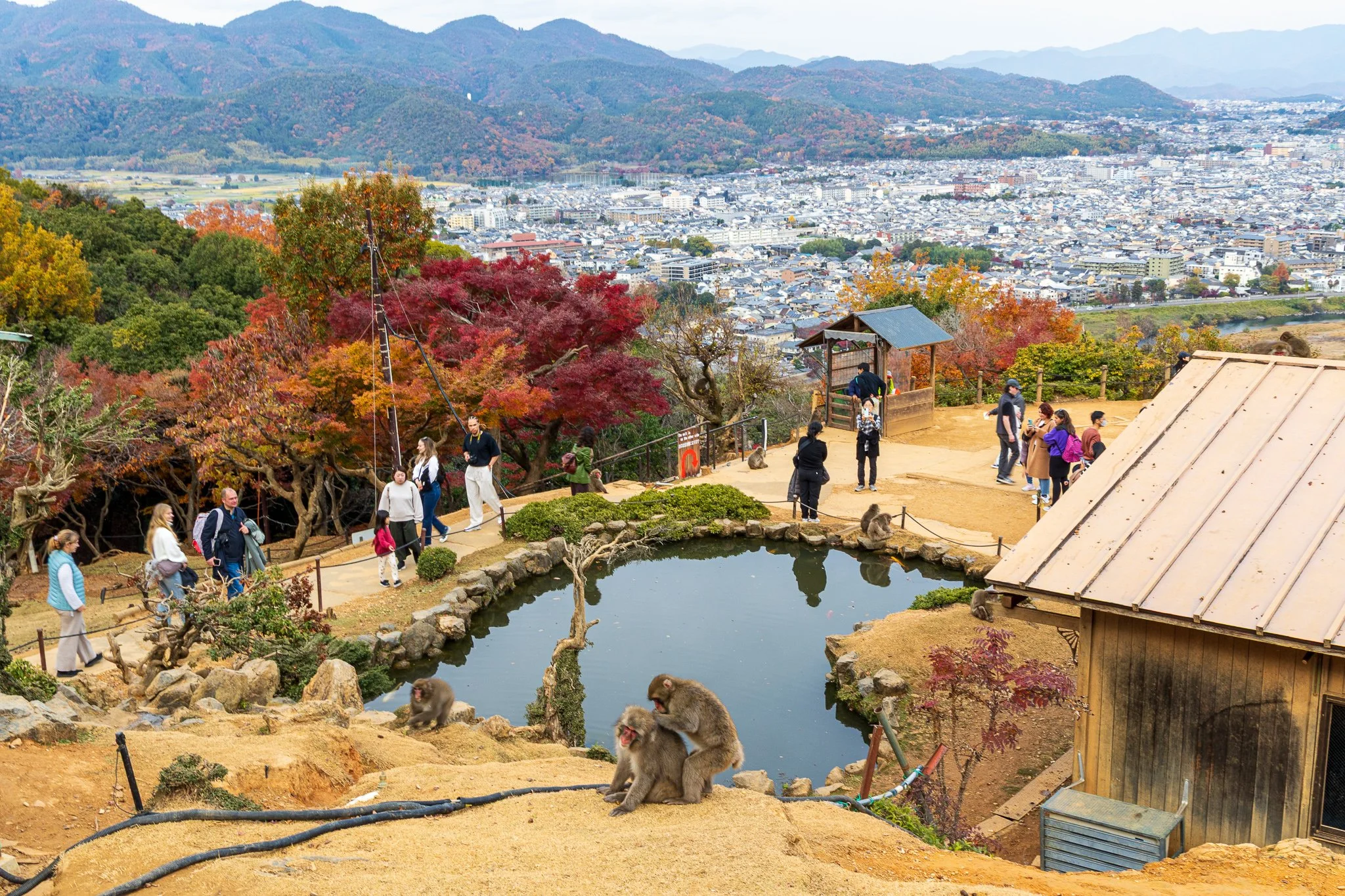
I arrived at the Arashiyama Monkey Park Iwatayama around 3:00pm. The park is open from 9:00am to 4:00pm, and admission is ¥800. One thing to note is that they only accept Japanese yen, so it’s worth having cash on hand before you arrive.
Getting to the top requires a 20–25 minute uphill walk, but once you reach the viewing area, you’re rewarded with monkeys roaming around and beautiful views over Kyoto.
I spent about 30 minutes at the top watching the monkeys and taking photos of Kyoto from above before making the 20-minute walk back down toward the Togetsukyō Bridge area.
Togetsukyo Bridge area
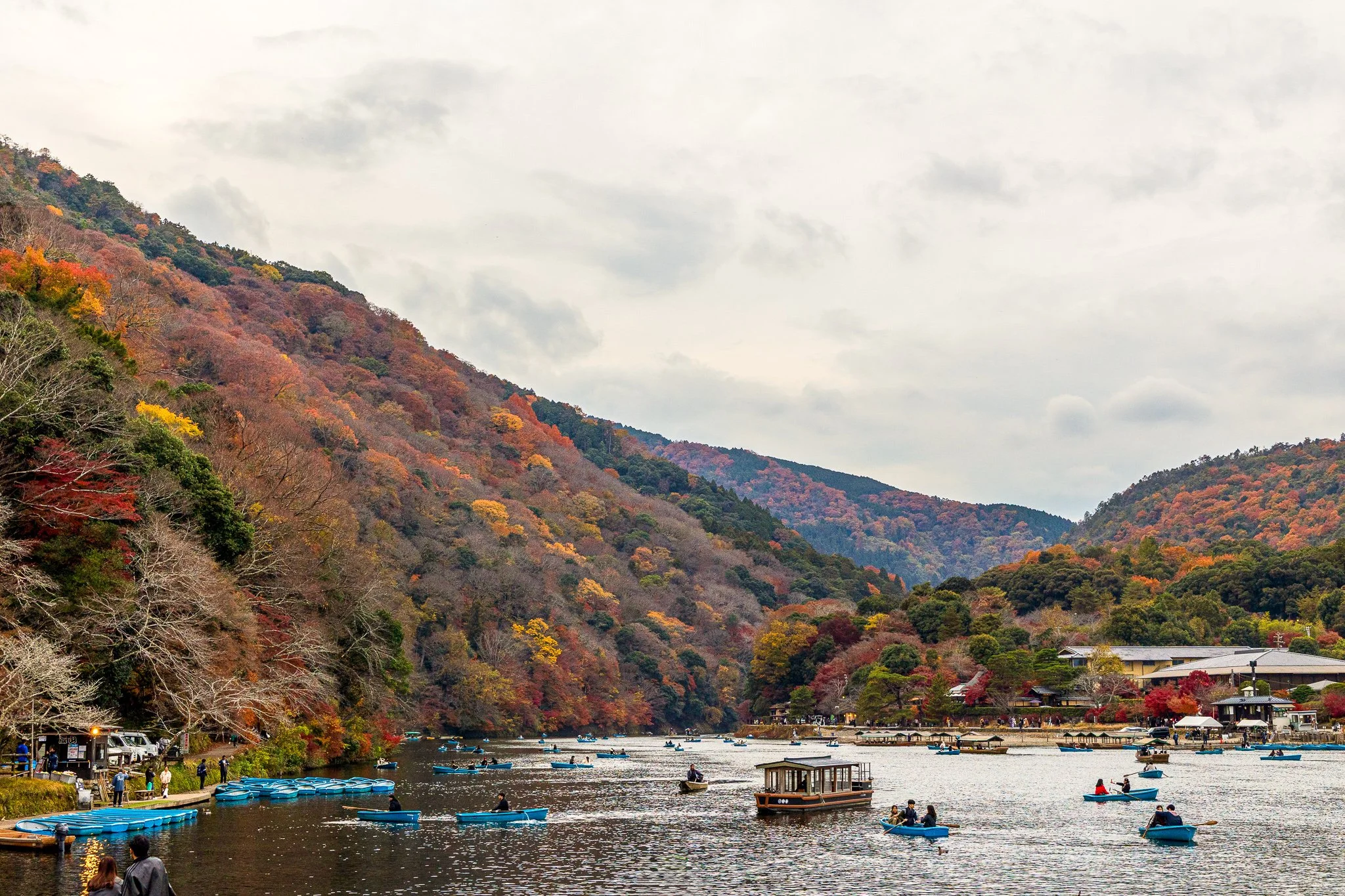
After visiting the monkey park, I walked toward the Togetsukyō Bridge area, one of the most iconic spots in Arashiyama. The bridge spans the Katsura River and is known for its beautiful views of the river, surrounding mountains, and forested hillsides.
The area is especially popular during cherry blossom season and autumn foliage season, when the scenery becomes even more picturesque. Since the bridge is also a main thoroughfare for both pedestrians and cars, it can get very busy, but it’s still worth visiting for the classic Arashiyama views.
It was a nice place to wrap up my time in Arashiyama before heading back to central Kyoto for dinner.
Dinner at Gion Duck Rice
I left the Arashiyama District around 4:30pm and made my way to dinner near Gion. From Arashiyama Station, I took the Hankyu Arashiyama Line to Katsura Station, then transferred to the Hankyu Kyoto Line Limited Express to Kyoto-Kawaramachi Station. From there, I walked to Gion Duck Rice, arriving around 5:30pm.
Gion Duck Rice does not take reservations, and wait times typically range from 45 to 90 minutes. The restaurant is tiny, with fewer than 10 counter seats, so long lines are very common. Luckily, I only waited about 40 minutes and was seated at 6:05pm.
The food was so good! I ordered the signature duck rice set and a bottle of CRAFT (Takara Craft) regional chu-hi. It was a wonderful way to end the day.