Day 11: Day 4 in Kyoto - Fushimi, Northern Kyoto, and Central Kyoto
On Tuesday, December 2, I spent the day exploring several areas of Kyoto, starting at Fushimi Inari Taisha and Tōfuku-ji in southern Kyoto before heading to Kinkaku-ji in northwestern Kyoto and gradually making my way back toward central Kyoto to visit Nijō Castle and Kyoto Tower.
Fushimi Inari Taisha
I started my morning at Fushimi Inari Taisha, an important Shinto shrine in southern Kyoto and one of the most iconic places to visit in the city. The shrine is especially famous for its thousands of vibrant vermilion torii gates, which wind their way up Mount Inari.
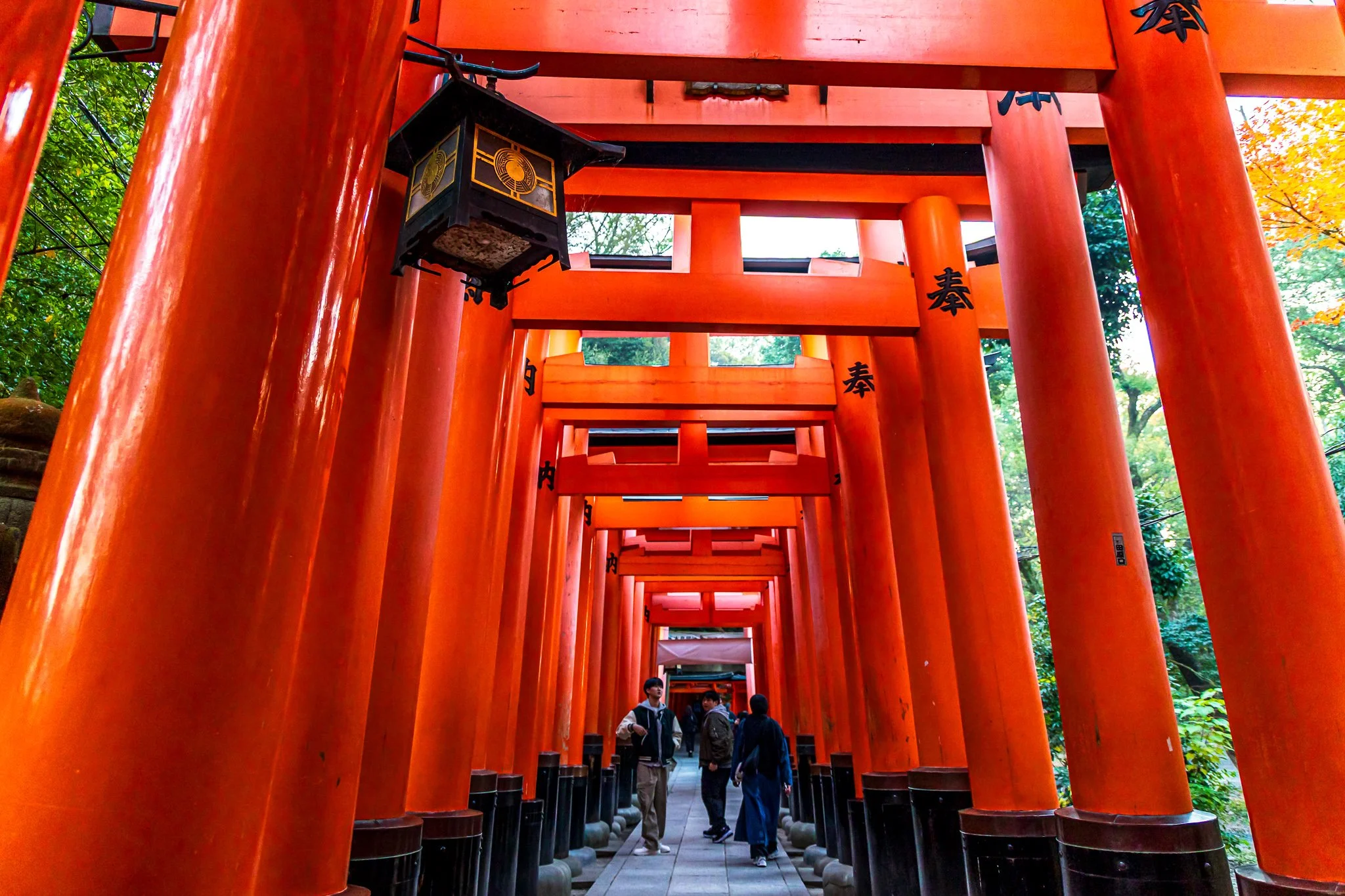
Because Fushimi Inari Taisha is such a popular place to visit, it can get very crowded. I decided to arrive around 7:00am to try to experience the shrine before the biggest crowds arrived, and I’m glad I did. It was not nearly as crowded that early in the morning, which made walking through the torii gates feel much more peaceful.
At Fushimi Inari Taisha, foxes, or kitsune, are revered as the sacred messengers of Inari, the Shinto god of rice, agriculture, and business success. Throughout the shrine grounds and along the mountain trail, you’ll see pairs of fox statues near the paths, altars, and smaller shrine areas.
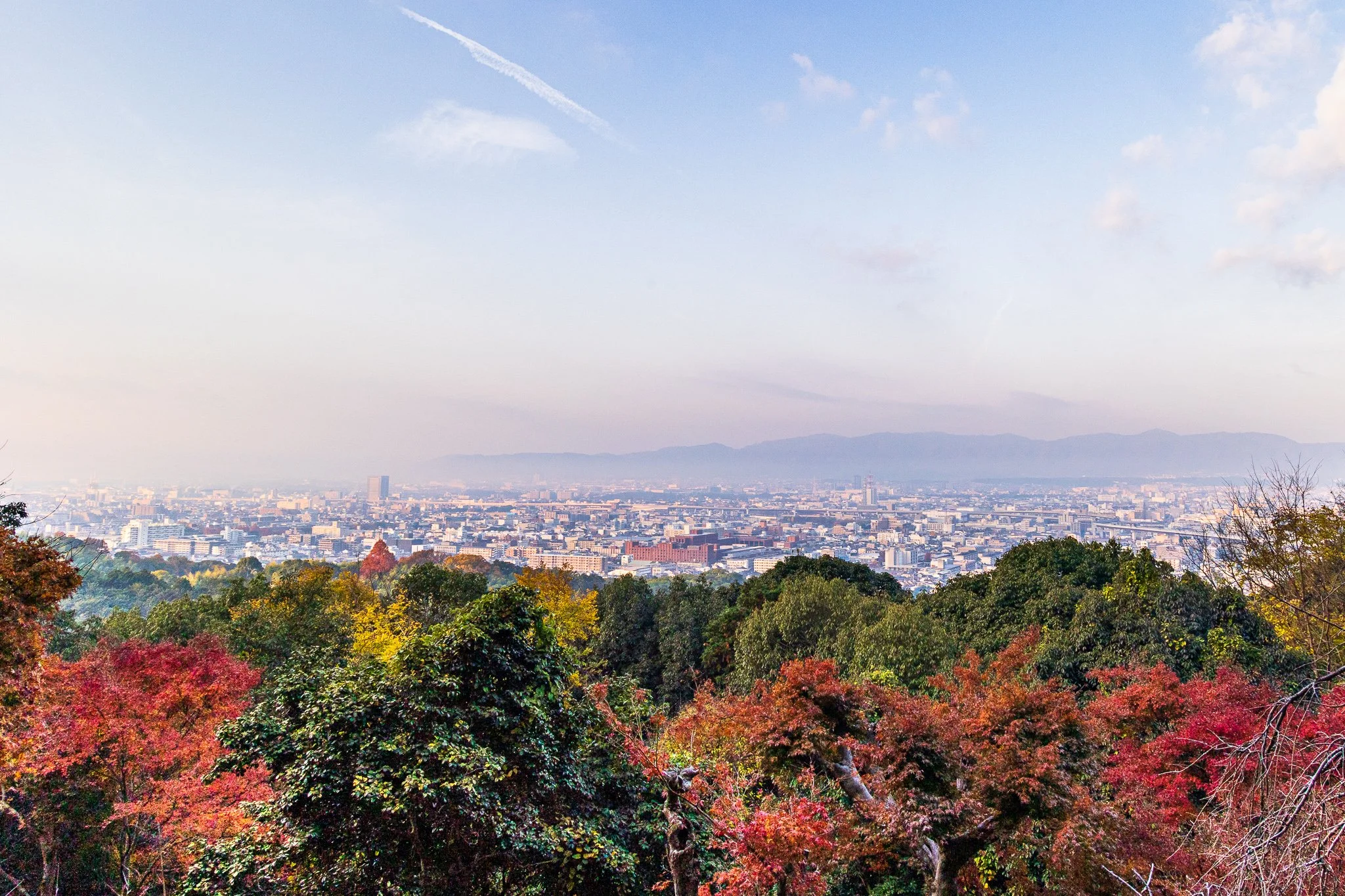
The full trail up Mount Inari is about 2.5 miles and features thousands of torii gates winding through the forest. I hiked as far as the Yotsutsuji Intersection, which sits roughly halfway up the mountain. It typically takes about 30 to 45 minutes of uphill climbing to reach this point from the shrine’s main entrance.
The Yotsutsuji Intersection is a popular stopping point because it offers one of the best open views of southern Kyoto along the trail. From there, the path splits into a loop that continues toward the summit of Mount Inari. Since the upper portion of the trail is more forested and has fewer wide-open views, many visitors choose to turn around at Yotsutsuji.
After reaching the Yotsutsuji Intersection and taking in the view, I headed back down the mountain and walked to Tōfuku-ji Temple.
Tōfuku-ji
It took about 20 minutes to walk from the base of Fushimi Inari Taisha to Tōfuku-ji, and I arrived around 8:45am.
Tōfuku-ji is one of Kyoto’s oldest and most famous Zen temples, best known for its spectacular autumn foliage. The temple grounds are large, with several halls, gardens, and bridges spread throughout the complex.
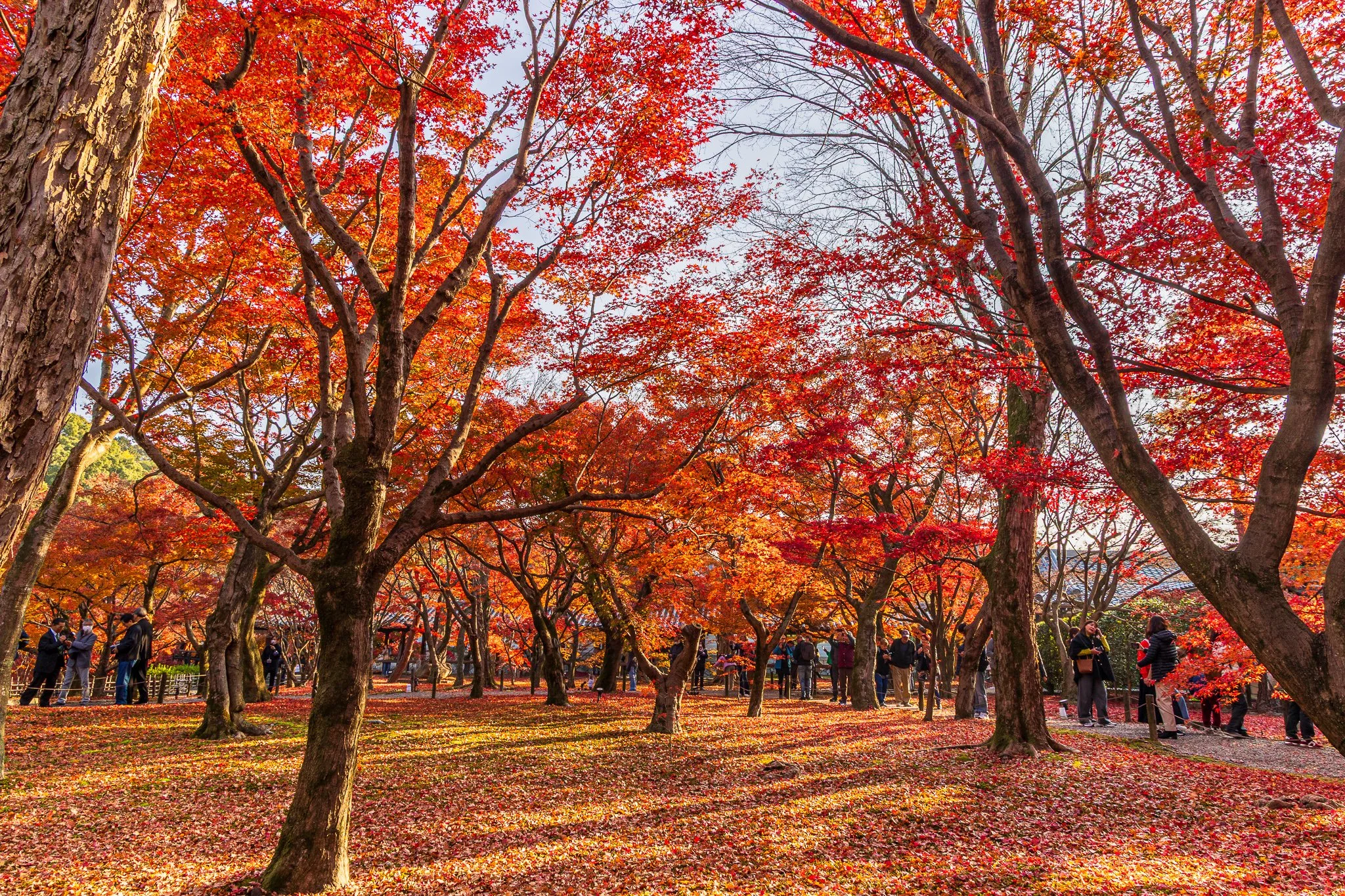
It is also one of Kyoto’s most popular places to visit in the fall, and it was already fairly crowded by the time I arrived. The main attraction is the iconic Tsūtenkyō Bridge, which offers a breathtaking view over a valley filled with maple trees that turn brilliant shades of red, orange, and gold.
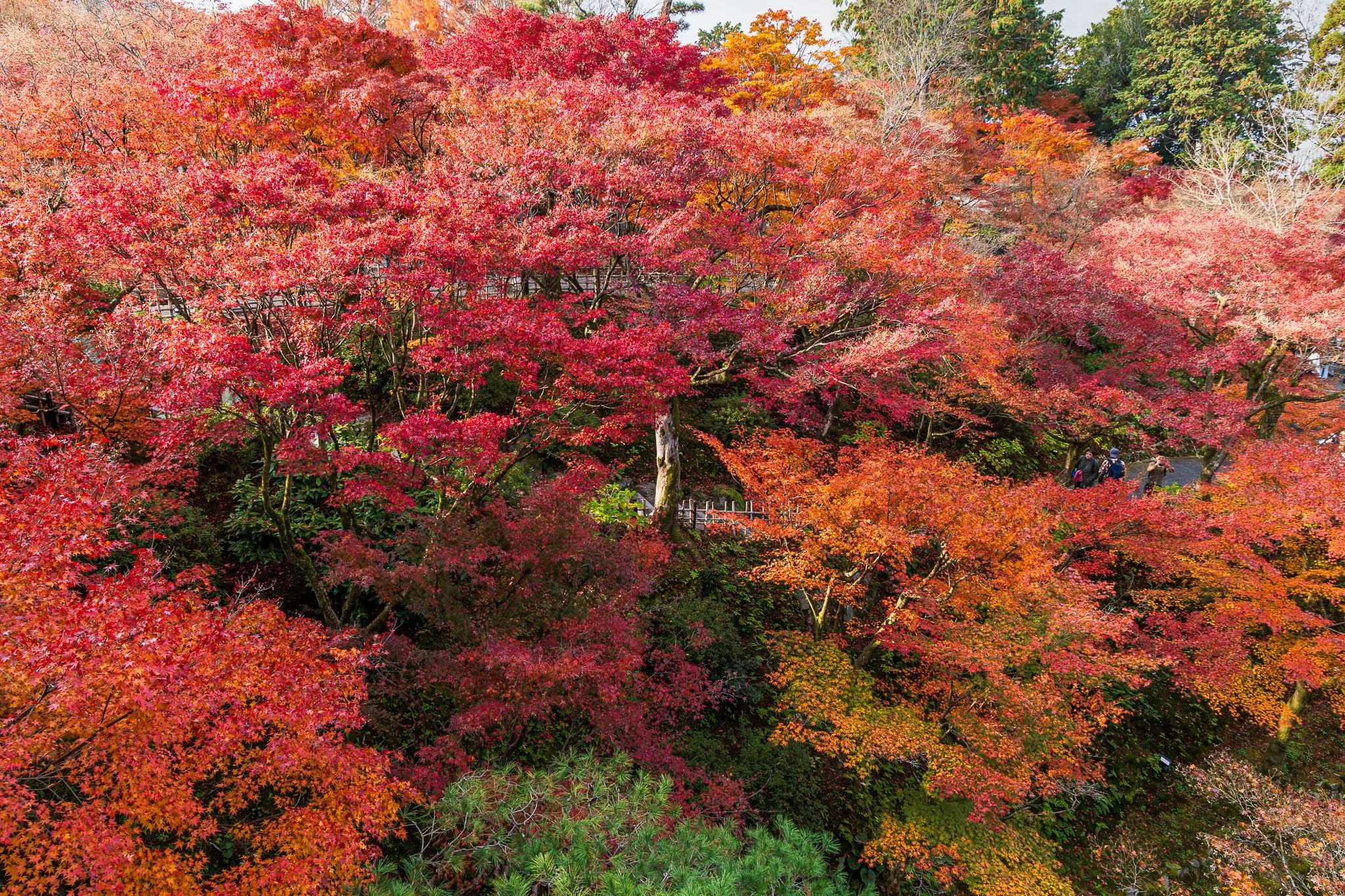
Entrance to the main temple grounds is free, but some areas require a separate admission fee, including the Tsūtenkyō Bridge area and the temple gardens. You can pay ¥400 to cross Tsūtenkyō Bridge, or view it from Gaunkyō Bridge, the pedestrian bridge many visitors cross on their way into the temple. I opted to pay the fee to cross the bridge and was very grateful I did.
I spent about 45 minutes wandering the grounds, taking photos, and enjoying the beautiful fall colors.
Kinkaku-ji (Golden Pavilion)
Kinkaku-ji, also known as the Golden Pavilion, was next on my list. Since it is located in northern Kyoto and getting there from Tōfuku-ji by public transit would have required both a train and bus, I decided to take a taxi instead.
I left Tōfuku-ji around 9:35am, and luckily there were two taxis waiting nearby. The ride cost ¥5,300, and I arrived at Kinkaku-ji around 10:15am.
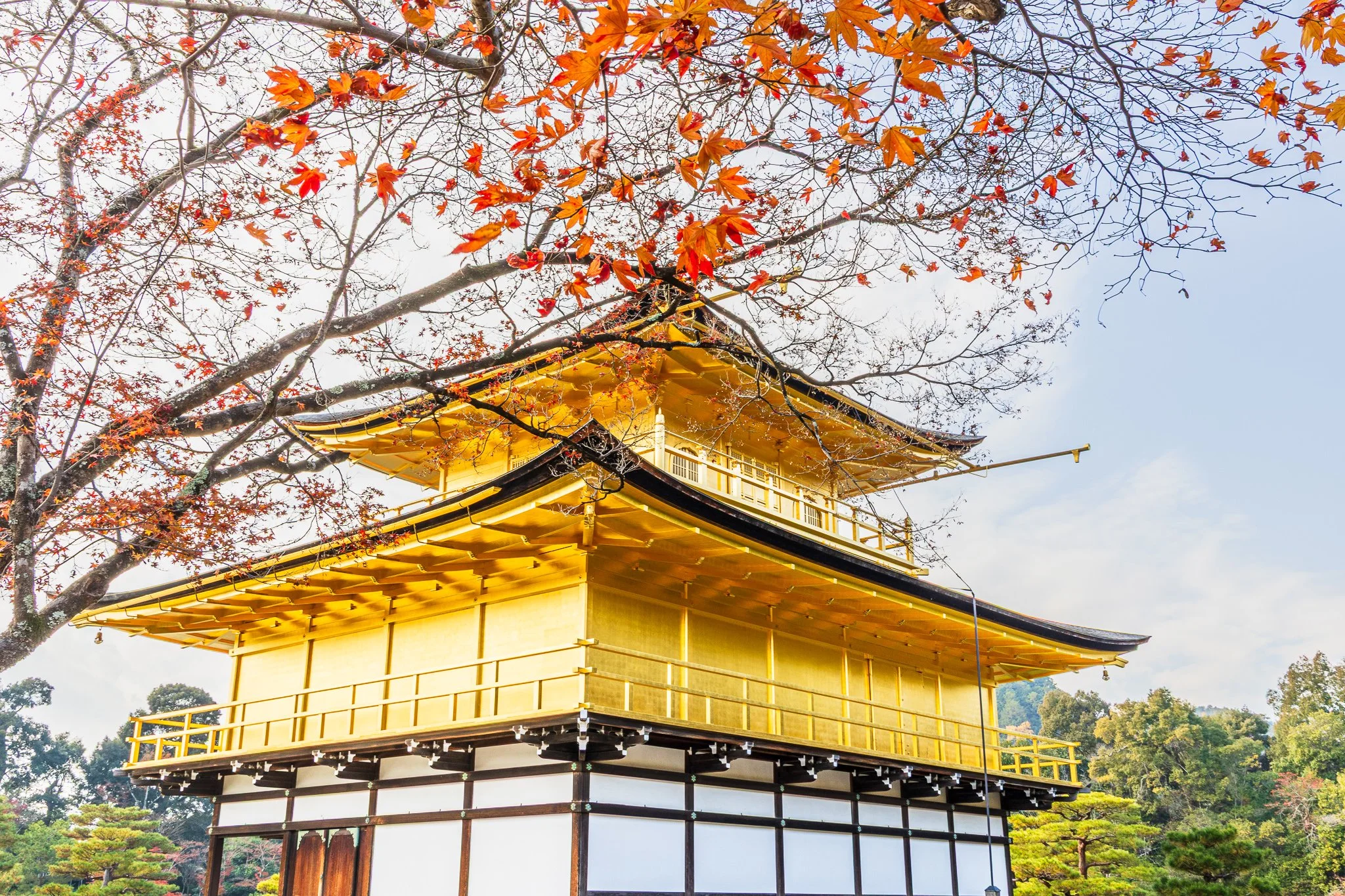
Kinkaku-ji, officially known as Rokuon-ji, is one of Kyoto’s most iconic landmarks and is part of the UNESCO-listed Historic Monuments of Ancient Kyoto. The Zen Buddhist temple is best known for its three-story pavilion, with the top two floors completely covered in gold leaf. The pavilion sits beside Kyōko-chi Pond, also known as Mirror Pond, where its reflection creates one of the most classic views in Kyoto.
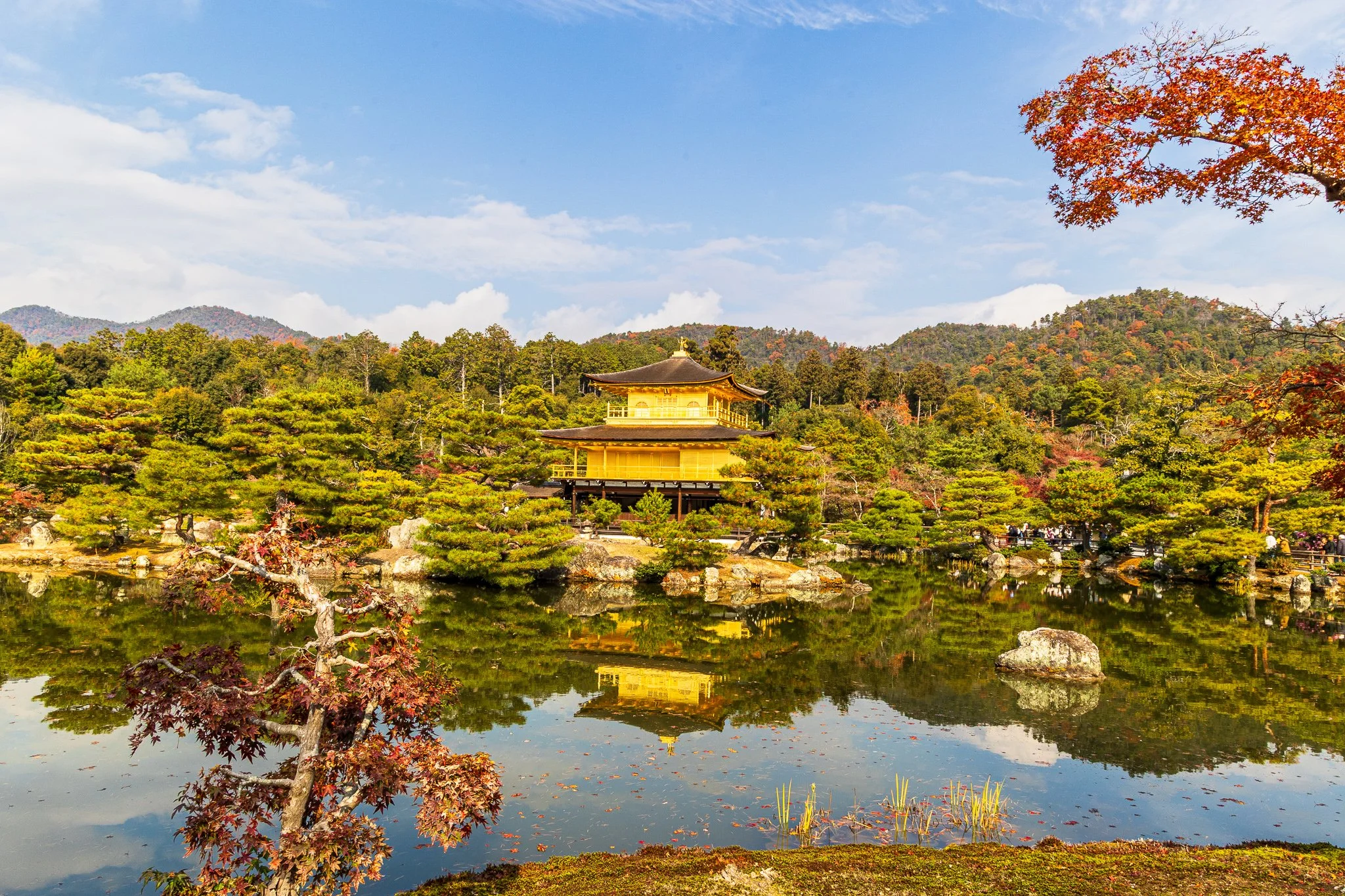
The temple is open from 9:00am to 5:00pm, and admission is ¥500.
I spent about 45 minutes at Kinkaku-ji, photographing the Golden Pavilion from different angles and capturing its reflection in Kyōko-chi Pond. After wandering through the gardens, I stopped for a matcha soft-serve ice cream cone before taking a taxi to Nijō Castle.
Nijō Castle
Nijō Castle was next on my list. From Kinkaku-ji, I took a bus to the castle, continuing my route from northern Kyoto back toward the central part of the city.
Built in 1603, Nijō Castle served as the Kyoto residence of Tokugawa Ieyasu, the first shogun of the Edo Period. It is now part of the UNESCO-listed Historic Monuments of Ancient Kyoto and offers a very different look at Kyoto’s history compared to the temples and shrines I had visited earlier in the day. While Kyoto is often associated with temples, shrines, and traditional gardens, Nijō Castle showcases the power, wealth, and political influence of the Tokugawa shogunate during the Edo Period.
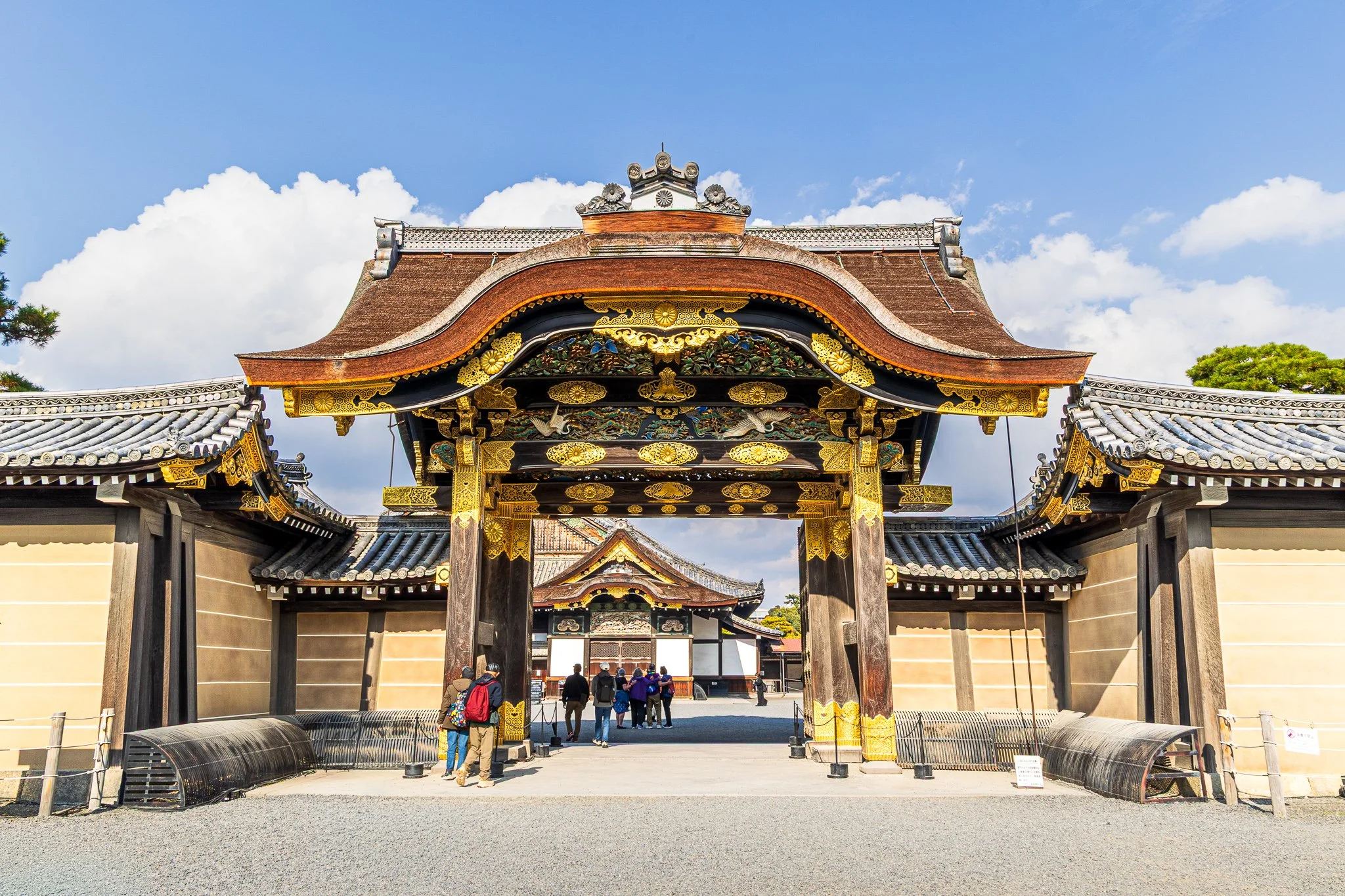
The castle grounds are divided into several main areas, including Ninomaru Palace and Garden, Honmaru Palace and Garden, the Plum and Cherry Grove, and Seiryū-en Garden. I started my walking route at Karamon Gate, the ornate Chinese-style gate that leads toward Ninomaru Palace. I did not go inside the palace, but I enjoyed walking around the surrounding gardens.
Ninomaru Garden is a classic Japanese garden centered around a large pond with carefully placed islands, stone bridges, and small waterfalls. It was such a beautiful and peaceful area to walk through.
After walking past the gardens, I continued through Honmaru Yagura-mon Gate to the Honmaru Palace area, located within the castle’s inner circle of defense and surrounded by stone walls and a moat. I did not go inside Honmaru Palace, but I wandered around the grounds and enjoyed seeing this quieter part of the castle complex.
One thing to note is that Honmaru Palace requires a separate ticket, and tickets must be purchased in advance through Nijō Castle’s website due to limited daily capacity. Adult tickets cost ¥1,000 and go on sale 30 days in advance, so it’s worth planning ahead if you want to visit the interior.
Next, I made my way to the stone foundation ruins of the castle tower keep, where I could get elevated views over the castle complex. It was beautiful to see the grounds from above.
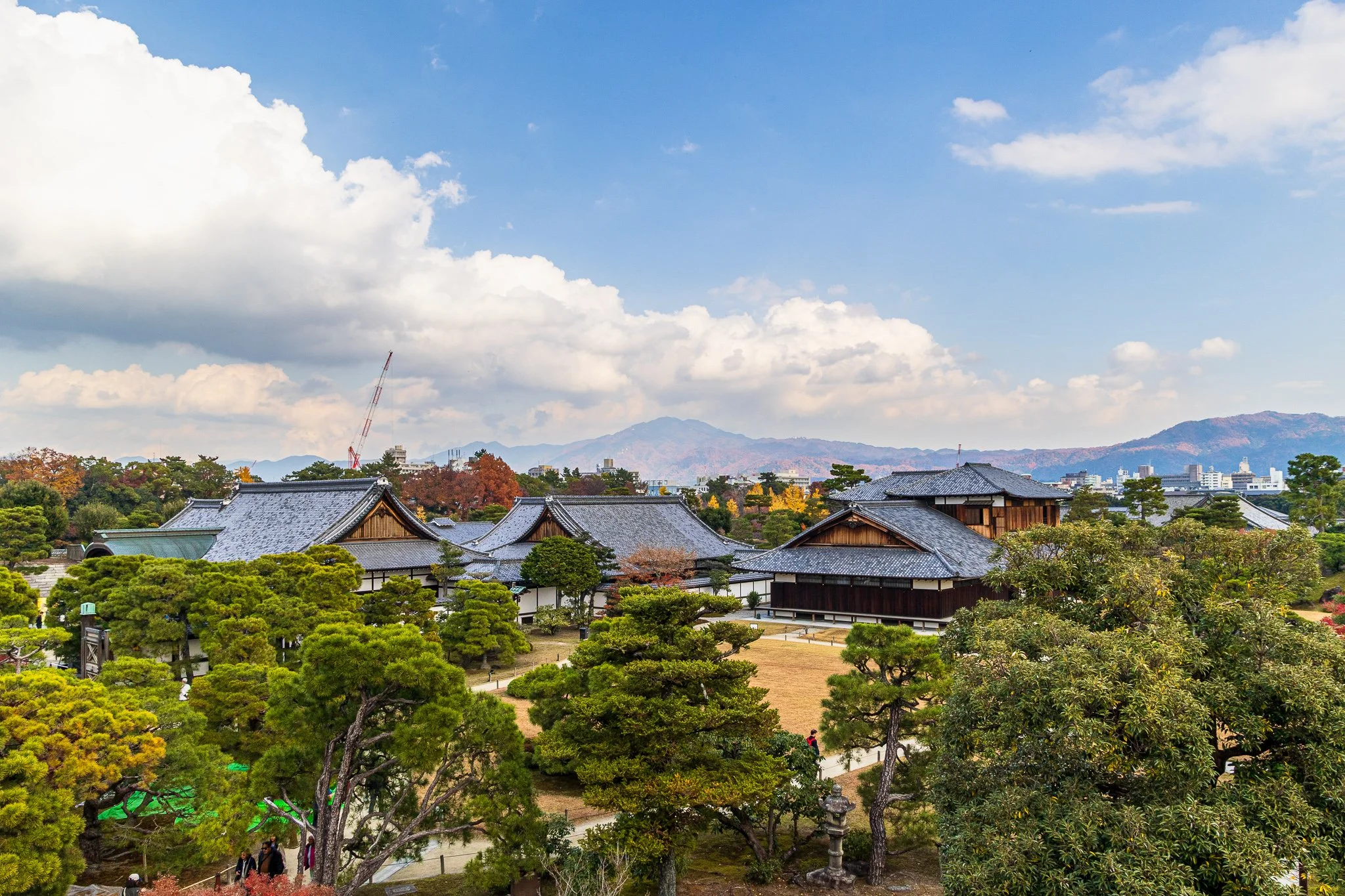
I then wandered through Seiryū-en Garden, a peaceful garden area with a tea house and café, before leaving through Higashi Ōtemon Gate.
I arrived around 12:30pm and spent almost two hours exploring Nijō Castle before taking a bus to Kyoto Tower.
Kyoto Tower
Located directly across from Kyoto Station, Kyoto Tower is the tallest structure in the city, standing 131 meters tall with an observation deck at 100 meters.
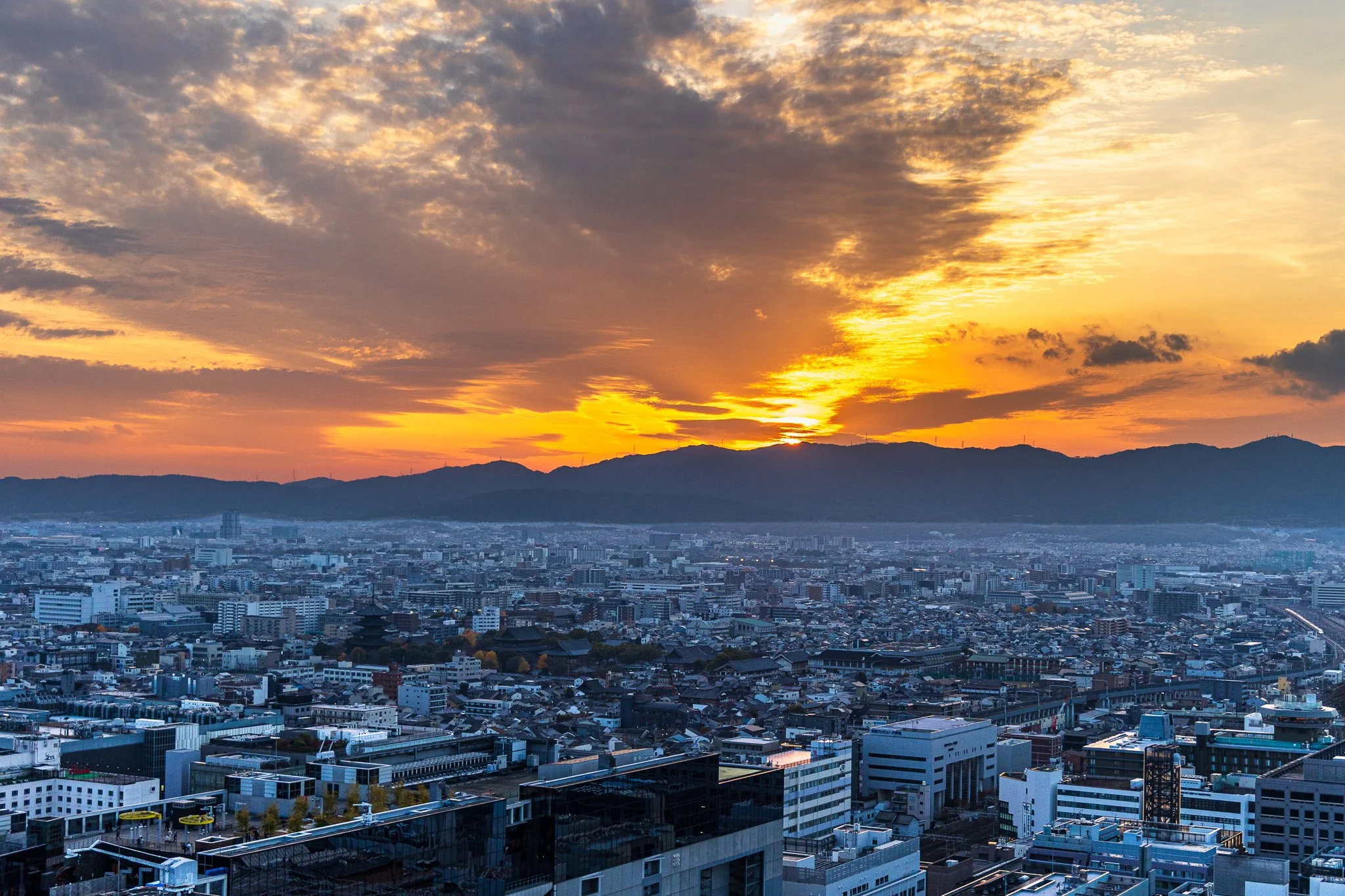
Because Kyoto does not have many tall buildings, the tower offers a rare 360-degree view over the city, surrounding mountains, and historic skyline. On a clear day, you can see many of Kyoto’s major landmarks from above, making it a helpful way to get a better sense of the city’s layout.
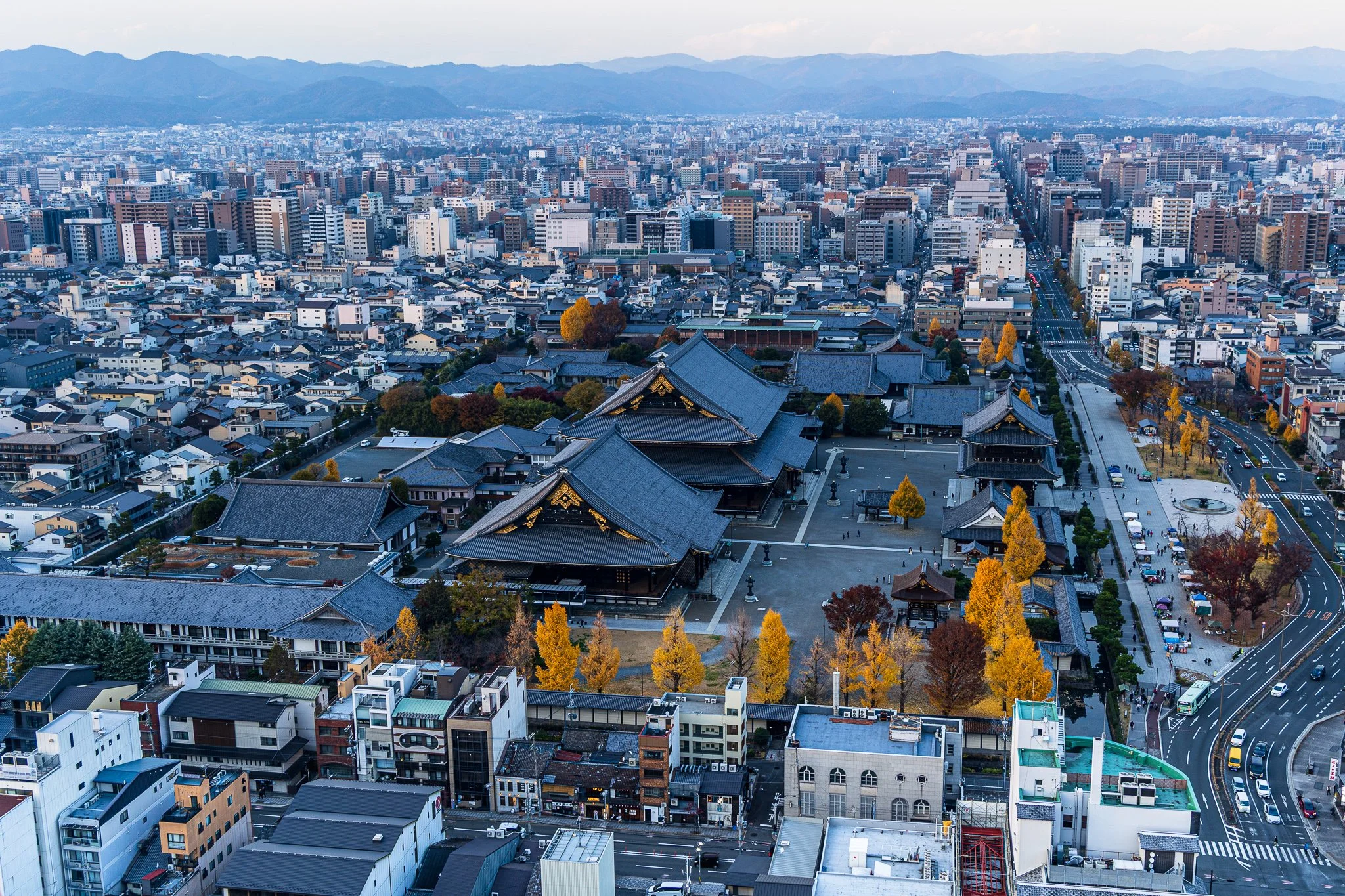
The observation deck is fully enclosed, so window reflections and glare can make photography a little tricky. Even so, it’s a great place to take in the city from above, especially if you want an easy viewpoint near Kyoto Station.
Admission to the observation deck is ¥900 for adults. I arrived around 4:00pm and spent about 30 minutes there before continuing on with the rest of my evening.
Drink at Kyoto Beer Lab
I had a 6:00pm dinner reservation that night at Sushiiwa Kyoto, but it was only around 4:30pm when I left Kyoto Tower. Since the restaurant was only about a 10-minute walk away, I had some time to spare and decided to wander around for a bit to find a cute spot for a drink before dinner.
I ended up at Kyoto Beer Lab, a small brewpub with a relaxed atmosphere and several of their own craft beers on tap. The staff were friendly, spoke enough English to help with recommendations, and suggested a few beers to try. They also had an outdoor patio, but I ended up sitting inside near the bar. They had some bar food available, though I skipped it since I had dinner plans.
It was a great place to relax and rest my tired feet before dinner.
Dinner at Sushiiwa Kyoto
While in Japan, I knew I wanted to try an omakase sushi course, and a friend recommended Sushiiwa Kyoto. Since they had reservations available, I made one ahead of time for 6:00pm.
When I arrived, I was seated at the sushi bar. It looked like I may not have needed a reservation that night, since I was the only person in the restaurant for a little while, but I was still glad I had made one, as it always feels better to be safe than sorry.
Sushiiwa Kyoto is an intimate sushi restaurant with a long history, known for serving classic nigiri sushi and seasonal seafood in a refined, traditional setting. Sitting at the sushi bar made the experience feel even more special, as I could watch each piece being prepared in front of me.
The food was absolutely delicious. Throughout the meal, I had several pieces of nigiri, including Japanese kingfish, red snapper, cod, eel, squid, yellowtail, and kinmedai, or golden eye snapper. I also had a bottle of sake and a glass of white wine with dinner.
One of the highlights was the care that went into each piece. The fish, rice, and presentation all felt simple but beautifully done, which made the meal feel memorable without being overly formal. It was such a special dinner and a wonderful way to end my last night in Kyoto.