Day 5: Day 4 in Tokyo - Chiyoda, Bunkyō, and Shiba Park
On Wednesday, November 26, 2025, I explored Hibiya Park, Imperial Palace East Gardens, Kitanomaru Park, Chidorigafuchi Moat, Yasukuni Shrine (all in the Chiyoda neighborhood), Koishikawa Korakuen Gardens in Bunkyo, and Tokyo Tower in Shiba Park.
Hibiya Park
After breakfast, once again the viral egg salad sandwich and muscat grapes, I left Hotel Sunroute Plaza Shinjuku around 7:00am. I took the Marunouchi Line from Shinjuku Station to Kasumigaseki Station, arriving at Hibiya Park around 7:45am.
Hibiya Park is Japan’s first Western-style park and feels like a peaceful40-acre oasis in the heart of Tokyo. Opened in 1903, it was once part of a feudal lord’s estate and still preserves Edo-period stone walls and remnants of the old moat, now a pond where ducks and herons gather. The park is open 24 hours a day and is free to enter, making it an easy and relaxing early-morning stop.
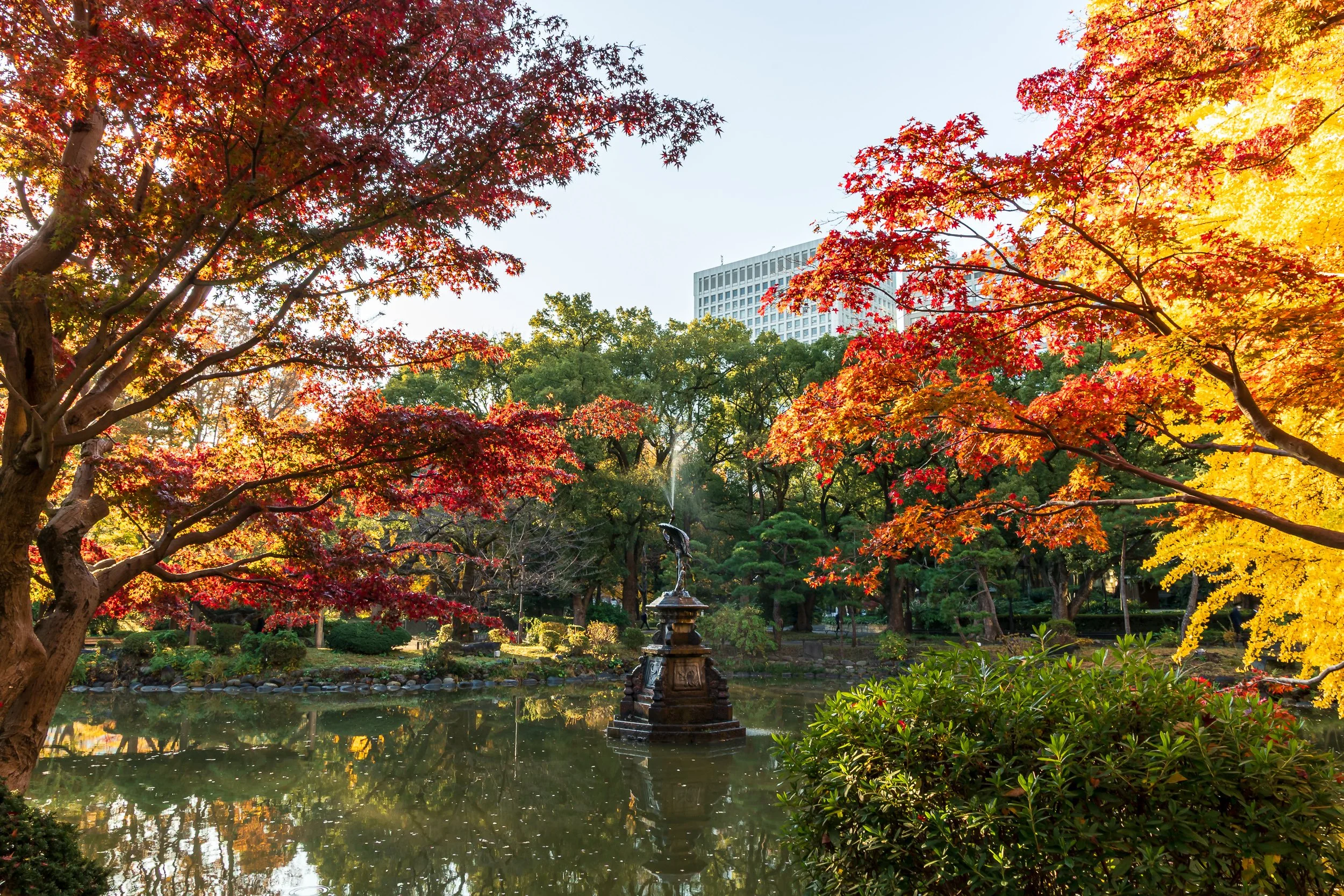
In the fall, Hibiya Park is especially beautiful, with a mix of tree varieties showcasing a full spectrum of autumn colors. The park was quiet at that early hour, making it a popular spot for locals to relax before work. Kumogata Pond, with its distinctive crane fountain, was the first thing I saw upon entering the park. The fountain is believed to be the third-oldest fountain in a Japanese urban park, and I especially enjoyed photographing the pond, where the surrounding trees and fountain created beautiful reflections in the still water.
After spending some time there, I walked over to Shinji-ike Pond, which incorporates historical elements such as a stone wall remnant of the former Edo Castle’s Hibiya-Mitsuke Gate.
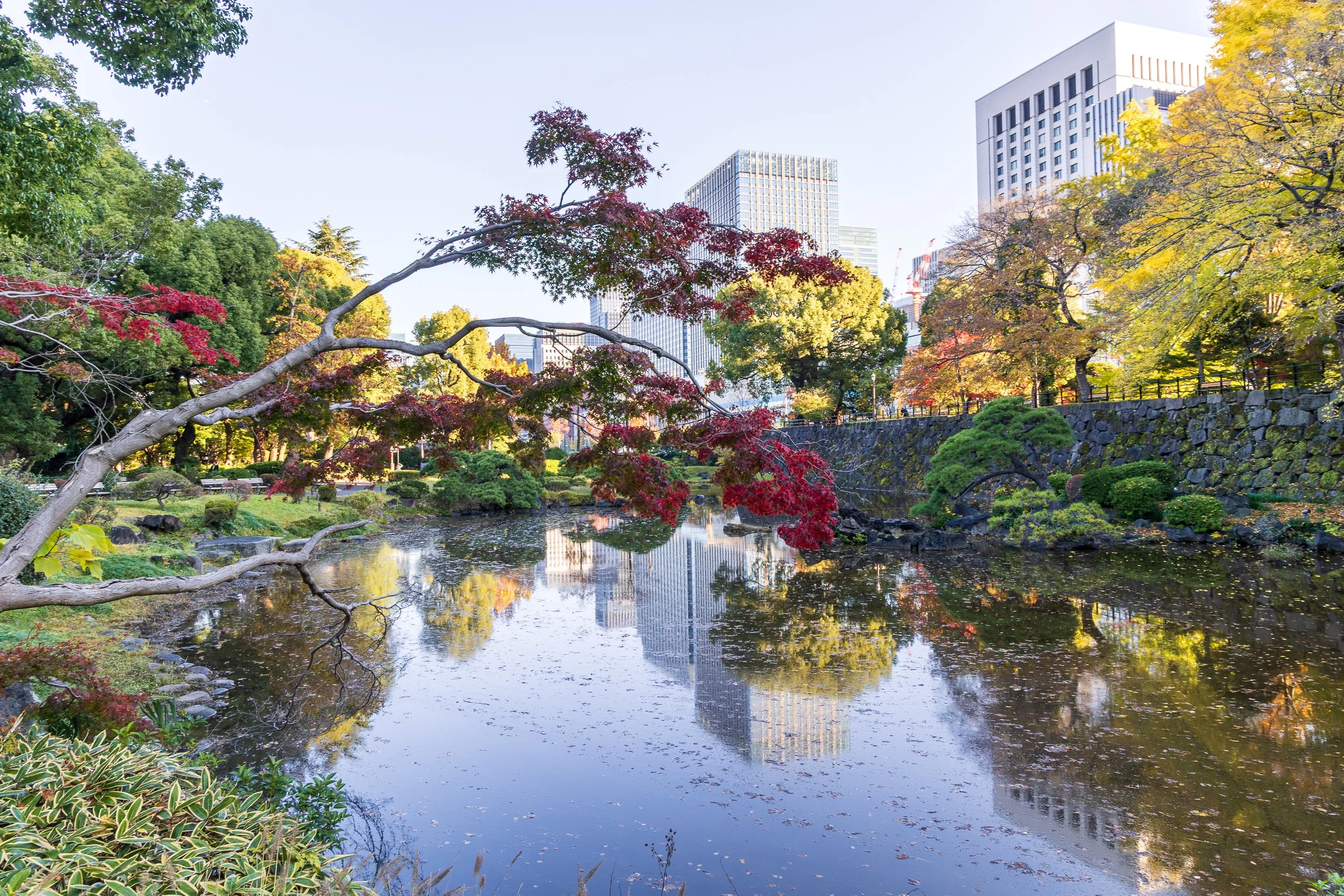
From there, I passed the Pelican Fountain and the Statue Themed Liberty by Iwao Norimatsu, two charming features within the park. It felt like a wonderful way to start the day. I left Hibiya Park around 9:00am and walked to the Imperial Palace East Gardens.
Imperial Palace East Gardens
Imperial Palace East Gardens are a historic public garden located on the former site of Edo Castle’s innermost defenses, known as the honmaru (main circle) and ninomaru (secondary circle). While none of the original castle buildings remain today, the gardens preserve impressive Edo-period stone walls, moats, entrance gates, and guardhouses built by the Tokugawa shoguns.
The gardens are free to enter and are open Tuesday, Wednesday, Thursday, Saturday, and Sunday from 9:00am to 4:00pm (last entry at 3:30pm), with extended hours until 5:00pm or 6:00pm during the summer months. Covering approximately 52 acres, the beautifully maintained grounds blend historic ruins with traditional Japanese landscaping. Seasonal flowers, manicured lawns, and scenic walking paths offer a peaceful way to explore Tokyo’s feudal past right in the heart of the city.
I began my visit by walking past Fujimi-yagura (Mount Fuji View Watchtower), which once offered views of Mount Fuji on clear days, before entering through Ōte-mon Gate, the grand stone entrance to the Imperial Palace East Gardens.
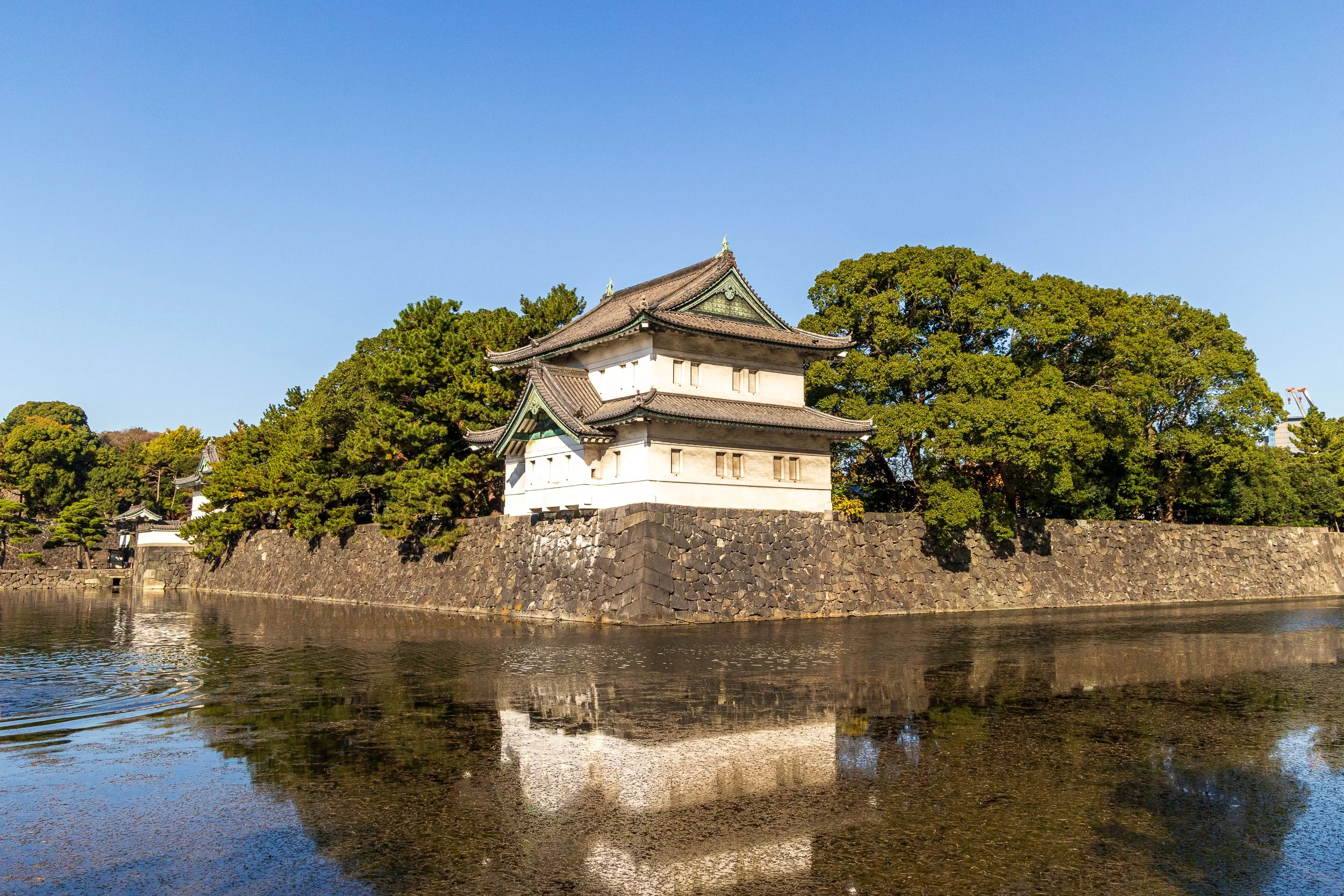
From there, I continued on to Ninomaru Garden, stopping to photograph the Dōshin Bansho guardhouse, one of the three original Edo Castle guardhouses still standing today.
Ninomaru Garden is a serene, Japanese-style garden tucked within the Imperial Palace grounds. The pond, bonsai trees, winding walkways, and small waterfall made it a particularly beautiful area to explore and photograph.
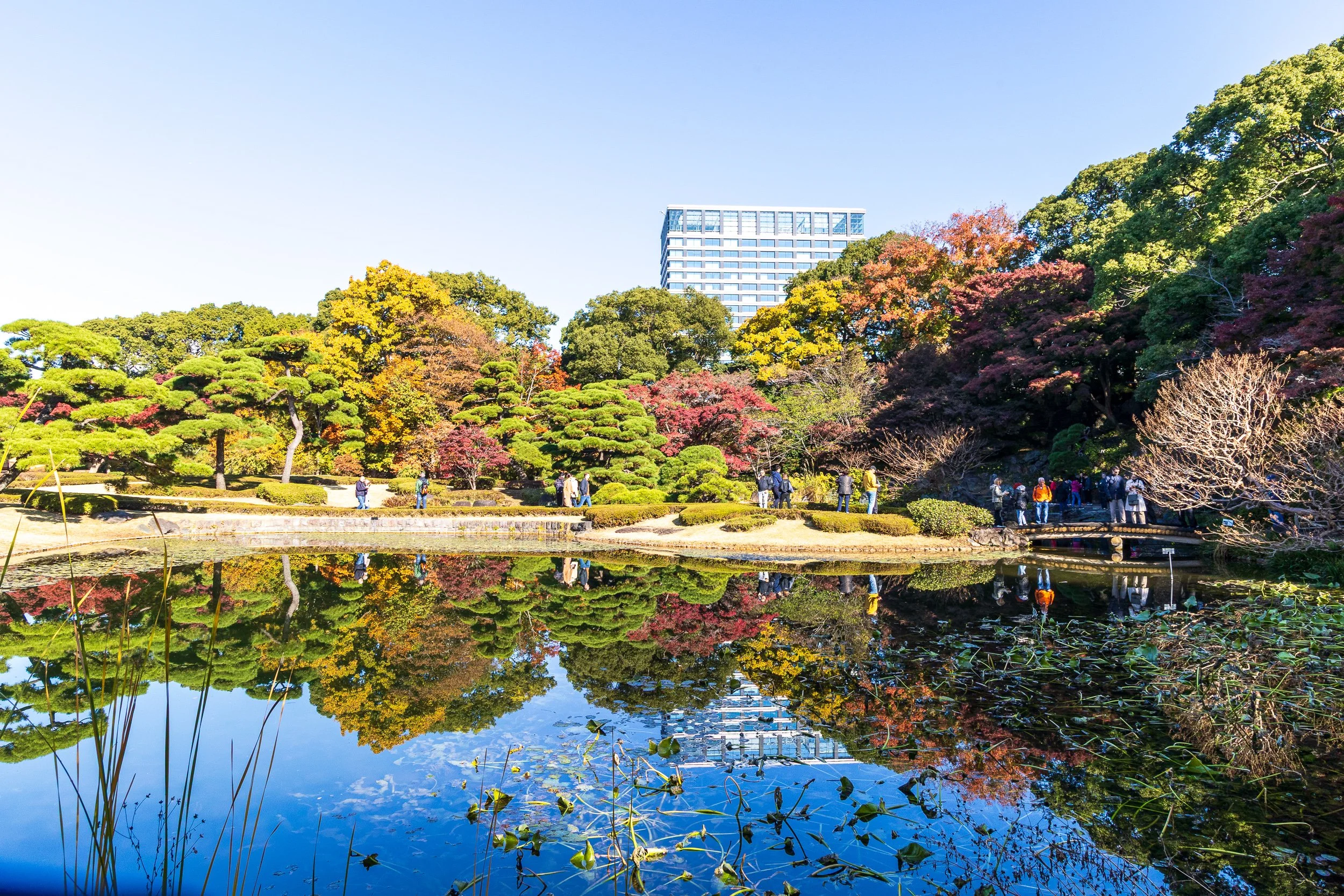
I spent about an hour and a half exploring the Imperial Palace East Gardens, leaving around 11:00am. Before heading to my next stop, I made sure to stop at the stone foundation of the former Edo Castle, another fascinating reminder of the site’s history, before walking about five minutes to Kitanomaru Park.
Kitanomaru Park
Kitanomaru Park is a public park in Chiyoda, located just north of the Imperial Palace. Once part of the northern section of the former Edo Castle grounds, where the park gets its name, it still preserves historical elements from that era. The park is open 24 hours a day, 7 days a week, and is free to enter. It’s also home to several major cultural landmarks, including the Nippon Budokan, a legendary indoor arena that has hosted historic concerts by artists such as The Beatles, Santana, Cheap Trick, and Bob Dylan.
On November 26, 2025, the Japanese pop group SUPER EIGHT was scheduled to perform at the Budokan as part of their first-ever three-day concert series there. It was fun to see so many fans gathered outside the venue!
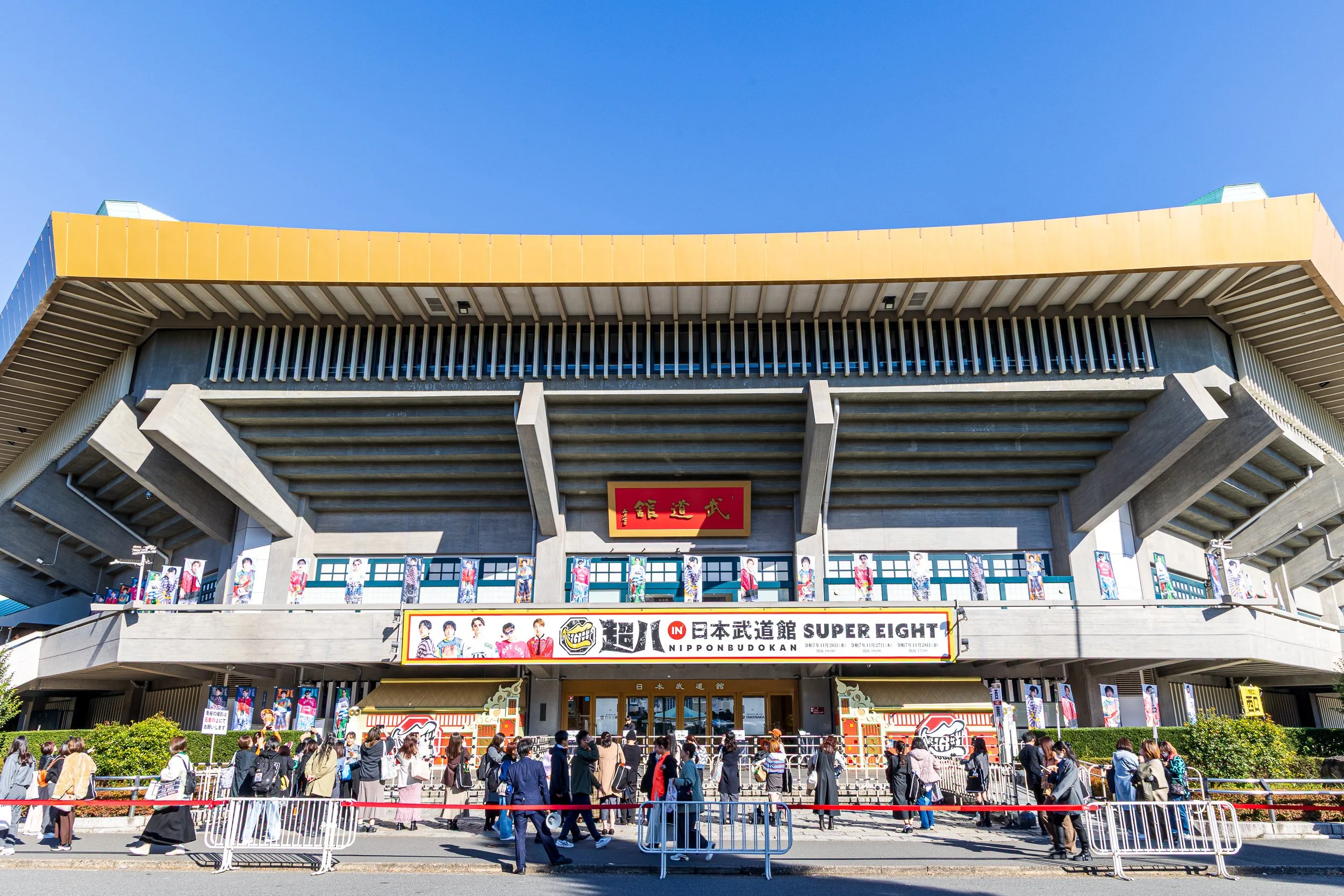
After passing the Budokan and the park’s clock tower, I stopped at CAFÉ 33 for a quick lunch. A sandwich and soda definitely hit the spot before continuing on through the park.
The western side of Kitanomaru Park is home to Momiji-yama, a hillside garden known for its spectacular fall foliage. The area features around 230 varieties of maple trees, primarily Japanese maples, which turn brilliant shades of red and orange in autumn. In some sections, the dense foliage forms a tunnel-like canopy, making it one of Tokyo’s most beautiful fall color spots. Nearby, towering ginkgo trees glow bright gold from late November through early December.
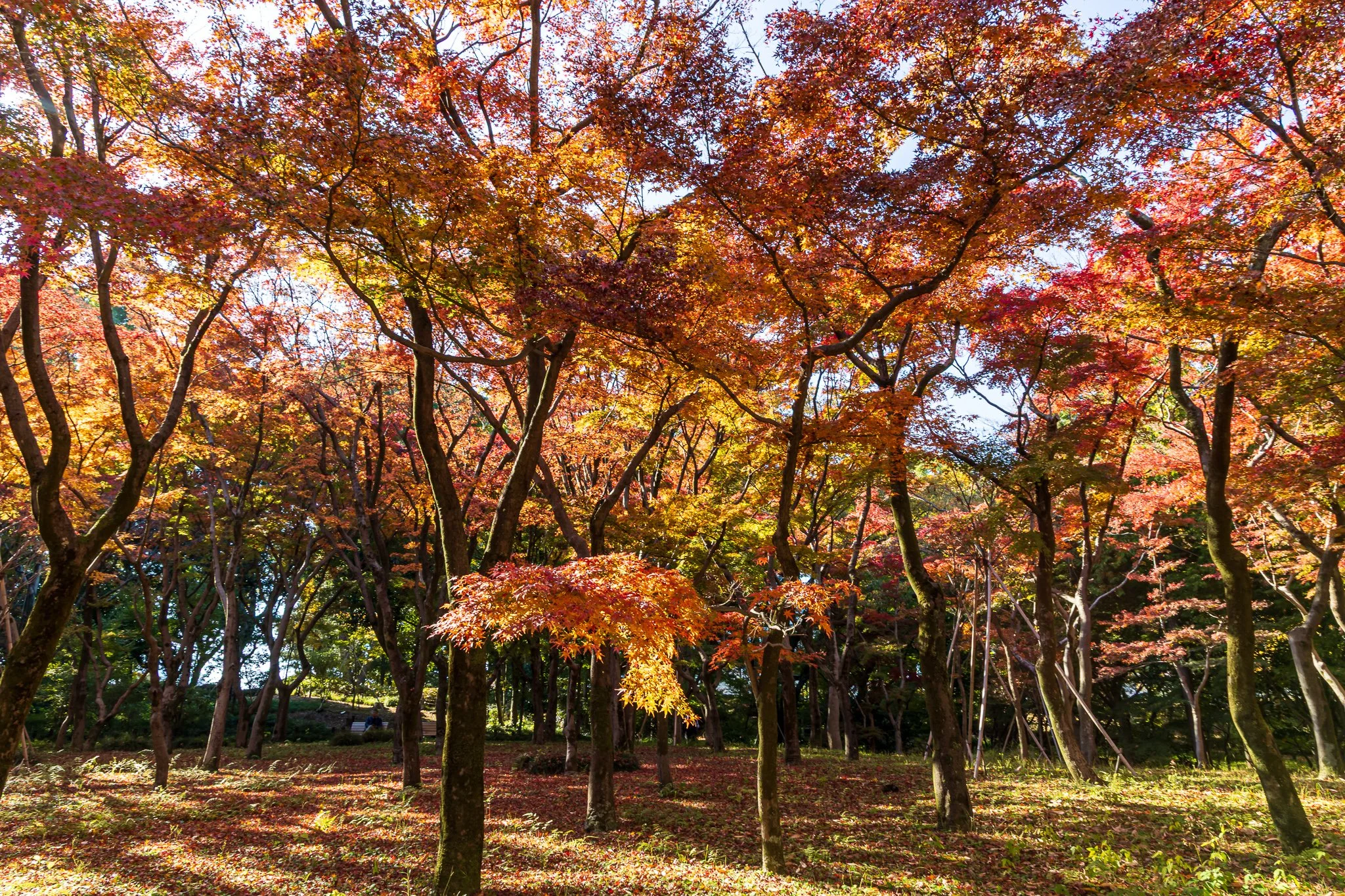
I spent about two hours wandering through the park and stopping for lunch. After getting as many photos as I could, I walked about five minutes to Chidorigafuchi.
Chidorigafuchi Moat
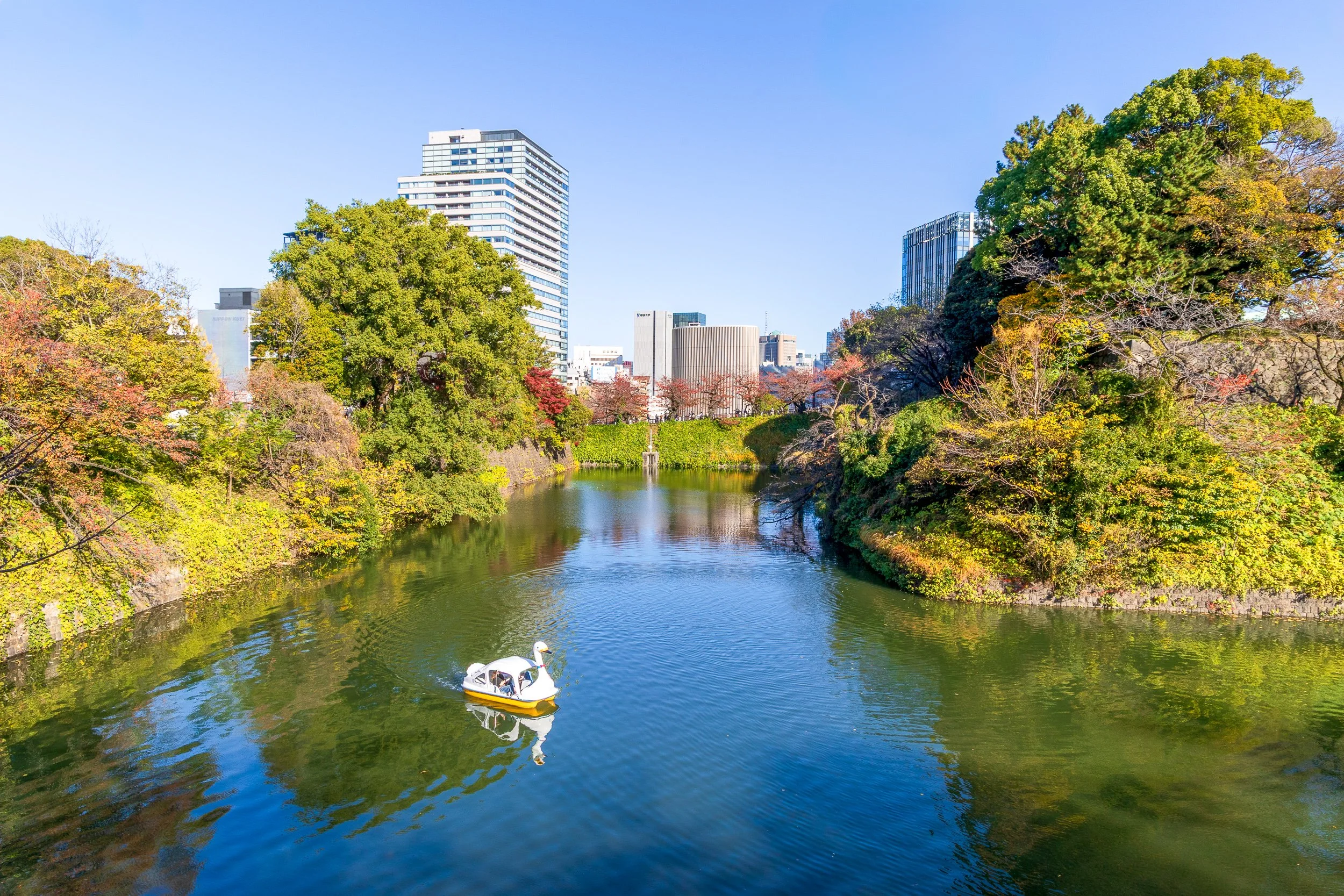
Chidorigafuchi Moat is a 700-meter-long walkway that runs along the moat of the Imperial Palace. While it’s best known as one of Tokyo’s top cherry blossom viewing spots in spring, it’s also beautiful in the fall, with colorful foliage lining the water.
I walked down to the boat pier, watching a couple leisurely paddle around the moat, and spent a bit of time relaxing on one of the benches along the path. It was a really nice place to slow down and relax for a bit before continuing on. From there, I walked about 10 minutes to Yasukuni Shrine, my next stop of the day.
Yasukuni Shrine
Yasukuni Shrine is a Shinto shrine located just a short walk from Chidorigafuchi Moat. Because of its proximity, it made sense to stop by as I continued through the area that afternoon.
The shrine was founded by Emperor Meiji in June 1869 and commemorates those who died in service of Japan. It honors more than 2.5 million individuals, including 14 convicted Class-A war criminals from World War II, which has made it a sensitive and often-debated site both within Japan and internationally. While many Japanese view the shrine as a religious place to honor ancestors, countries such as China and South Korea see it as symbolizing a lack of remorse for wartime aggression. Regardless of perspective, Yasukuni Shrine remains an important and complex part of Japan’s modern history.
Beyond its historical significance, Yasukuni Shrine is also a beautiful, and often underrated, spot for autumn foliage. A long avenue of towering ginkgo trees stretches between the first and second torii gates, creating a striking corridor of golden yellow leaves in late November and early December. The trees, some reaching over 20 meters tall, were stunning and a bit less crowded than other popular ginkgo spots around Tokyo.
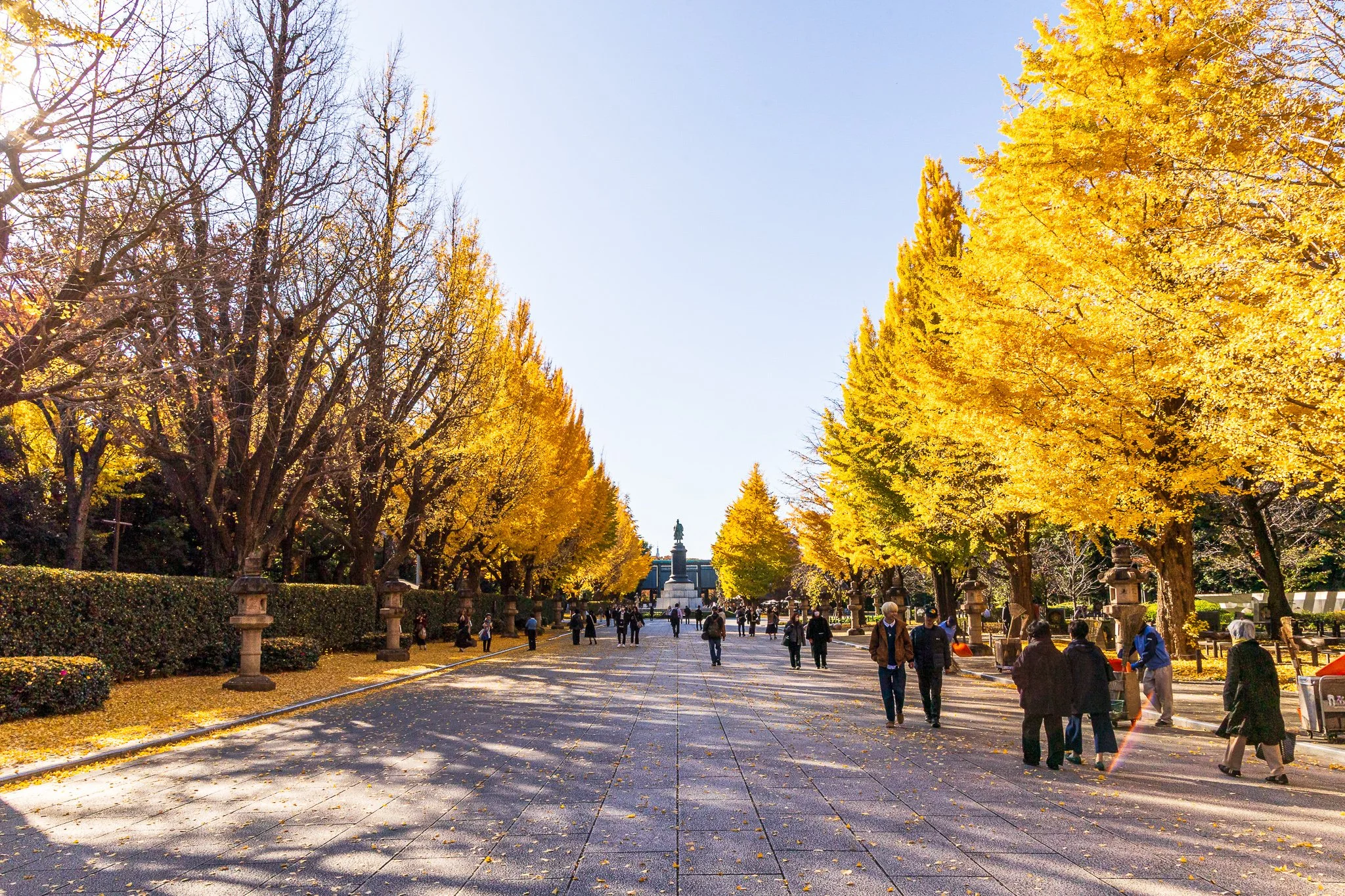
I spent about 30 minutes at the shrine and walking up and down the avenue of ginkgo trees. It was a beautiful stop before continuing on to my next destination, Koishikawa Korakuen Garden.
Koishikawa Korakuen Gardens
To get to the garden, I walked to Kudanshita Station and took the Tozai Line one stop to Iidabashi Station. From there, the garden is about an 8-minute walk. While it’s also only about a 20-minute walk from Yasukuni Shrine, I had already done quite a bit of walking that day and appreciated a short train ride as a brief reprieve.
I arrived at the garden around 3:00pm, perfectly timed for golden hour, with sunset around 4:30pm that day.
Koishikawa Korakuen Garden is one of Tokyo’s oldest and most scenic traditional Japanese gardens, dating back to the early Edo period. The garden is open daily from 9:00am to 5:00pm, with the last entry at 4:30pm. Admission costs ¥300 for adults, ¥150 for visitors aged 65 and over, and is free for children and middle school students who reside in Tokyo.
Designed as a strolling landscape garden, Koishikawa Korakuen is meant to be explored slowly along a network of winding paths that reveal carefully composed views. Like many classic Japanese gardens, it recreates famous landscapes in miniature, using ponds, stone bridges, trees, and gentle hills inspired by both Japanese and Chinese scenery.
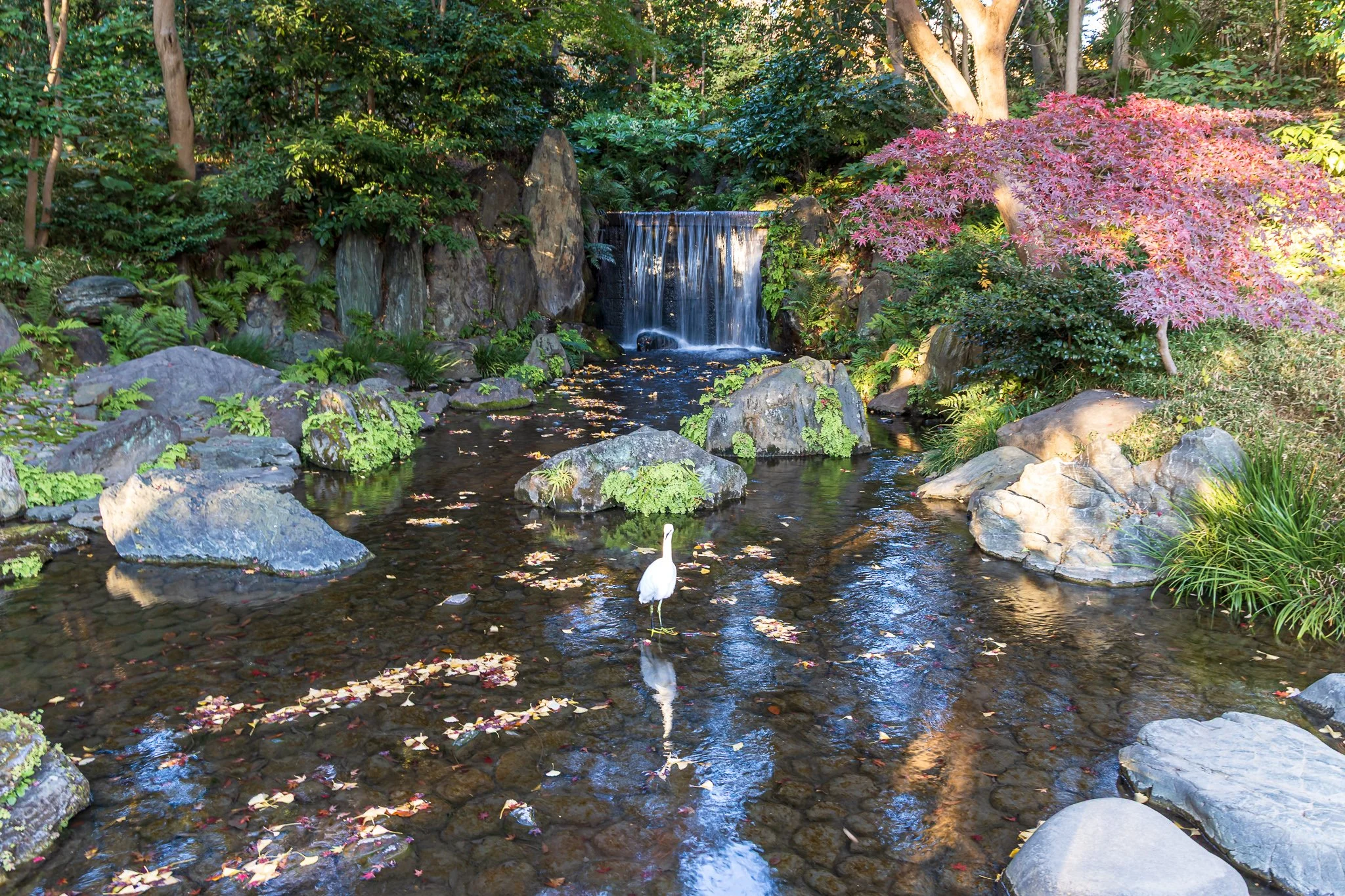
In the fall, the garden is especially beautiful. The main pond is surrounded by dozens of maple trees, which turn brilliant shades of red and orange in late November, creating stunning reflections on the water. Despite being tucked into the middle of Tokyo, with the modern skyline and Tokyo Dome visible in the distance, the garden feels like a peaceful escape from the city.
I spent about two hours strolling through the garden, sitting on a bench near the north end of the pond to take it all in. Just like at Showa Kinen Park, there was a stand selling mitarashi dango, a soft, chewy Japanese rice dumpling served three to a skewer and coated in a sweet-savory glaze. I was starting to get a little hungry again, and it was wonderful to enjoy a snack while sitting in the garden and watching the sunset.
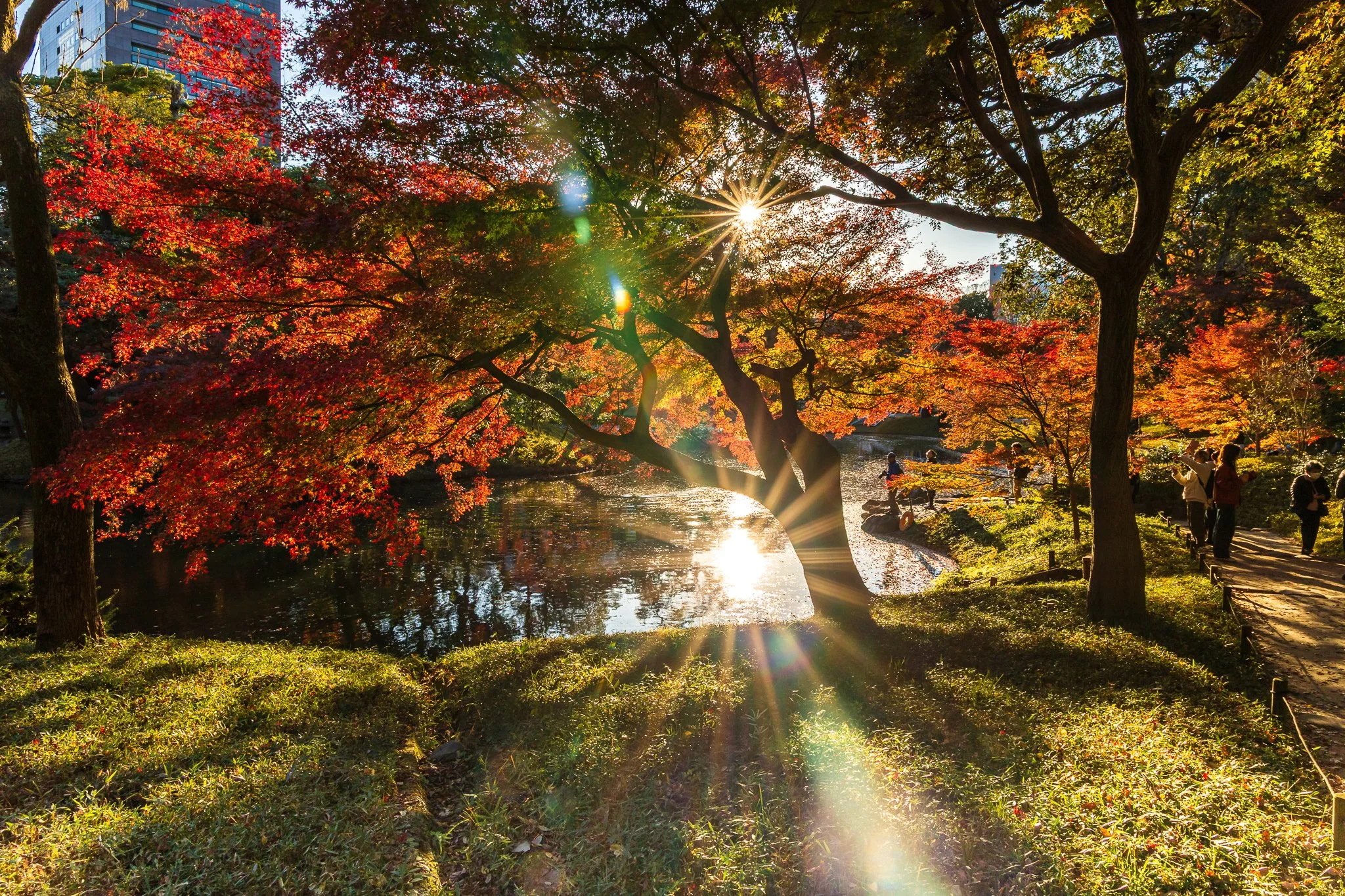
I left the garden when it closed at 5:00pm and walked to Suidōbashi Station to take the Mita Line to Onarimon Station, where I headed out to photograph Tokyo Tower.
Tokyo Tower
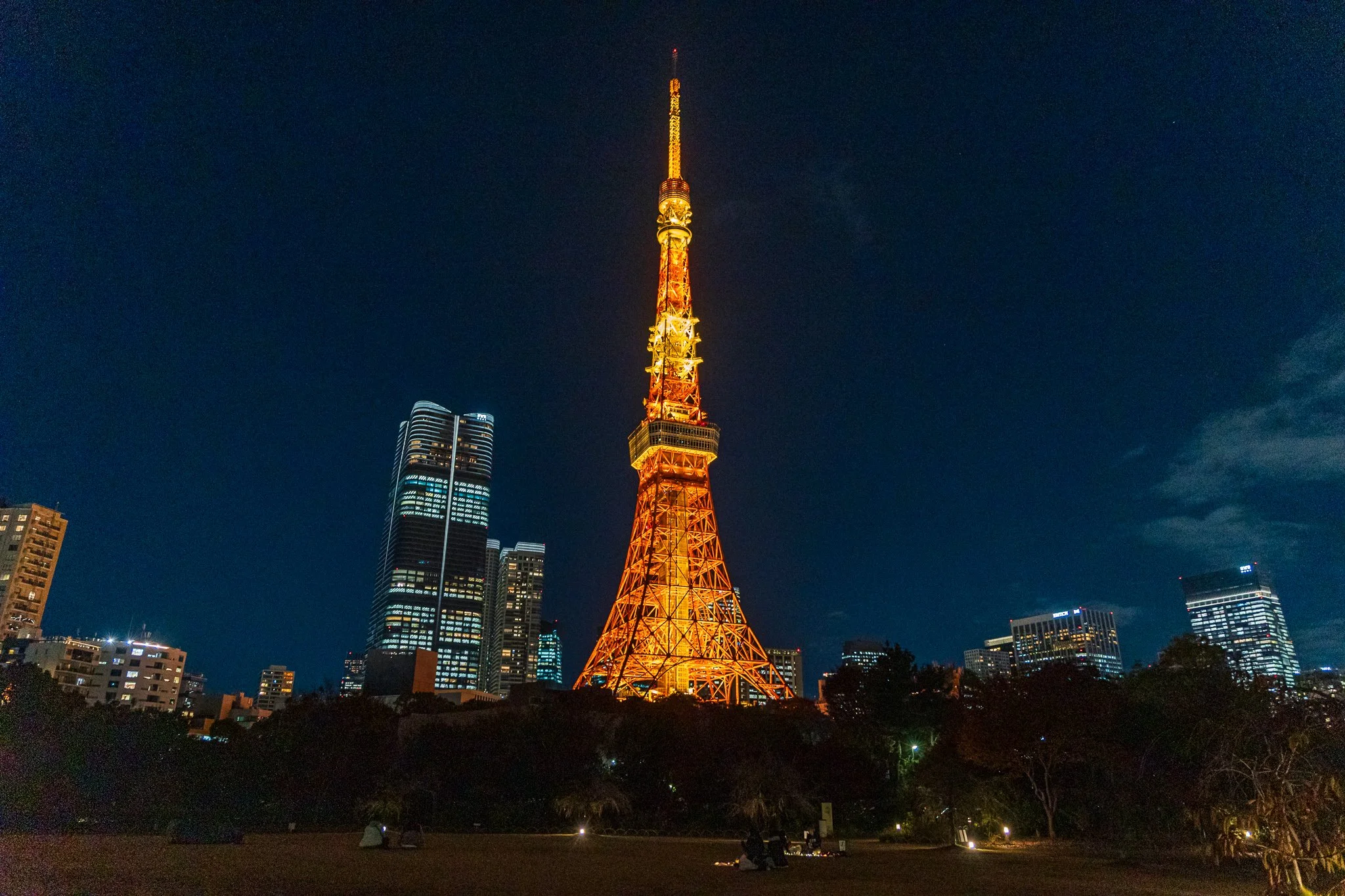
Tokyo Tower is one of the city’s most iconic landmarks and a symbol of Japan’s post-war rebirth. Inspired by the Eiffel Tower, its classic red-and-white design gives it a nostalgic, retro charm that still stands out in Tokyo’s skyline today. While newer observation towers like Tokyo Skytree offer greater height and more modern facilities, Tokyo Tower remains beloved for its history, atmosphere, and central location near parks and temples.
Since I had already enjoyed views from the Tokyo Metropolitan Government Building and Tokyo Skytree, and had a ticket for Shibuya Sky the following day, I decided not to go up Tokyo Tower. Instead, I focused on photographing it from the ground and enjoying its presence as a classic Tokyo landmark.
I had read about a popular, Instagram-famous stairway photo spot near the tower, but when I arrived, it was crowded with a long line, so I chose to skip it. Instead, I walked through Shiba Park, which offered a beautiful, more relaxed setting to photograph Tokyo Tower framed by greenery.
Sky Lounge Stellar Garden
From there, I continued on to Sky Lounge Stellar Garden, a top-floor lounge at The Prince Park Tower Tokyo, to unwind with a drink and dinner. The lounge offers panoramic city views, with different seating options depending on where you sit. Seats at the bar are free, while tables require an additional charge, more for tables with a direct view of Tokyo Tower, and less for tables without a tower view.
I arrived around 6:00pm without a reservation. The host had no trouble finding a spot for me at the bar. It did start to fill up as the evening went on, but the atmosphere remained relaxed.
For dinner, I ordered the lobster and crab spaghetti in tomato sauce. While it was very good, in hindsight I probably would have chosen the Wagyu beef bolognese instead, as it was ¥1,200 cheaper and seemed to have a more generous portion of meat than the seafood pasta (at least compared to what I noticed from the person sitting next to me). Still, the lobster and crab spaghetti was delicious.
I had a lovely time at Sky Lounge Stellar Garden. The food and drinks were great, and I ended up chatting with the lady next to me, another American tourist also visiting the classic cities (Tokyo, Kyoto, and Osaka). After three days of barely talking to anyone, it was really nice to talk to someone other than myself!
I left the restaurant around 9:00pm and took the train back to Hotel Sunroute Plaza Shinjuku, stopping at FamilyMart on the way to grab breakfast for the next day.