Day 4: Day 3 in Tokyo - Toyosu Area, Nezu Shrine, Ueno Park, and Asakusa
On Tuesday, November 25, 2025, I explored Tsukiji Outer Market, teamLab Planets, Nezu Shrine, Ueno Park, Nakamise Shopping Street, Sumida Park, Tokyo Skytree, Sensō-ji, and the Asakusa Observatory.
For me, this itinerary worked well from a geographic standpoint. Tsukiji Outer Market and teamLab Planets are both located in the Toyosu area, making them easy to pair together. From there, Nezu Shrine and Ueno Park are just north of Toyosu, and the rest of the stops, Nakamise Street, Sumida Park, Tokyo Skytree, Sensō-ji, and the Asakusa Observatory, are all clustered in Asakusa, a short distance southeast of Ueno.
Commuting from Hotel Sunroute Plaza Shinjuku to Tsukiji Outer Market
I started my morning with breakfast from 7-Eleven, where I tried the viral egg salad sandwich. It really was as good as everyone says! I paired it with some muscat grapes, which were just as delicious.
I had a 9:00–9:30am entry ticket for teamLab Planets, meaning I needed to arrive within that window to enter. I chose an early time slot after reading that there are less crowds in the morning, and that Tuesdays and Wednesdays are often cited as the least busy days to visit.
I wanted to do something before my teamLab Planets entry time, and starting the day at Tsukiji Outer Market made the most sense, given its proximity to teamLab and my plans to visit Nezu Shrine and Ueno Park later in the afternoon.
I left Hotel Sunroute Plaza Shinjuku around 7:30am and walked to Shinjuku Station to take the train to Tsukiji Outer Market.
Tsukiji Outer Market
Tsukiji Outer Market is one of the most famous markets in Tokyo. The market spans several blocks and is made up of narrow lanes lined with wholesale and retail shops, along with countless restaurants. Visitors can find everything from fresh and processed seafood and produce to food-related goods like Japanese knives.
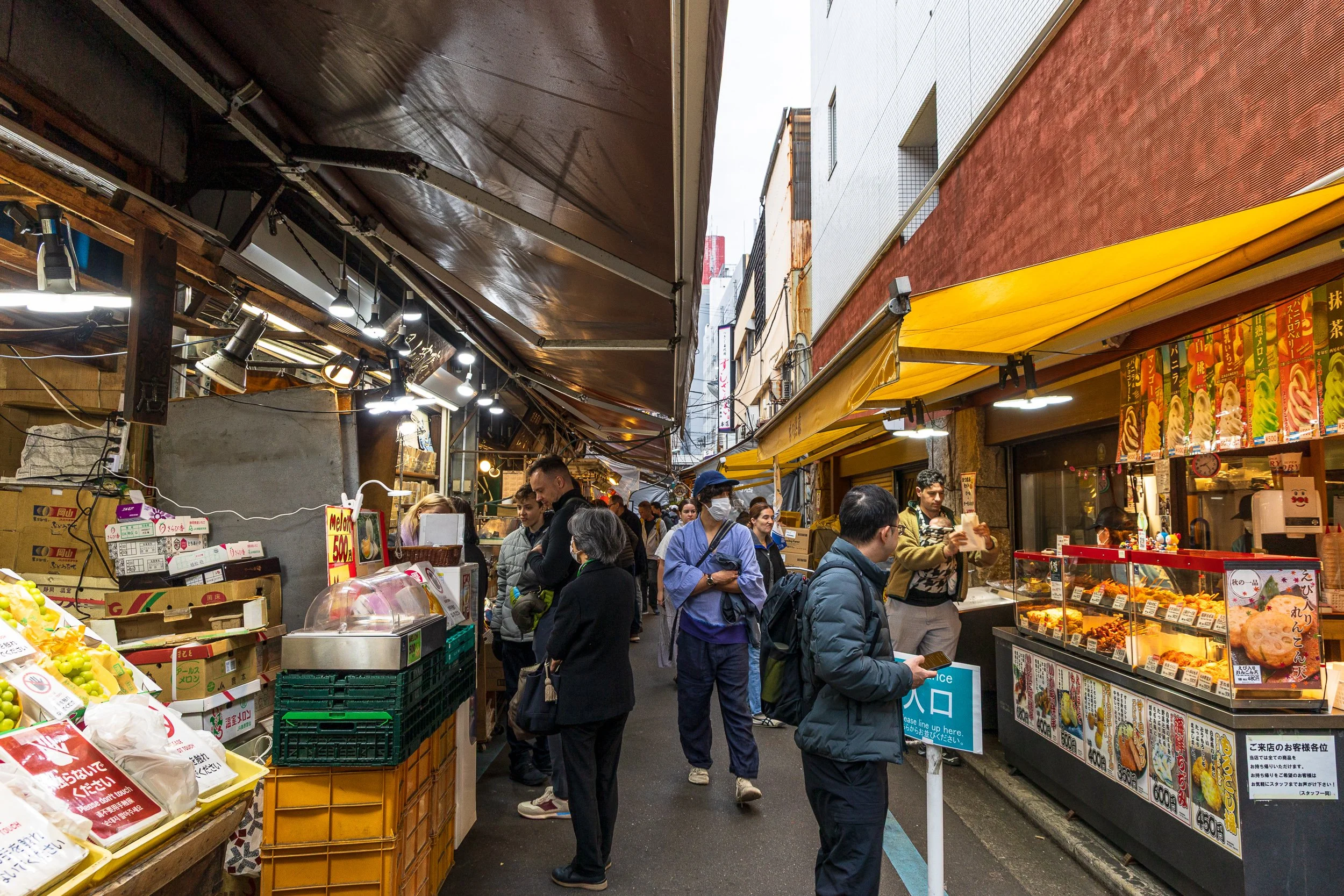
Often referred to as Japan’s “food town,” Tsukiji Outer Market is especially known for its incredible food scene. Many of the restaurants open early in the morning, some as early as 5:00am, and close by late morning or early afternoon. Since much of the seafood sold and served here is delivered directly from Toyosu Market, it’s one of the best places in Tokyo to enjoy exceptionally fresh sushi and other seafood, making it an ideal stop for breakfast or lunch.
I arrived at Tsukiji Outer Market around 8:15am. In hindsight, instead of having breakfast from 7-11, I probably should have had breakfast at Tsukiji Outer Market. But, I wasn’t sure what to expect, and I was hungry when I woke up, and didn’t feel like waiting.
You could easily spend hours at Tsukiji Outer Market, but unfortunately, I didn’t have that much time, so I spent only about 30 minutes doing a quick walk-through, taking photos, and soaking in the atmosphere.
Around 8:45am, I left Tsukiji Outer Market and caught the Tokyo Big Sight bus to head to teamLab Planets, arriving just in time to line up for my entry window.
teamLab Planets
teamLab Planets is an immersive digital art museum in Tokyo where large-scale, interactive installations use light, sound, mirrors, and water to create surreal, ever-changing environments that visitors move through and experience firsthand.
The museum is divided into four main areas: Water, Garden, Athletic Forest, and Air. In the water section, visitors walk through water that can reach up to knee height, so you’ll want to make sure to wear pants that can be rolled up and stay up or bring along a pair of shorts to change into. Lockers are provided to store shoes and personal belongings. I walked through the exhibits with just my phone and mirrorless camera.
I chose to visit the Water and Garden sections and skipped the Forest and Air areas. The water section was my favorite. Walking through the space, it looked like koi fish were swimming across the surface of the water, creating a truly immersive experience. The Infinite Crystal Universe and Crystallized Light installations were especially beautiful to walk through. The Garden section was just as impressive, with flowers that move up and down throughout the space.
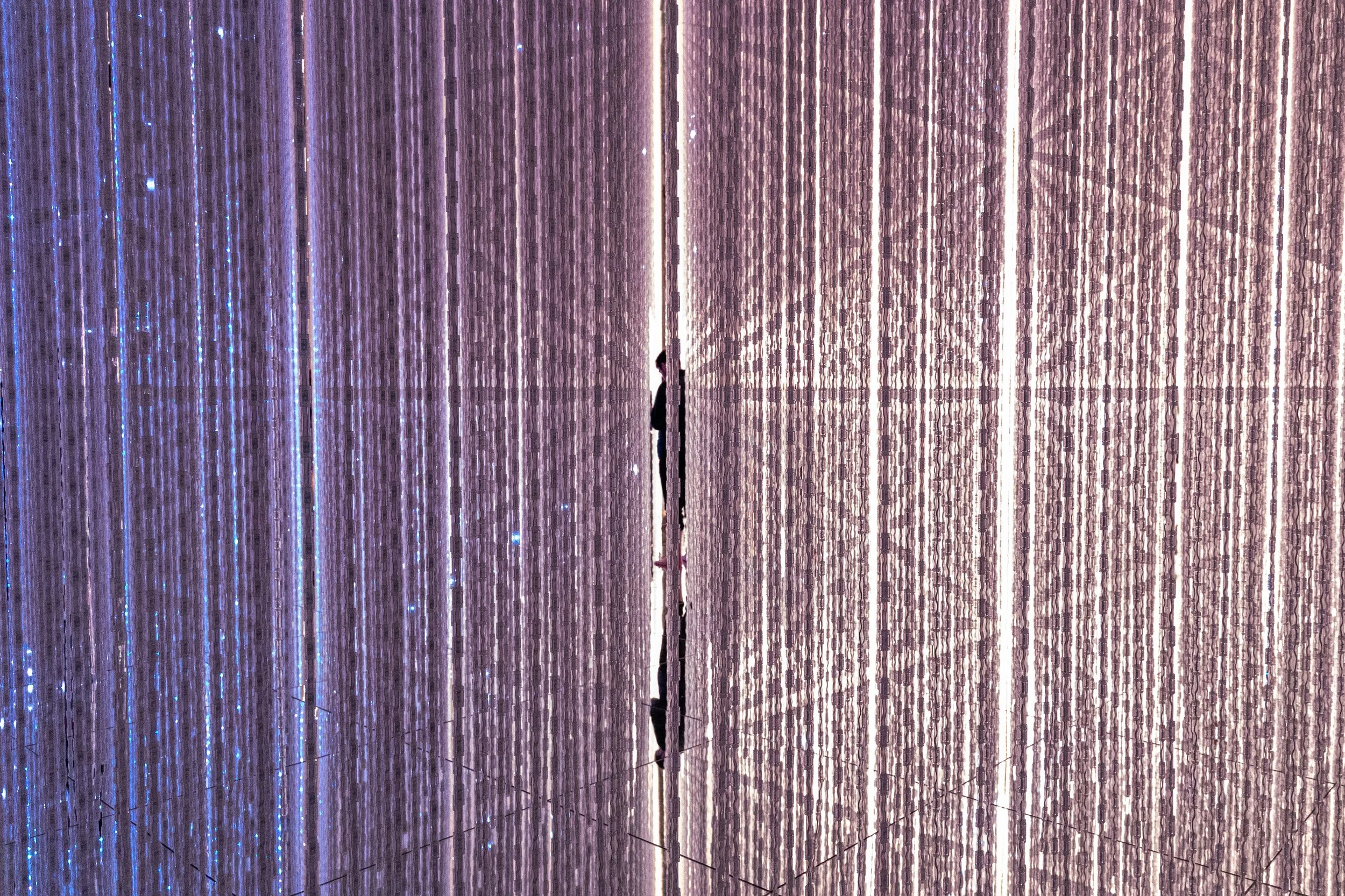
teamLab Planets was such a fun and memorable experience. I left around 11:00am to walk to the Toyosu stop to take the train to Nezu Shrine. The commute took about 45 minutes.
Nezu Shrine
Nezu Shrine is one of Tokyo’s oldest and most beautiful Shinto shrines, located in the quiet Bunkyō ward. Established in 1705, several of its buildings are designated as Important Cultural Properties, showcasing traditional architecture that has been preserved for centuries.
The shrine grounds are open 24 hours. The main hall is open from 6:00am to 5:00pm. Entrance to the shrine is free.
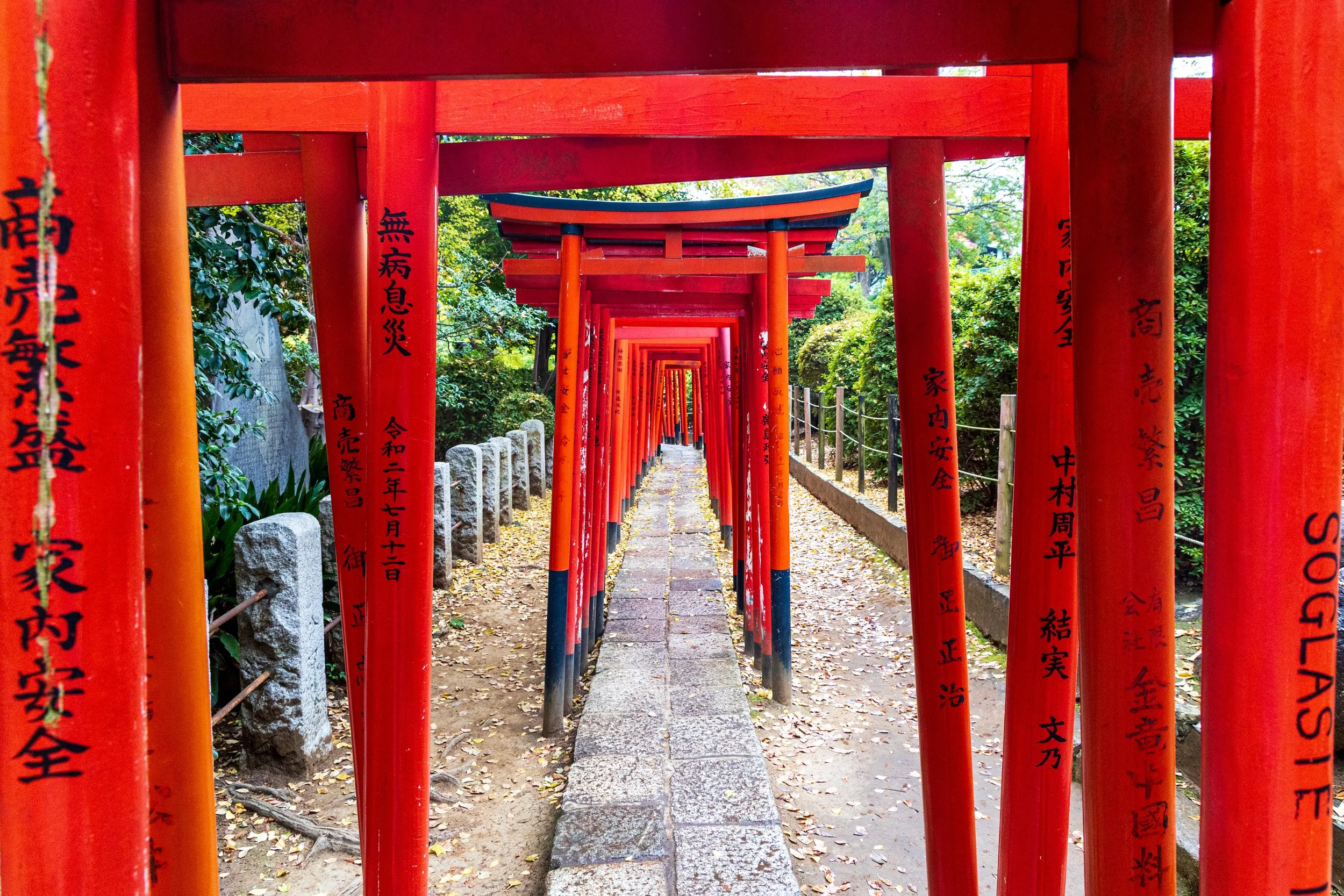
Tucked away in a residential neighborhood, it’s far less crowded than many of the city’s more famous shrines and offers a calm, more traditional atmosphere. The shrine is especially known for its path of vibrant red torii gates and its azalea garden, which flourishes in the springtime. Nezu Shrine offers a glimpse into a quieter, more local side of Tokyo’s spiritual life.
I spent about 30 minutes wandering around the grounds before walking 15 minutes to Ueno Park.
Ueno Park
Ueno Park is one of Tokyo’s oldest and largest public parks, best known for its museums, shrines, zoo, and expansive green spaces. I spent about two hours wandering through the park, stopping at several historic and cultural landmarks along the way.
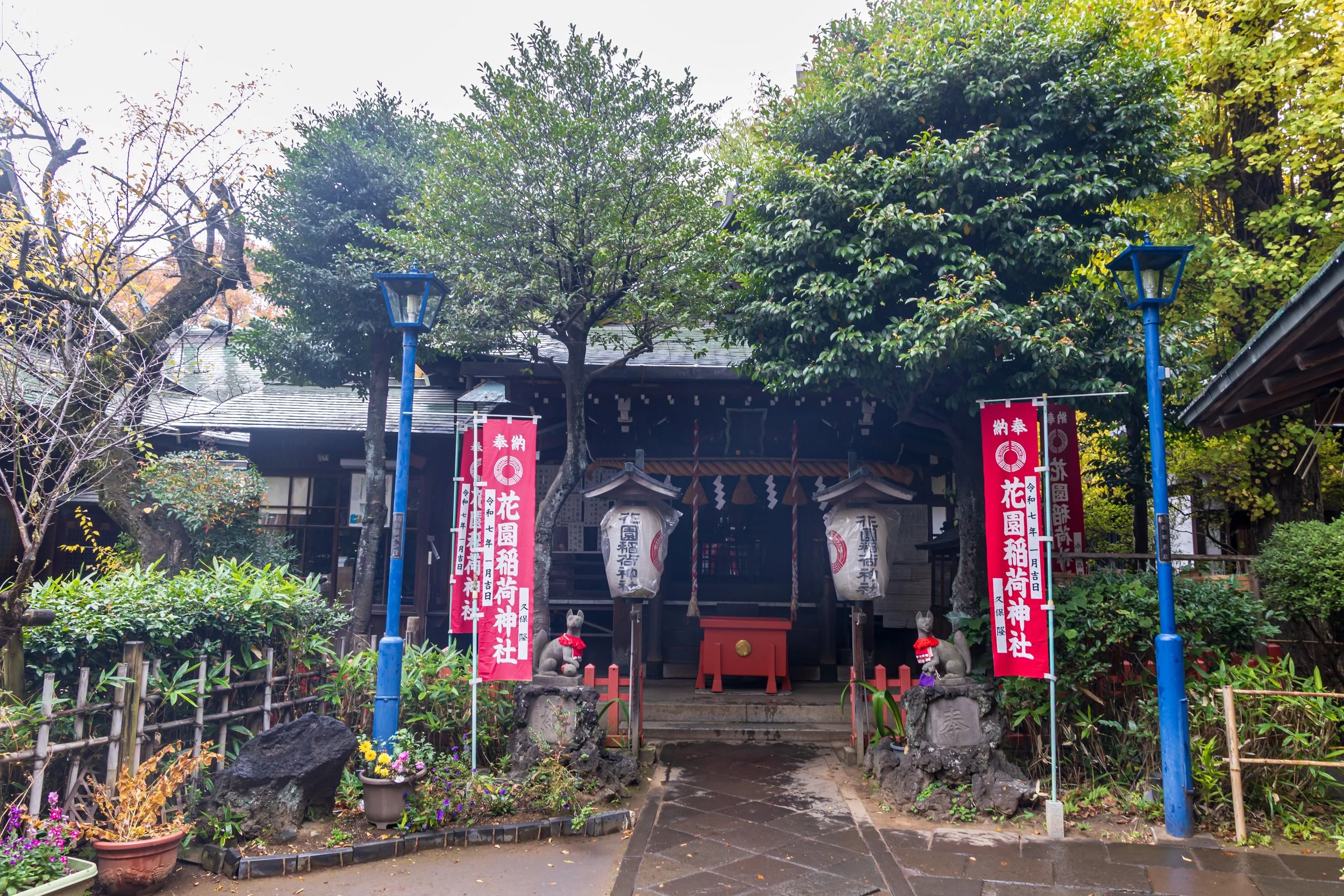
I started my visit at Hanazono Inari Shrine and the neighboring Gojōten Shrine, two small Shinto shrines tucked away from the park’s main paths. Hanazono Inari Shrine is especially charming, with its red torii gates and fox statues, messengers of the deity Inari, while Gojōten Shrine is one of the oldest shrines in the Ueno area. Since they’re located right next to each other, it was easy to visit both at once, and the area felt peaceful and quiet compared to the rest of the park.
From there, I walked up a small hill to see the Ueno Daibutsu. Only the head of the original statue remains, as the rest was lost to war and natural disasters. The statue is also known as the Gokaku Daibutsu, or “Success Buddha,” because it “can’t fall any further”, a Japanese wordplay that has made it a symbol of good luck for students.
Next, I made my way to Ueno Tōshō-gū and the nearby Kaneiji Five-Story Pagoda. Ueno Tōshō-gū is known for its ornate golden gates, stone lanterns, and intricate carvings, making it one of the most photogenic spots in the park.
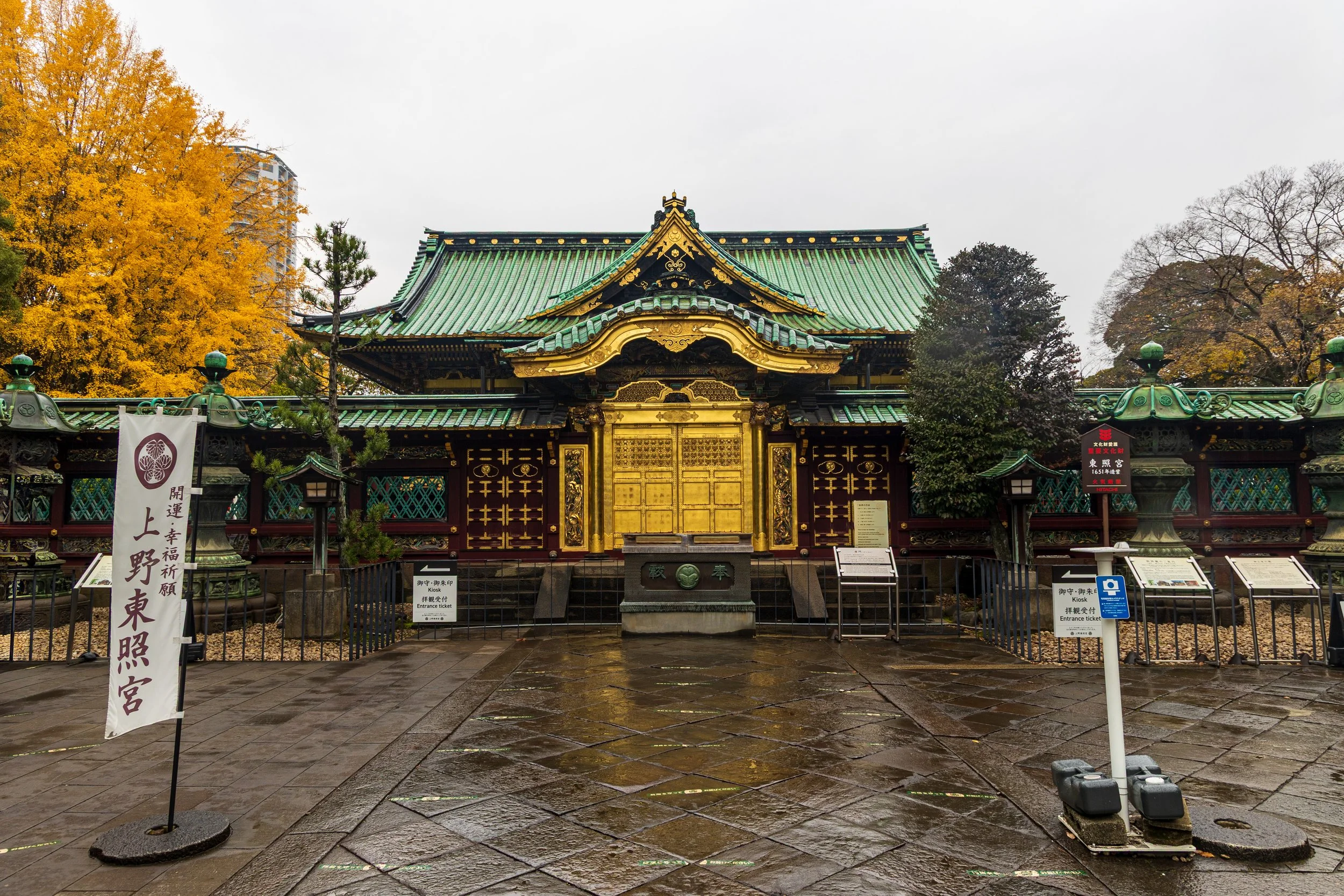
I then headed toward the Tokyo National Museum, but along the way I passed EVERYONE’s CAFE. Realizing how hungry I had gotten, I stopped there for lunch before continuing on. Afterward, I walked over to the museum grounds but chose not to go inside, instead stopping to take photos of the building and the fountain out front.
Next, I visited Shinobazu-no-ike Bentendō, a Buddhist temple dedicated to the goddess Benzaiten. The temple sits on an island in the middle of Shinobazu Pond, located in the southern part of the park, and offers a calm, scenic stop before moving on.
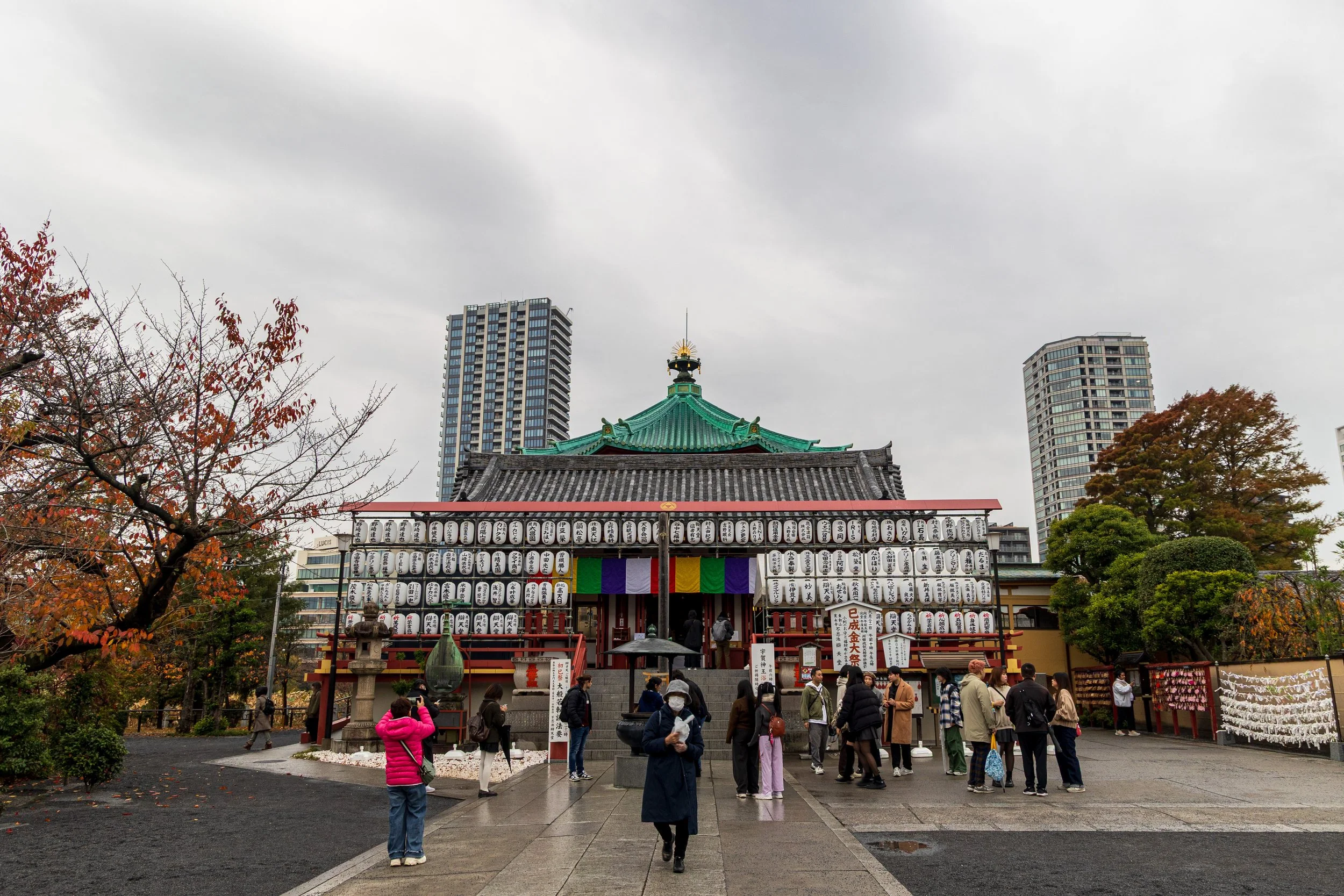
My final stops within Ueno Park were the Statue of Saigō Takamori and the Tomb of the Shōgitai Warriors. After about two hours of walking, sightseeing, and lunch, I left Ueno Park and continued on toward Asakusa.
Nakamise Shopping Street
I leftUeno Park around 3:30pm. I had a timed entry to Tokyo Skytree between 4:00–4:29pm, meaning I needed to arrive within that window. The trip from Ueno to Tokyo Skytree would take about 20 minutes by train, so I had plenty of time.
To get there, I took the Ginza Line from Ueno Station to Asakusa Station, arriving around 3:45pm. From there, it would have taken about 10 minutes to continue to Tokyo Skytree by train, or about 20 minutes to walk. Since I still had time to spare, I decided to skip transferring trains and walk instead. This also gave me a chance to pass through the Asakusa area, including Nakamise Shopping Street, along the way.
Nakamise Shopping Street is a bustling 250-meter pedestrian street that connects Kaminarimon Gate to Hōzōmon Gate at Sensō-ji, Tokyo’s oldest temple. Lined with stalls selling traditional snacks and souvenirs, the street has been serving visitors for centuries and is one of the most iconic shopping streets in the city.
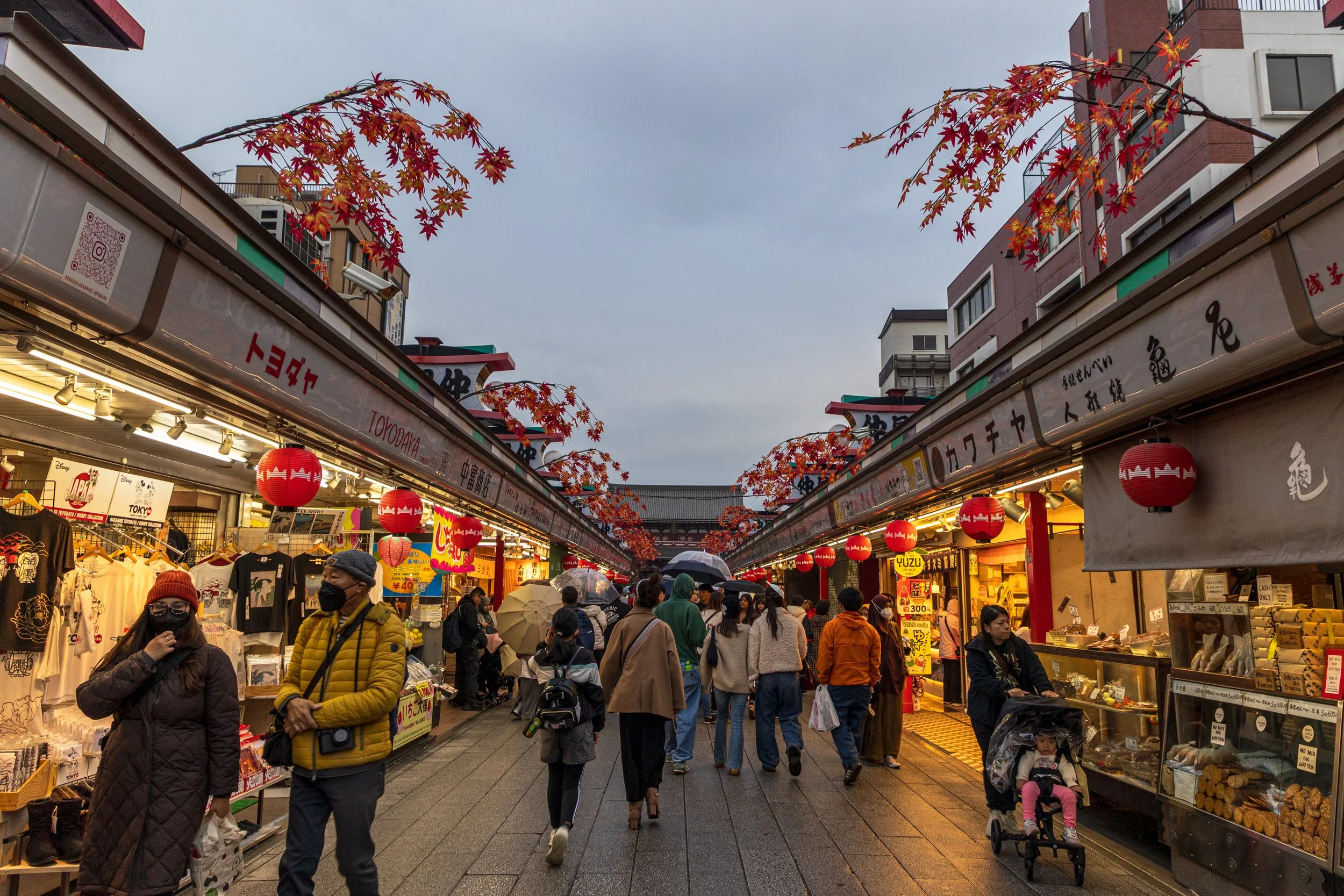
Since I needed to get to Tokyo Skytree before 4:29pm, I couldn’t linger long at Nakamise Shopping Street. Still, it was a fun, energetic stop and a great way to experience Asakusa, even with limited time.
Sumida Park
Along the way to Tokyo Skytree, I walked through Sumida Park, a peaceful riverside park that runs along the Sumida River. It’s a relaxing spot with open walkways, scenic river views, and great sightlines of Tokyo Skytree. During my visit, there were also some beautiful fall colors, which made it a really pleasant place to pass through.
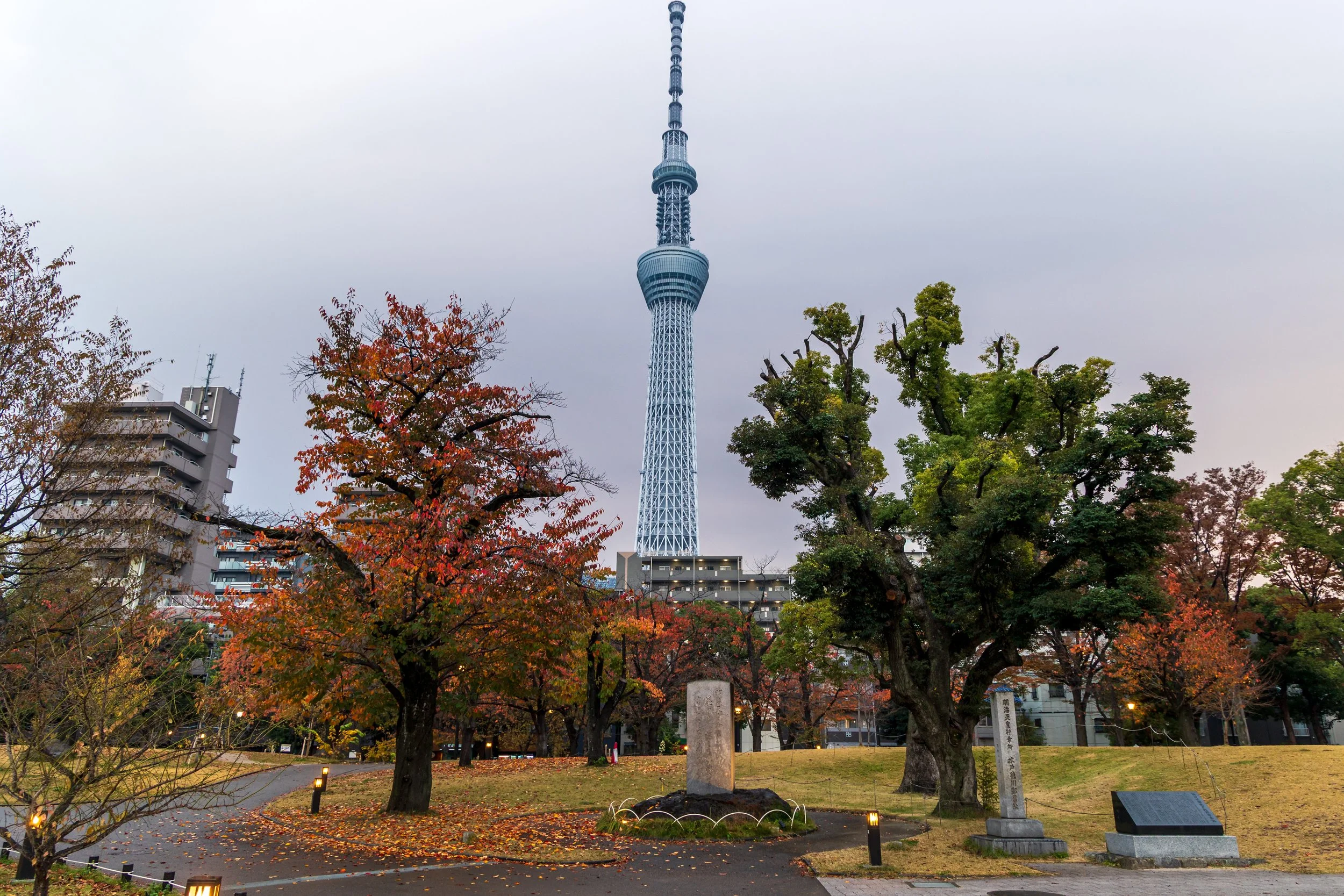
Tokyo Skytree
I arrived at Tokyo Skytree a little after 4:30pm. Technically, I was outside the entry window for the ticket I had purchased, but I was still allowed in. When I checked earlier that day, there were plenty of tickets still available for that time slot, so I suspect it was a slower day. That said, it’s always best to arrive within your purchased time window, just to be safe.
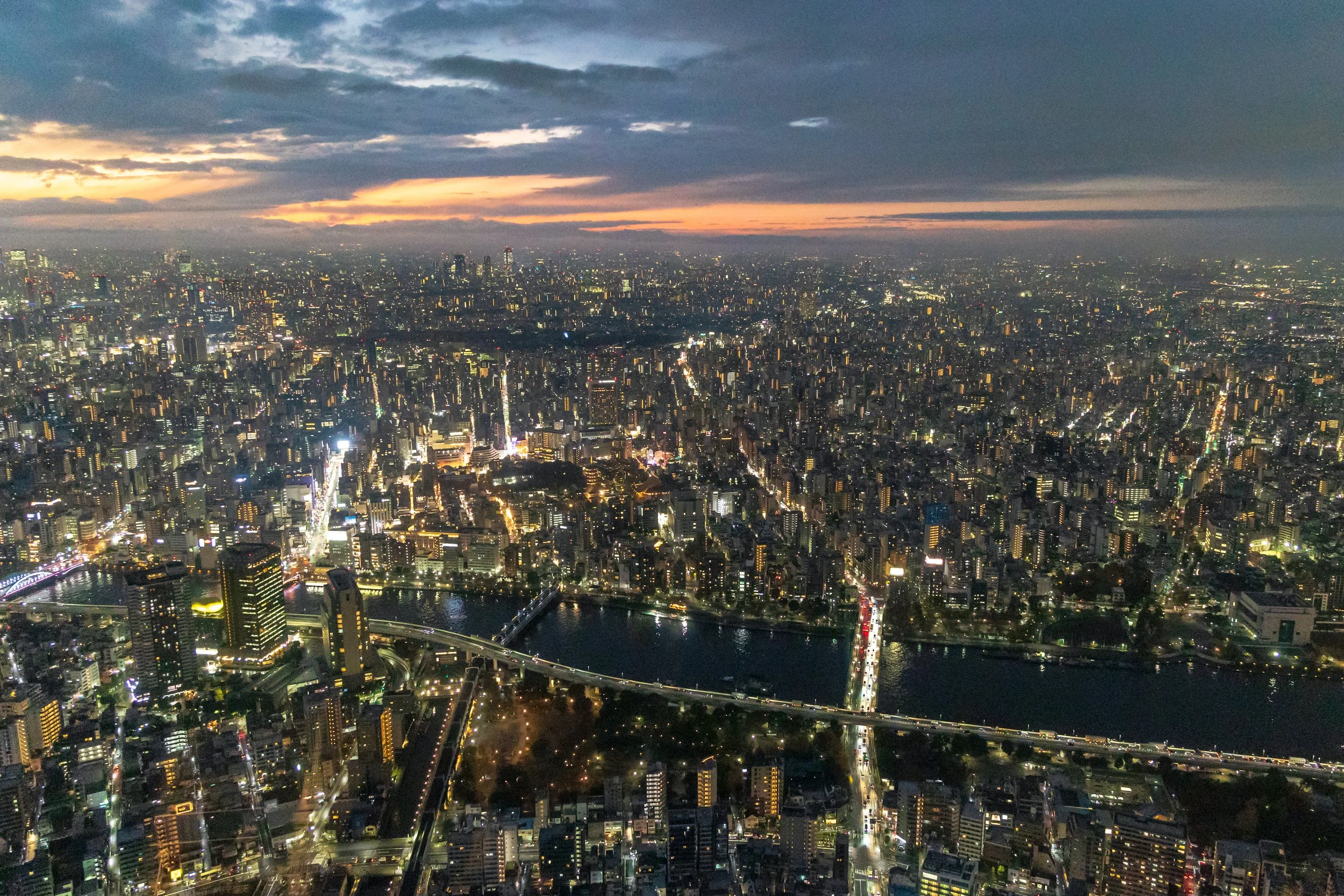
Standing 634 meters (2,080 feet) tall, Tokyo Skytree offers 360-degree views of the city from high above the skyline. On a clear day, it’s even possible to see Mount Fuji in the distance.
When purchasing tickets, you can choose access to the Tembo Deck at 350 meters, or a combo ticket that includes both the Tembo Deck and the Tembo Galleria at 450 meters. I opted for the combo ticket. I bought my ticket in advance on October 26, 2025, since I knew I wanted to time my visit for sunset. Same-day tickets are available, but I prefer to plan ahead, especially for something like this.
Of course, seeing the view is always a bit of a gamble with the weather. It had rained on and off throughout the day, but luckily the skies cleared in time for a beautiful sunset.
Senso-ji Temple at Night
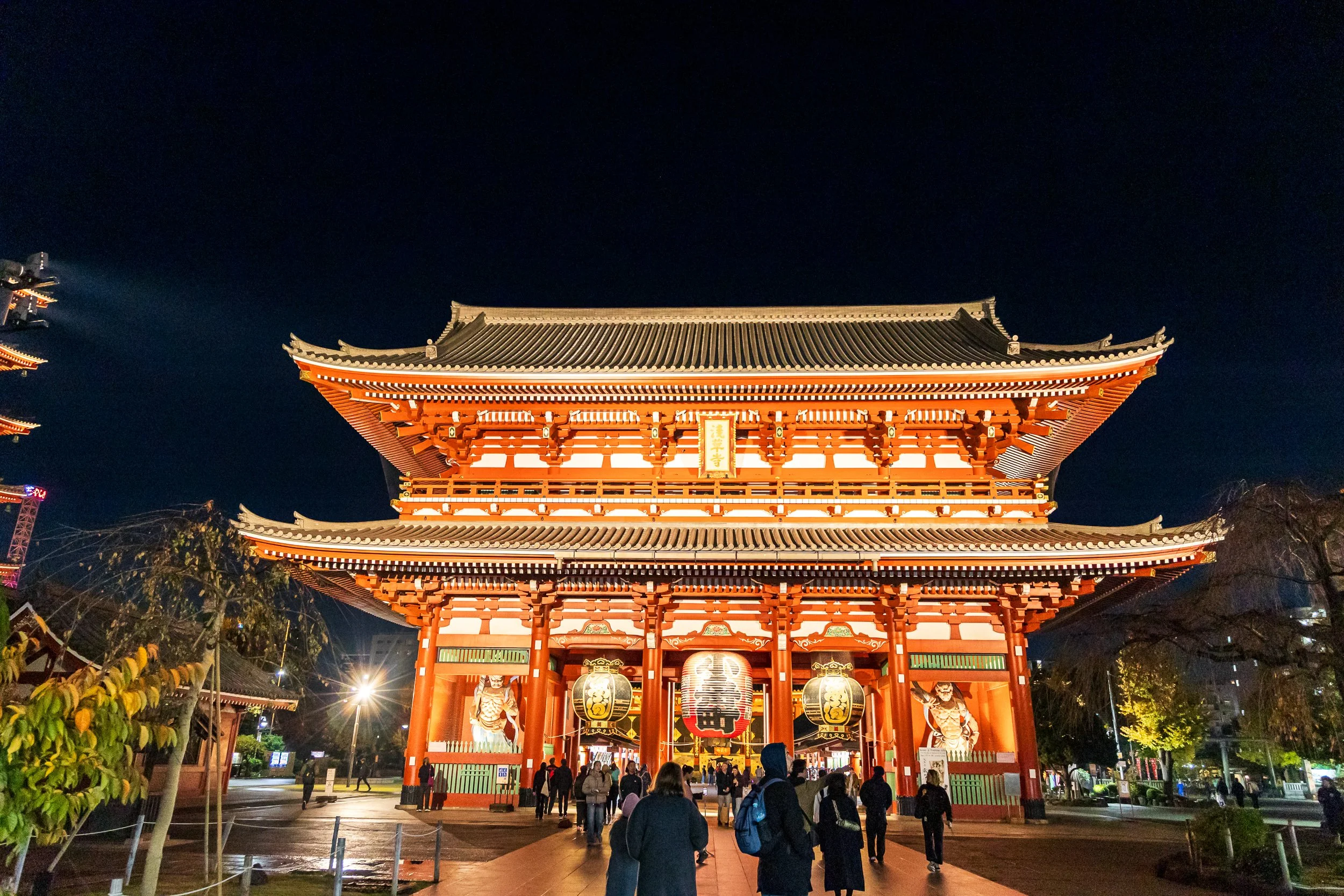
I left Tokyo Skytree around 6:45pm, taking the Asakusa Line one stop from Oshiage Station to Asakusa Station. From there, I walked to Sensō-ji to photograph the temple at night. While I had been in the area earlier in the day and walked through part of Nakamise Shopping Street, I hadn’t made it all the way to the temple at that time.
Sensō-ji is Tokyo’s oldest and most famous Buddhist temple, located in the historic Asakusa neighborhood. Founded in 645 AD, the temple is best known for its iconic Kaminarimon (Thunder Gate), massive red lantern, and lively approach through Nakamise Shopping Street.
The temple’s main hall and shops are open from 6:00am–5:00pm in summer and 6:30am–5:00pm in winter, but the temple grounds are open 24 hours a day. Each evening, the temple buildings are beautifully illuminated until 11:00pm.
I had read that Sensō-ji at night offers a more magical and peaceful contrast to its daytime hustle and bustle, and since I hadn’t been able to visit earlier, seeing it at night felt like the perfect alternative. Although it was still somewhat crowded, it was noticeably calmer than Nakamise Shopping Street during the day and a great time to capture photos of the illuminated temple.
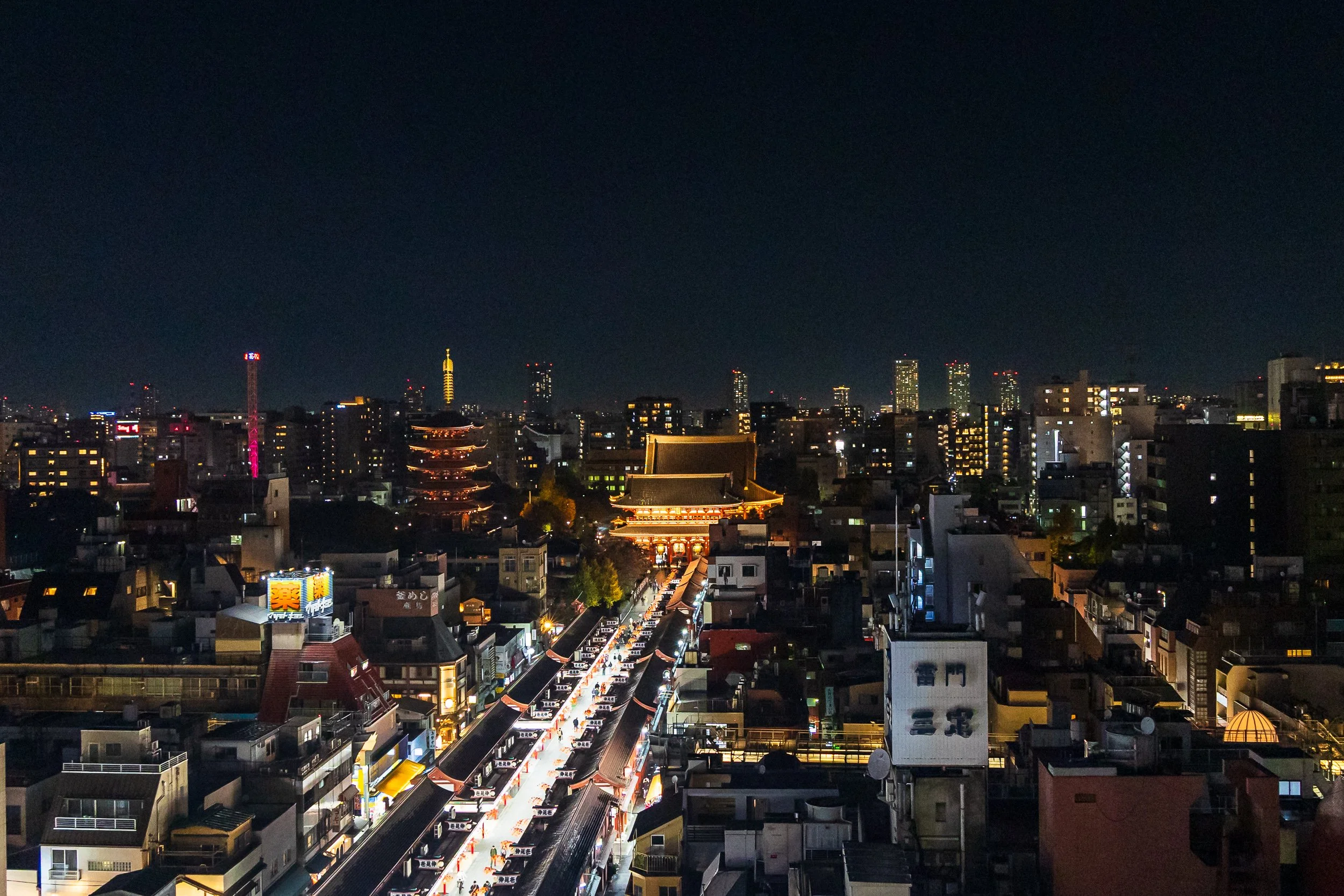
After photographing the temple, I walked to the Asakusa Culture Tourist Information Center to visit its free observation deck for a final round of nighttime photos.
Asakusa Culture Tourist Information Center
The observation deck is located on the 8th floor and offers great views over Nakamise Shopping Street and Sensō-ji on one side, and Tokyo Skytree and the Asahi Flame on the other. It’s especially nice to visit in the evening when the landmarks are illuminated, and since the terrace is open-air, it’s a great spot for photos without glare from glass.
The center is open daily from 9:00am–8:00pm and is completely free to enter, making it a great stop for views without the crowds.
After grabbing a few photos from the observation deck, I headed to dinner at Jugemu Grilled and BBQ Asakusa District.