Day 12: Day 5 in Kyoto - Eastern Kyoto. Day 1 in Osaka - Namba
December 3 was my last day in Kyoto and my first day in Osaka. After checking out of The Machiya Ebisuya, I left my Osprey Fairview 40L backpack at the front desk and spent the morning/afternoon exploring eastern and northeastern Kyoto with just my Peak Design 6L sling.
I started at Kiyomizu-dera Temple, then took a taxi to Ginkaku-ji before following the Philosopher’s Path south toward Nanzen-ji, stopping at Shinnyo-dō and Eikan-dō along the way. Around 4:00pm, I returned to the hotel to pick up my backpack and make my way to Osaka.
Kiyomizu-dera
Kiyomizu-dera, located in the Higashiyama district in eastern Kyoto, is one of Kyoto’s most celebrated and iconic Buddhist temples. Designated as a UNESCO World Heritage Site, it is especially famous for its massive wooden stage, which juts out from the main hall and stands about 13 meters above the hillside. From the stage, you get sweeping views over Kyoto, framed by cherry blossoms in spring and colorful maple leaves in autumn.
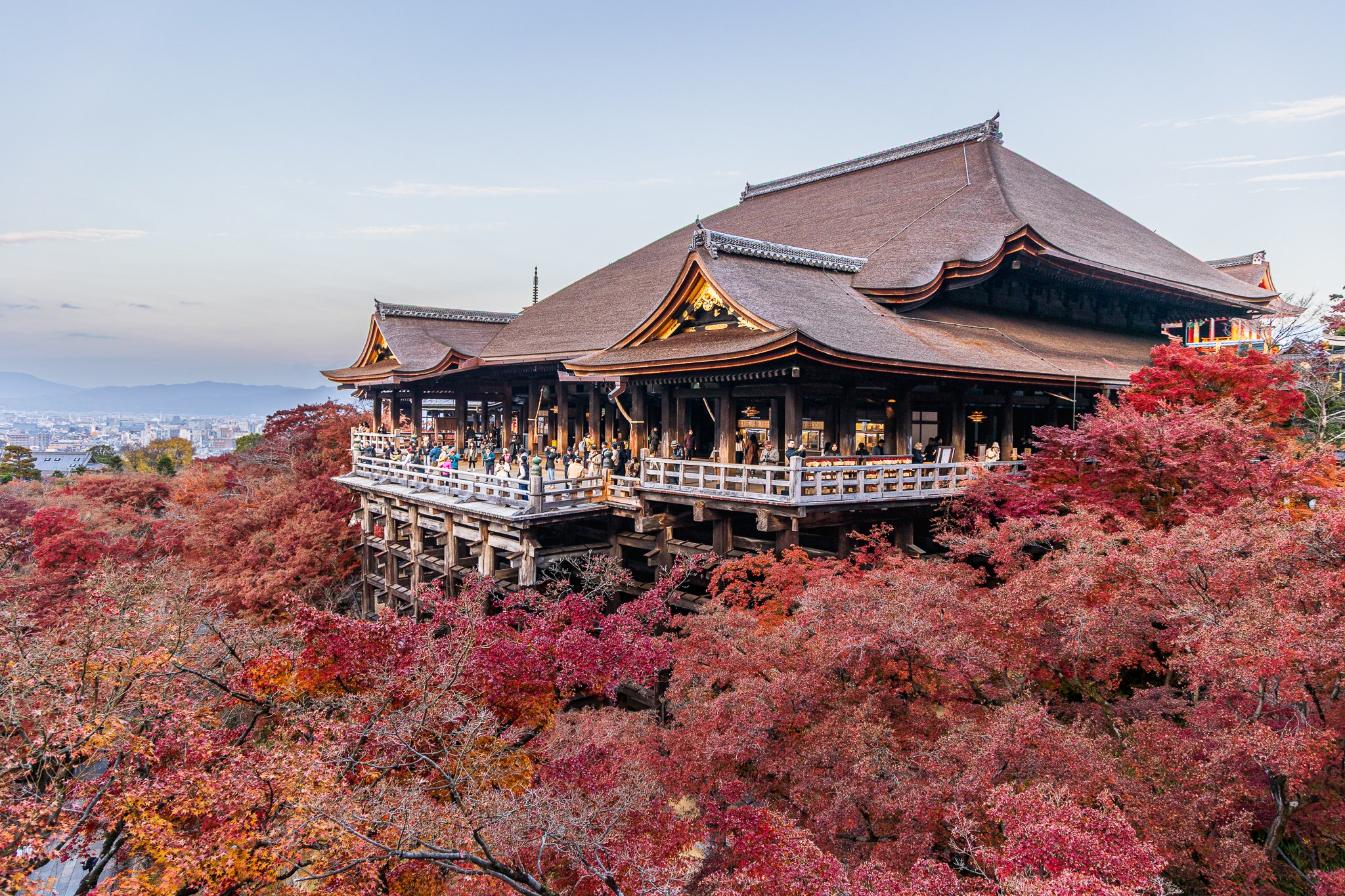
Kiyomizu-dera opens at 6:00am, though closing time varies by season. When I visited on December 3, the temple closed at 6:00pm. Admission for adults was ¥500.
Since Kiyomizu-dera is one of the most famous and popular landmarks in Japan, I wanted to get there early. I arrived around 7:00am and stayed until about 8:00am, taking in the views and photographing the beautiful fall colors from the temple.
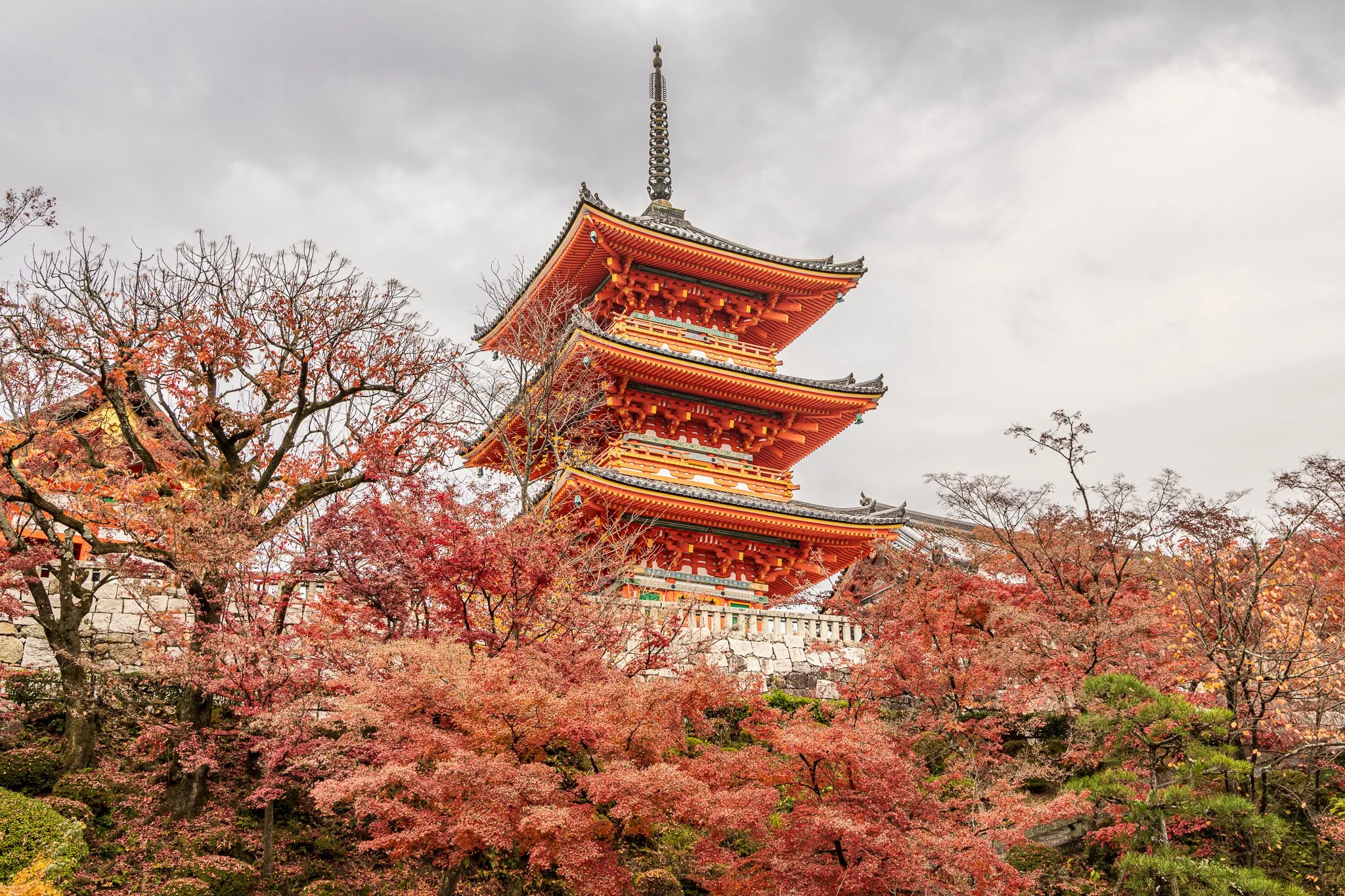
It was a little crowded, but not horribly so. I was actually grateful there were some people there, because I was able to ask a couple of people to take my photo in exchange for taking theirs. It ended up being a nice little travel moment.
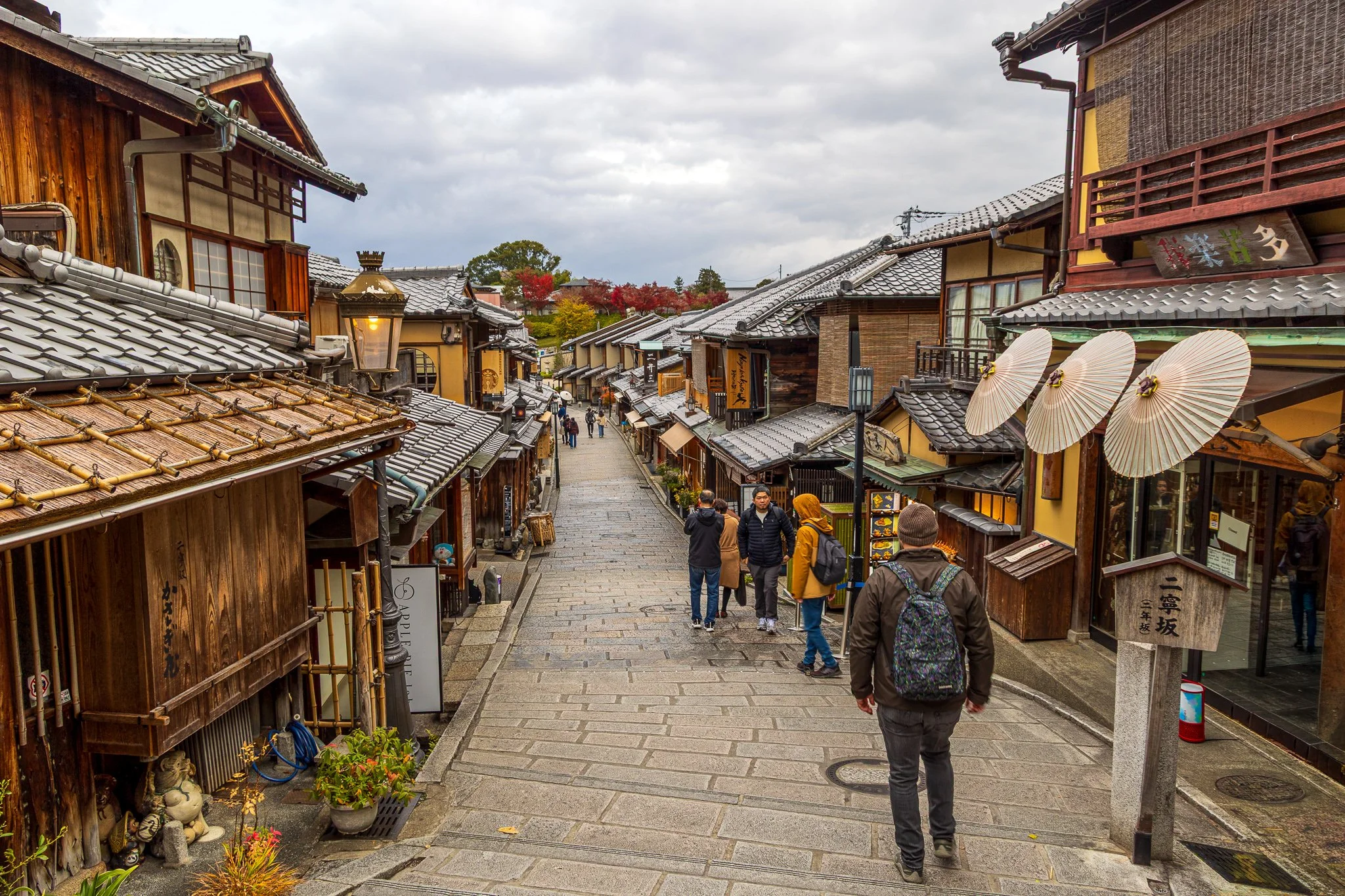
When I was done at the temple, I wandered through the nearby streets of Ninenzaka and Sannenzaka for a bit.
Ninen-zaka and Sannen-zaka Preserved Districts
Ninen-zaka and Sannen-zaka are two preserved historic streets in Kyoto’s Higashiyama District, leading to and from Kiyomizu-dera Temple. The area is known for its traditional atmosphere, with narrow lanes lined by small shops, cafés, restaurants, and souvenir stores.
Many of the shops sell local specialties such as pottery, sweets, pickles, crafts, and other souvenirs. Even though the area is very popular with visitors, the traditional architecture and sloping stone streets still make it one of Kyoto’s most atmospheric neighborhoods to walk through.
I wandered the area for about 20 minutes before grabbing a taxi to Ginkaku-ji. The ride cost ¥2,270, and I arrived just before 9:00am.
Ginkaku-ji
Ginkaku-ji, also known as the Silver Pavilion, is a Zen temple in Kyoto’s northern Higashiyama area. Despite its name, the pavilion is not actually covered in silver. Instead, the temple is known for its understated wooden pavilion, carefully maintained moss garden, and distinctive dry sand garden, including the famous Moon Viewing Platform.
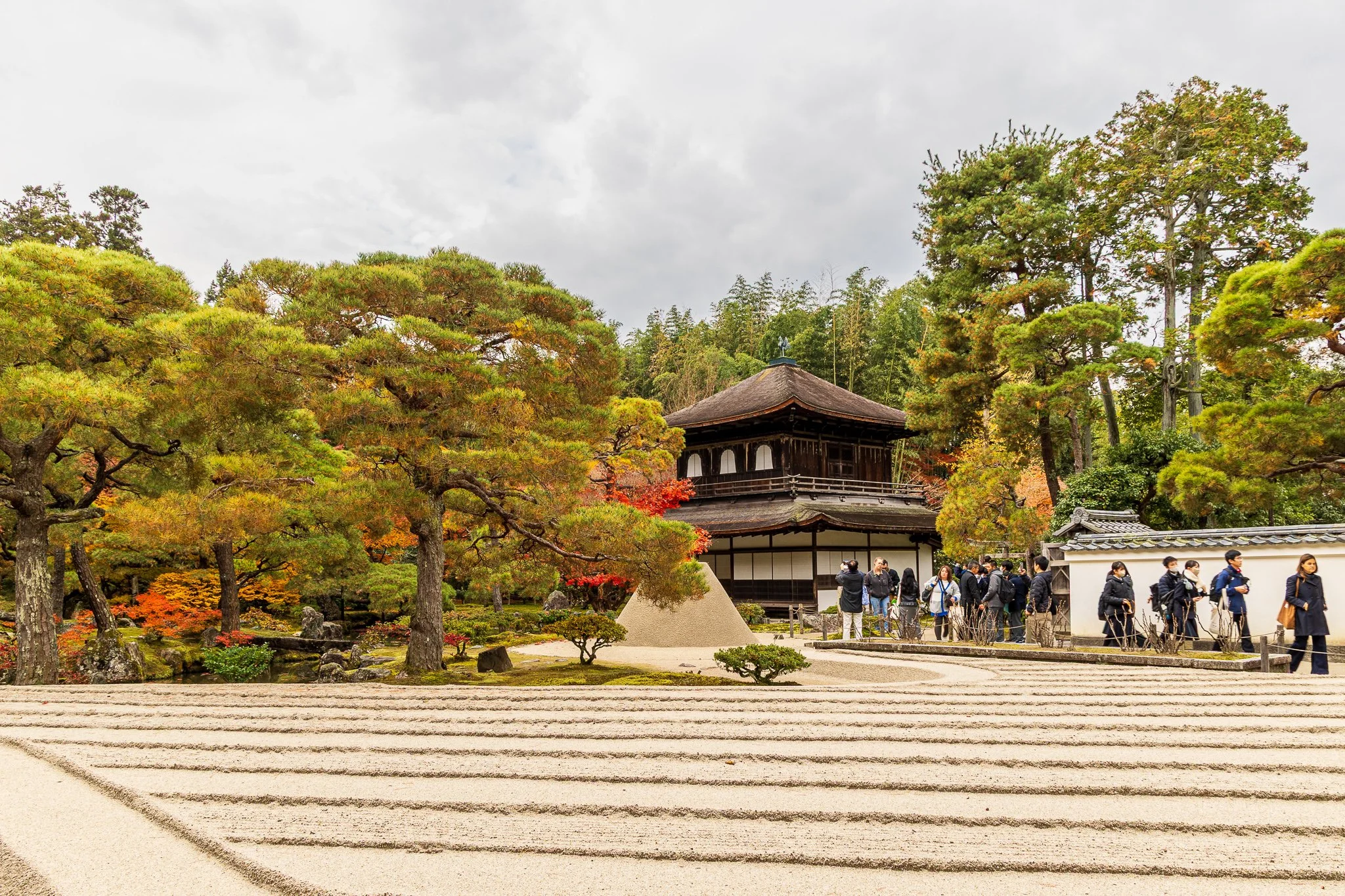
The walking route through the grounds leads past raked sand, moss-covered areas, streams, and garden paths before climbing to an elevated viewpoint over Kyoto. The temple has a quiet, rustic beauty often associated with the Japanese idea of wabi-sabi, or beauty in imperfection.
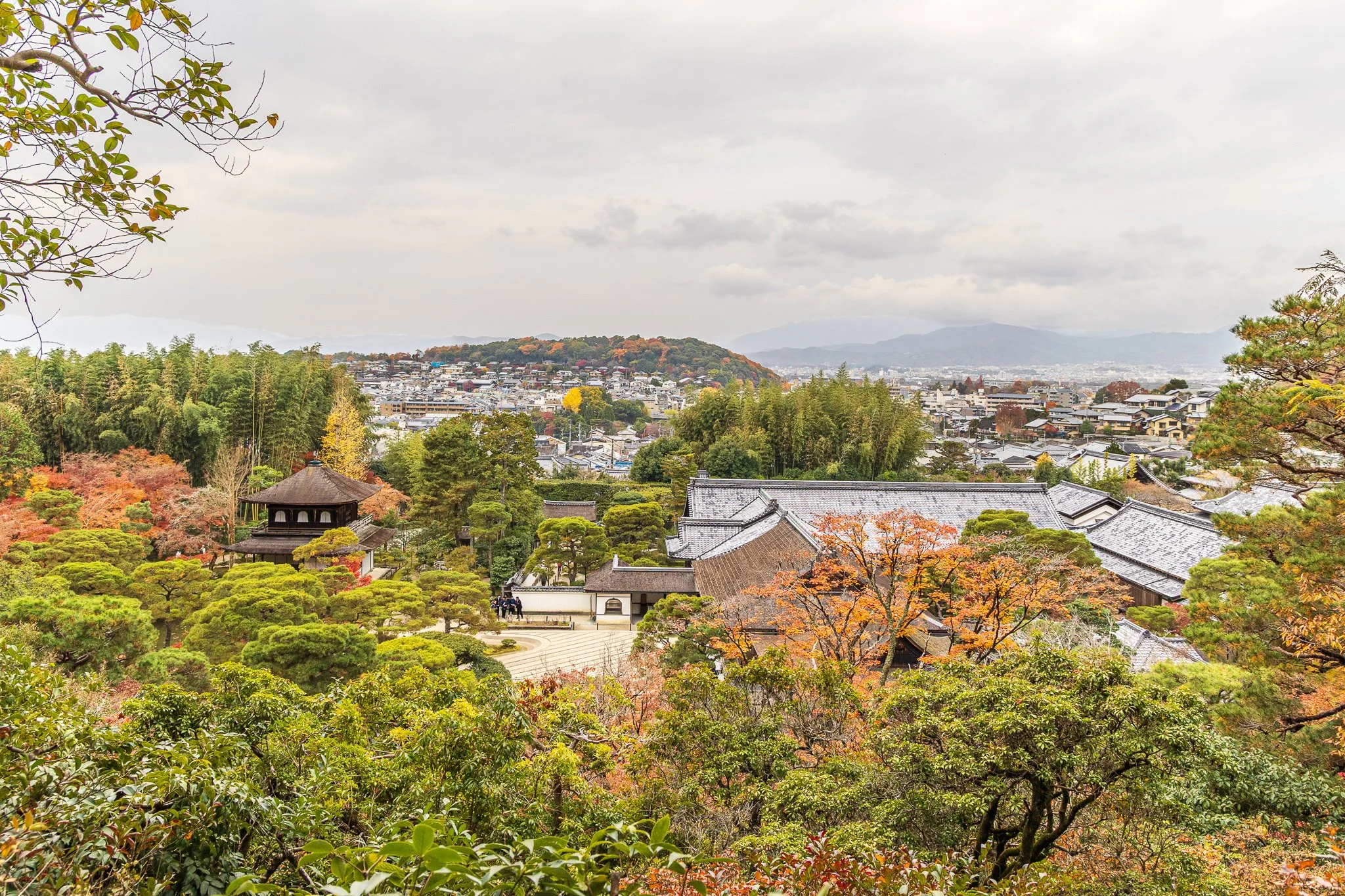
The temple is open from 9:00am to 4:30pm, and admission is ¥1,000 for adults and ¥500 for elementary and middle school students.
I arrived just before the gates opened and spent about 40 minutes wandering the grounds before continuing toward Shinnyo-dō Temple via the Philosopher’s Path.
Philosopher’s Path
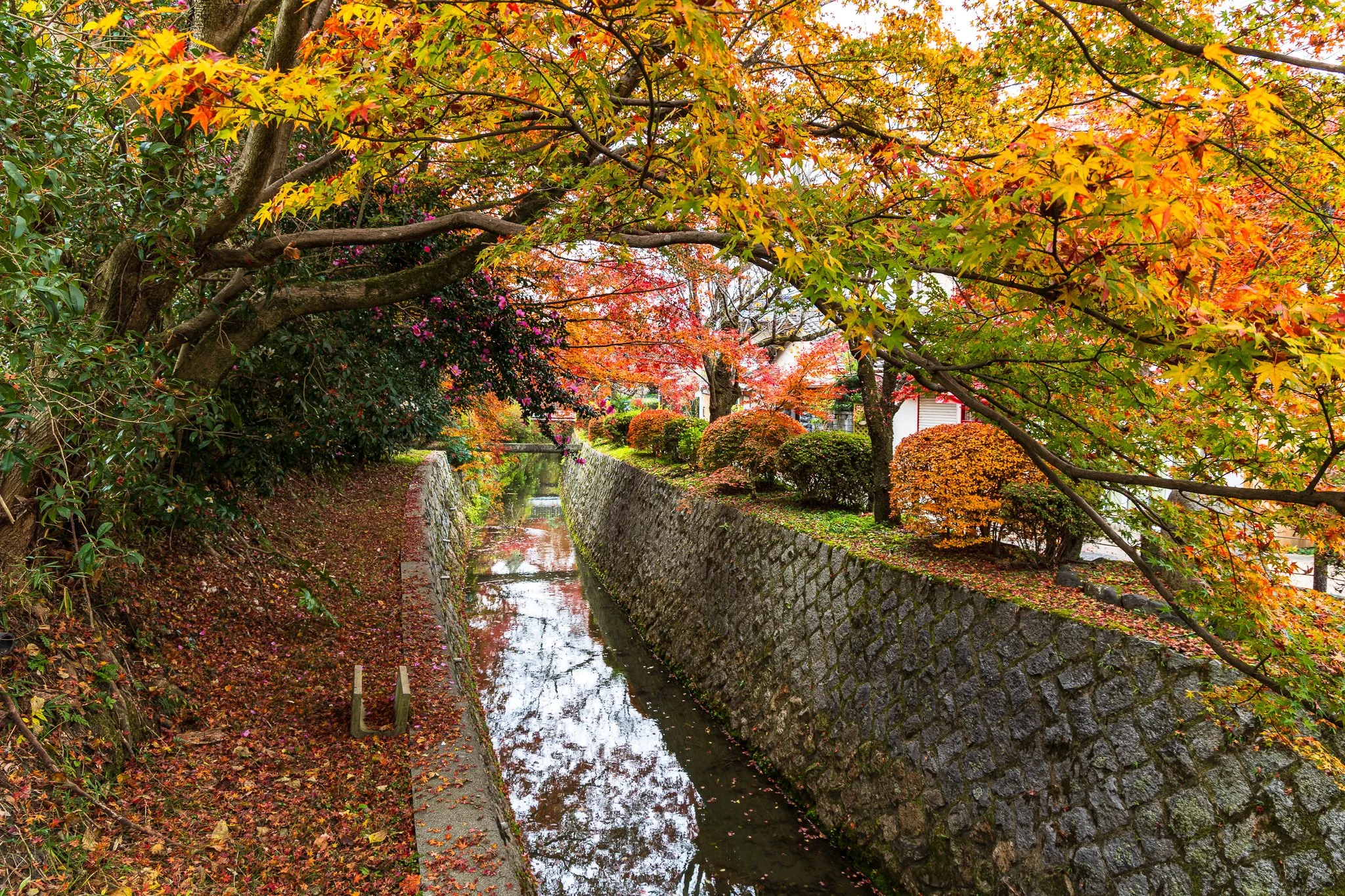
The Philosopher’s Path is a scenic walkway in northern Higashiyama that follows a canal lined with trees. The path stretches roughly 1.5 miles and is often used as a walking route between Ginkaku-ji and Nanzen-ji.
It is especially famous in spring, when the cherry trees along the canal bloom, but it can also be beautiful in autumn. By December 3, many of the leaves had already fallen, so it was not as vibrant as Kiyomizu-dera had been earlier that morning. Even so, it was still a very pretty and peaceful path to walk.
Shinnyo-dō
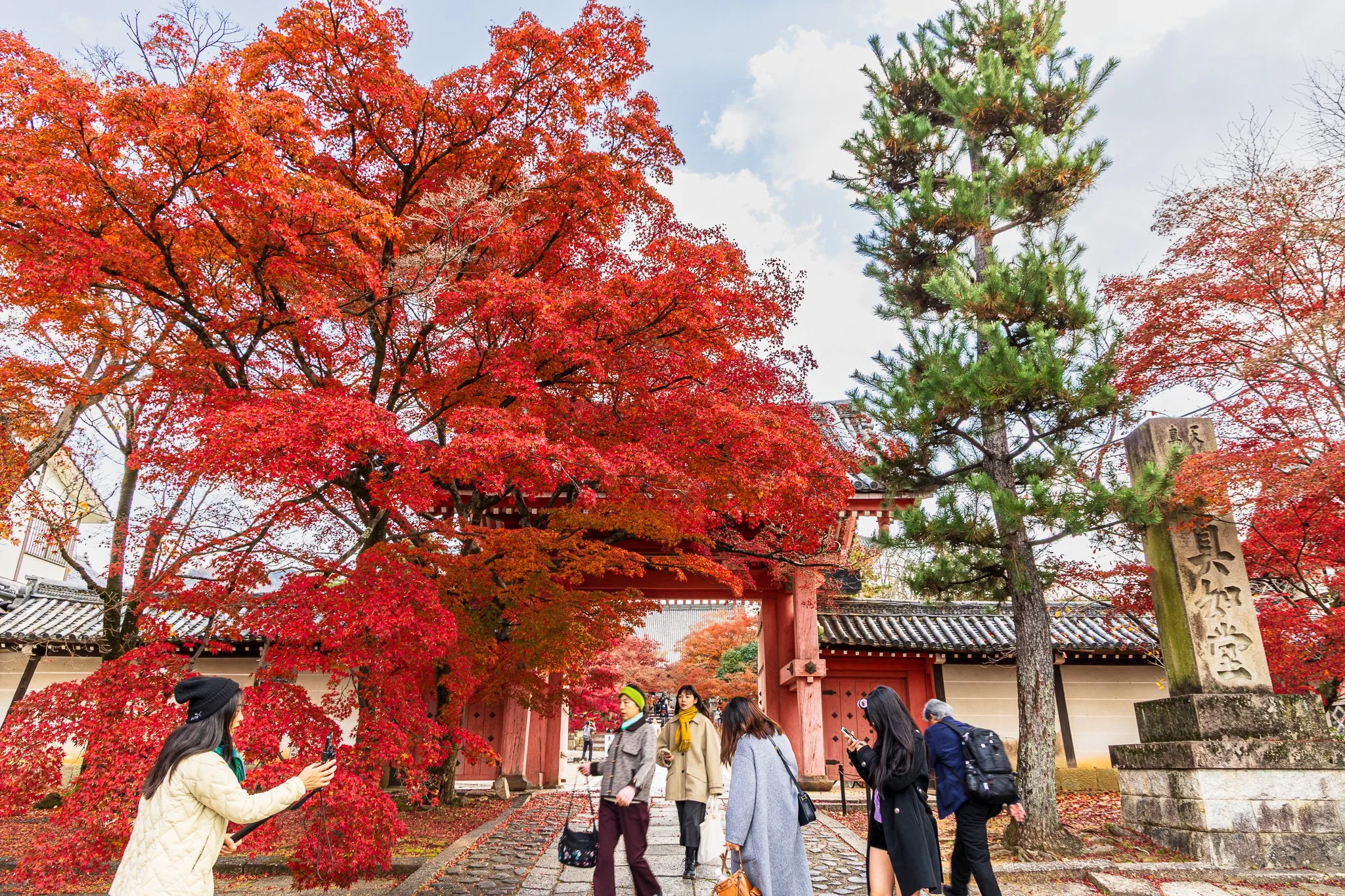
From Ginkaku-ji, I walked about 20 minutes to Shinnyo-dō, officially known as Shinshō-gokuraku-ji. This Tendai-sect temple was established in 984 by a priest from Enryaku-ji Temple and is especially known for its maple-filled grounds, which turn vivid shades of red and orange in late November and early December.
Although it is popular with locals and photographers during autumn, Shinnyo-dō still feels a bit more tucked away than some of Kyoto’s most famous fall foliage spots. When I arrived around 10:30am, it was somewhat crowded, but the crowds felt quite manageable.
The temple grounds are free to enter, including the pagoda area and cemetery path, while the inner chamber and gardens require a separate admission fee. I spent almost an hour wandering the grounds before walking toward Eikan-dō, stopping at Ichijoji Nakatani along the way for lunch.
Eikan-dō
Eikan-dō, also known as Zenrin-ji, is one of Kyoto’s most famous temples for autumn colors. It is even nicknamed “Maple Eikan-dō” because of the thousands of maple trees planted throughout the grounds.
Set on a hillside, Eikan-dō has main halls built along the base of the Higashiyama mountains, with paths and buildings stretching upward into the forested foothills. The Tahōtō Pagoda, a two-story pagoda located at one of the highest points of the temple grounds, provides sweeping views over Kyoto, especially in autumn when the area is surrounded by red maple leaves.
The grounds also include Hōjō Pond, where autumn colors reflect in the water around the surrounding trees and stone bridge.
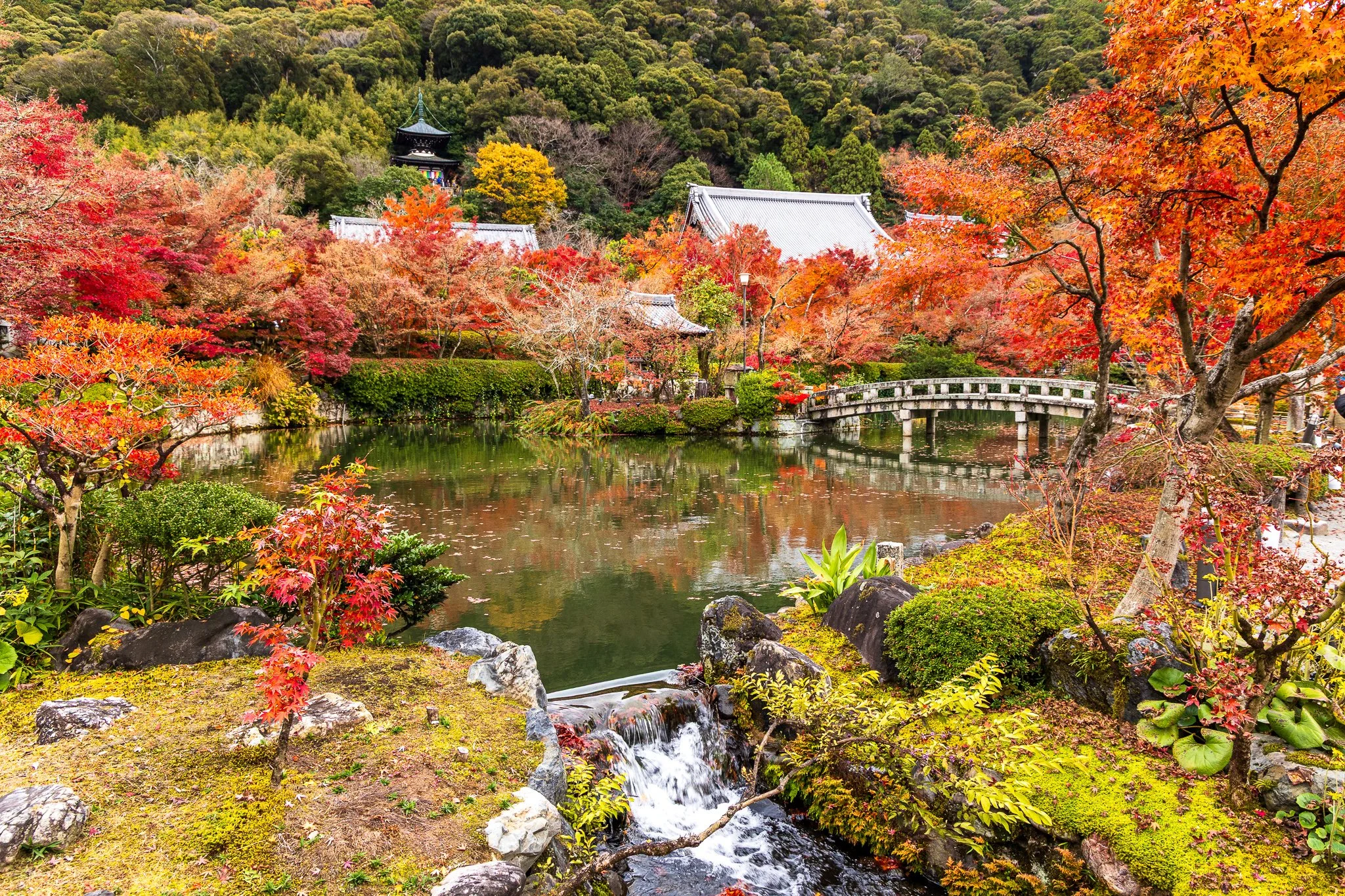
Eikan-dō is open daily from 9:00am to 5:00pm, with last entry at 4:00pm. General admission is ¥600 for adults and ¥400 for students.
I arrived at 12:15pm and spent about an hour there before walking about 5 minutes to Nanzen-ji.
Nanzen-ji
Nanzen-ji is a major temple complex in Kyoto’s Higashiyama area and one of the most important Rinzai Zen temples in Japan. It also marks the southern end of the Philosopher’s Path.
The temple complex is spacious and surrounded by trees and mountains, making it a beautiful place to wander, especially during autumn.
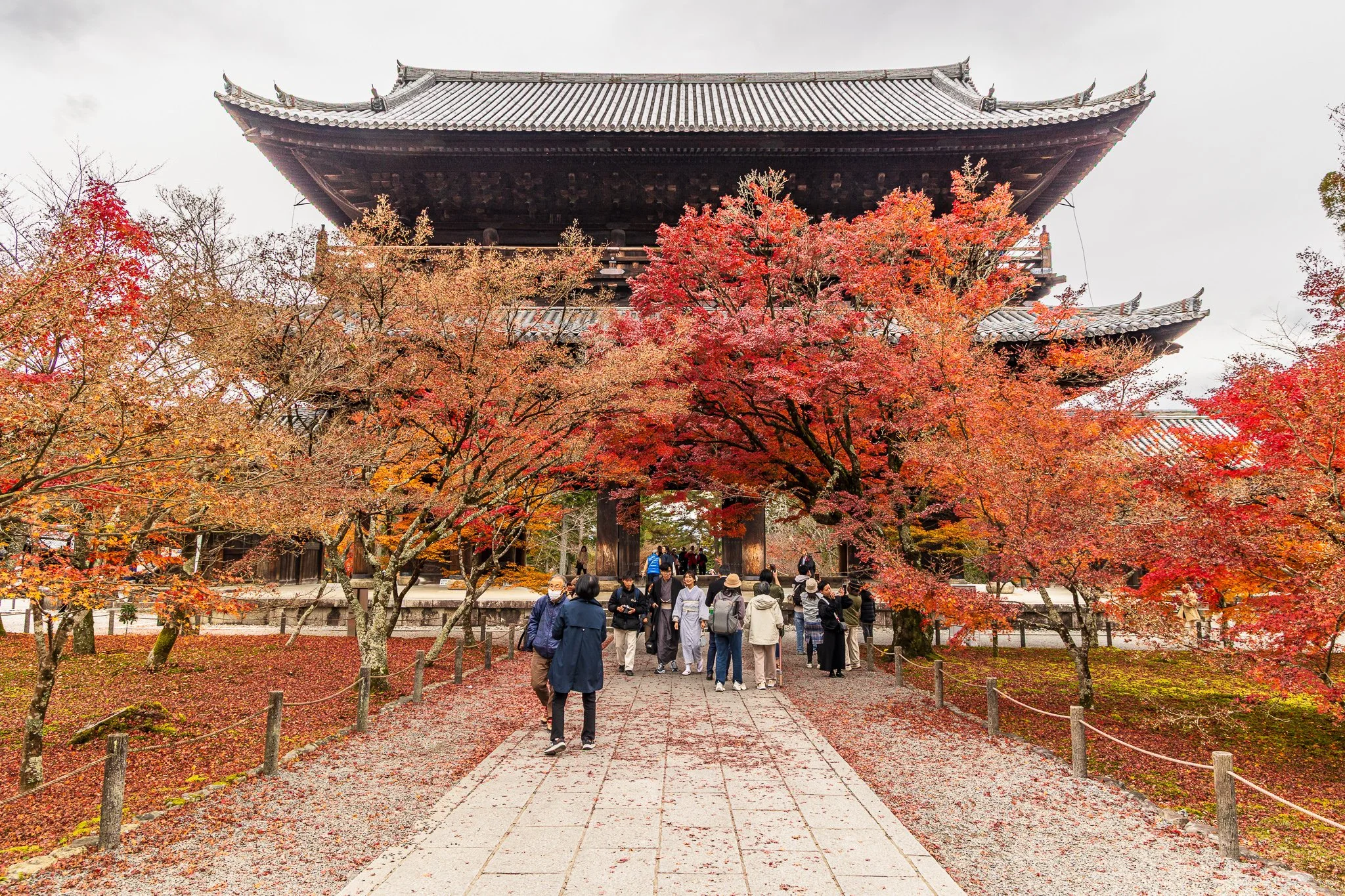
The main temple grounds are free to enter, though some areas, including the Sanmon Gate, Abbot’s Quarters, and sub-temples, require separate admission fees.
One of the most unique features of Nanzen-ji is the Suirokaku Aqueduct, a brick aqueduct that looks almost European in style. It was built during the Meiji Period as part of the Lake Biwa Canal system, which brought water from Lake Biwa to Kyoto. Today, it is one of the most popular photo spots in the Nanzen-ji complex.
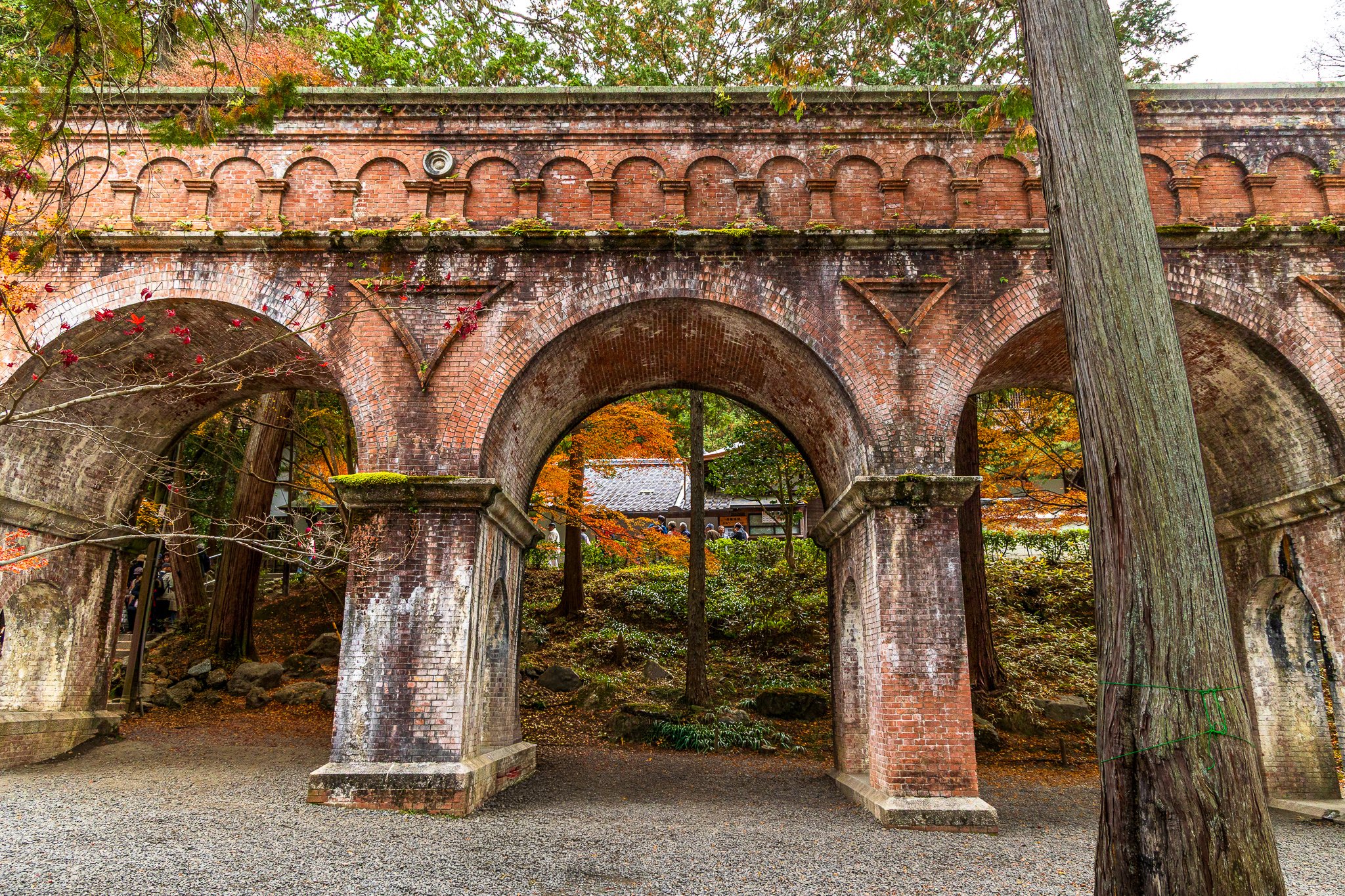
I arrived around 1:00pm and spent about two hours exploring Nanzen-ji before making my way back to The Machiya Ebisuya.
Commuting from Kyoto to Osaka
I arrived back at The Machiya Ebisuya around 4:00pm to pick up my backpack and make my way to Osaka. Google Maps showed that the best route to Sotetsu Fresa Inn Osaka-Namba, my hotel in Osaka, was to take the Hankyu Kyoto Line, transfer to the Midosuji Line, and walk a bit. The entire commute took almost an hour and a half.
By doing that, I was taking local trains from Kyoto to Osaka, which wasn’t exactly ideal with my 40L backpack. At first, I wasn’t able to find a seat and felt a little in the way. In hindsight, I probably should have gone to Kyoto Station and taken the JR Line to Osaka for a more comfortable ride. Oh well. It all worked out, and I checked into my hotel around 5:30pm.
Checking into Sotetsu Fresa Inn Osaka
I chose to stay at Sotetsu Fresa Inn Osaka-Namba because it was conveniently located near Dotonbori, Shinsaibashi, and Namba Station, right in the heart of Osaka’s entertainment, shopping, and food district.
It was also fairly affordable, costing $386.94 for three nights in December 2025. The location was especially convenient because one of the entrances to Namba Station was practically right outside the front door, giving me easy access to the Osaka Metro Midosuji Line and the Nankai Line, both of which I used while I was in Osaka.
Evening in Namba
After dropping off my bag at the hotel, I headed back out to wander around Namba for a bit.
I started my evening with dinner at Namba Ramen Ichiza, a ramen dining area located on the 9th floor of Edion Namba. It brings together several ramen shops from around Japan, making it a fun and convenient place to try a bowl of ramen without having to search too far after a travel day.
I had pork ramen with egg, green onions, and an Asahi beer. It was delicious!
After dinner, I treated myself to a cocktail at Bar Around the World Osaka, a small bar in Namba with a stylish, intimate atmosphere. When I got there around 7:15pm, it was just me and another couple in the bar. Since it was still quiet, I was able to talk with the bartender for a while. He knew some English, and I unfortunately still only knew a few Japanese phrases, like sumimasen and arigatō gozaimasu. To bridge the gap, we used Google Translate to have a conversation.
It was the perfect way to end the night and a wonderful start to my time in Osaka.