On Friday, December 5, 2025, I spent my third day based in Osaka and my second full day in the city exploring a mix of nature, temples, retro neighborhoods, hidden alleys, cocktails, and sushi. I started the morning with an early trip to Minoh Falls, then returned to the Minami (South Osaka) district to wander through Shitennō-ji, Shinsekai, Namba, Amerikamura, and Hōzenji Yokochō, before ending the night with drinks at Bar Nayuta and dinner at Kaiten Sushi Ginza Onodera.
Commute to Minoh Park and Minoh Falls
I left my hotel around 6:00am to take the train to Minoh Park to see Minoh Falls. Since I knew it would take about an hour to get to the park and about 40 minutes to walk to the waterfalls, I wanted to leave early so I would still have plenty of time to explore Osaka afterward.
To get there, I took the following route:
Midosuji Line to Umeda Station
Walked to Osaka-Umeda Station
Took the Takarazuka Main Line to Ishibashi handai-mae Station
Transferred to the Hankyu Mino Line and continued to Mino-o Station
I arrived at Mino-o Station around 7:00am and walked through Minoh Park to reach the waterfall.
Minoh Park and Minoh Waterfall
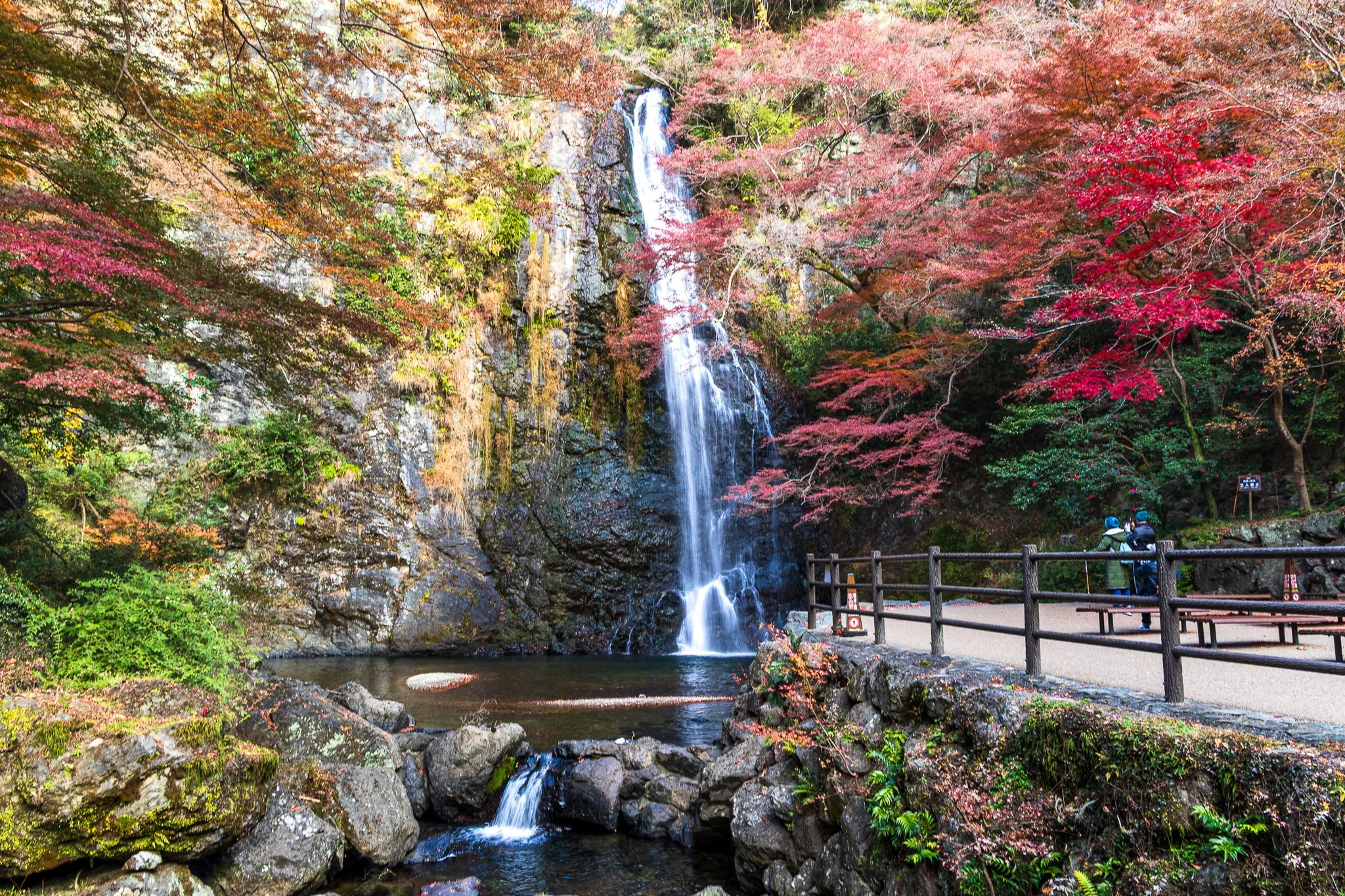
Minoh Park is a quasi-national park in Osaka Prefecture, just north of Osaka city, and one of the area's best-known fall foliage spots. One of the park’s main natural attractions is Minoh Falls, a 33-meter waterfall surrounded by vibrant red maples.
The waterfall is about 2.8 kilometers from Mino-o Station. The path leading to it is paved and relatively easy, taking about 40–45 minutes each way at a relaxed pace. The park is free to enter and is especially popular in autumn, when visitors come for the fall colors and momiji tempura, or fried maple leaves.
At the beginning of the path, there are small shops, stalls, and a public restroom. After that, the trail becomes more of a quiet, forested nature walk with beautiful fall foliage.
About halfway up the trail is Ryuan-ji, a historic Shugendō temple founded in 658 AD. The temple area is known for its red Zuiun Bridge, mossy stone steps, and peaceful setting along the path. I didn’t go inside, but I did stop to take some photos of the temple grounds and from the bridge.
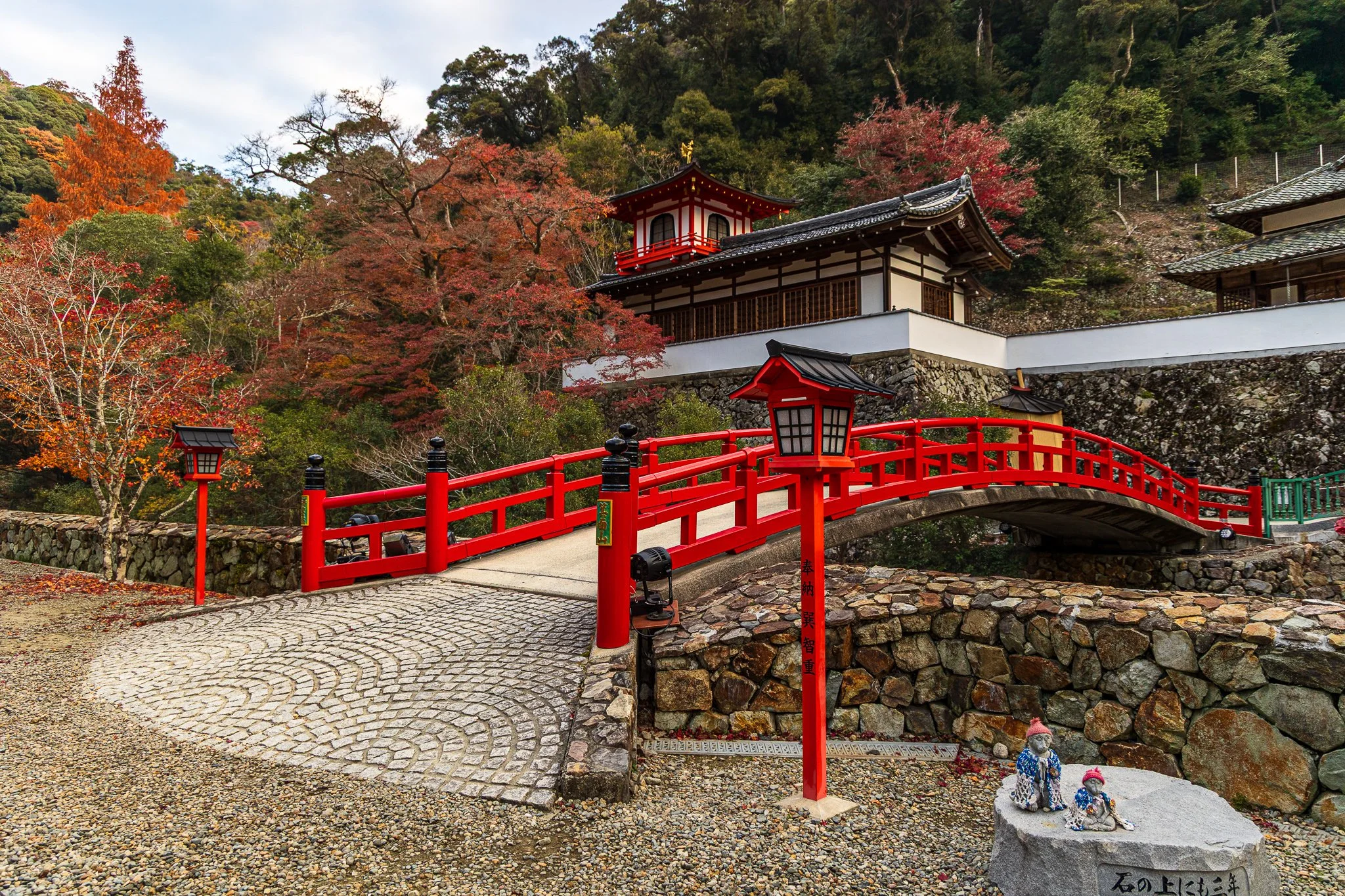
Since I arrived so early, there weren’t many people around. The handful of people I did pass greeted me with “Ohayō.” I later looked it up and learned it meant “good morning.” It truly was a beautiful and pleasant walk.
When I was about 200 meters from Minoh Falls, I saw that the path leading to the waterfall was officially restricted and fenced off.
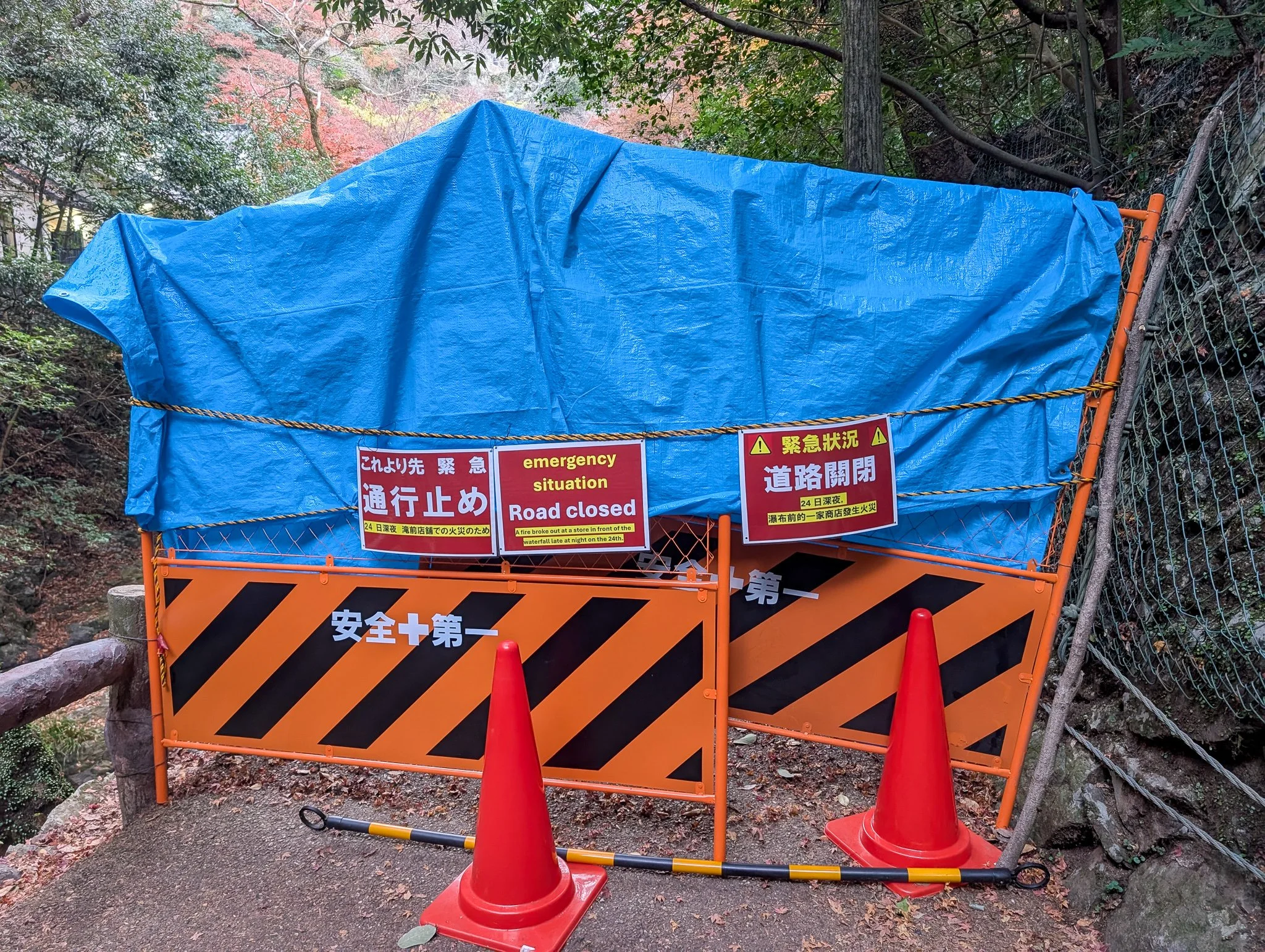
While standing there, I did some quick research on my phone and learned that a fire had broken out near a food stall and shop area close to Minoh Falls late on November 24, 2025, shutting down the path to the waterfall. I was devastated and nervous that my entire commute from Osaka had been for nothing. While the park itself was beautiful, the waterfall was the part I had been most excited to visit.
I didn’t want to just turn around, but I also didn’t see anyone nearby to ask whether there was an alternate route. So, I stood there for about 10 minutes, hoping someone would come by with an explanation.
Eventually, a couple arrived, followed by another solo visitor. Then, someone who appeared to work for the park opened a gate leading to an unpaved detour path with stairs, which allowed us to safely access a viewpoint of the waterfall. The path was not stroller- or wheelchair-friendly, but it gave me the access I needed to see Minoh Falls.
After all that uncertainty, I was so grateful to be able to see the waterfall in person and spend some time taking photos.
When I was ready to head back down, I saw a man walking a yellow lab. I love dogs and frequently ask people if I can pet them. I had seen quite a few dogs in Japan by this point, but I didn’t remember seeing a yellow lab yet. I asked the man if I could pet his dog, and he said yes. The dog was so sweet!
I learned that the man’s name was Tim, and he was also walking back down toward the base of the park. We ended up walking together for a while, and it was really nice talking with him, learning about his time in Japan, and hearing more about the park.
There is more to see in Minoh Park, including Katsuo-ji Temple, but I decided to skip it so I could head back into Osaka and explore more of the city. I hopped onto the Hankyu-Mino Line at Mino-o Station around 10:00am, making my trip to Minoh Park and Minoh Falls last 3 hours.
Commute to Shitennō-ji
When I got back to the base of Minoh Park, I walked to Mino-o Station and took the train back toward Osaka to visit Shitennō-ji.
To get there, I retraced my steps and took the following route back:
Hankyu Mino Line to Ishibashi handai-mae Station
Transferred to the Takarazuka Main Line to Osaka-Umeda Station
Walked to the Umeda Station
Took the Midosuji Line to Tennōji Station
Walked to Shitennō-ji
Shitennō-ji
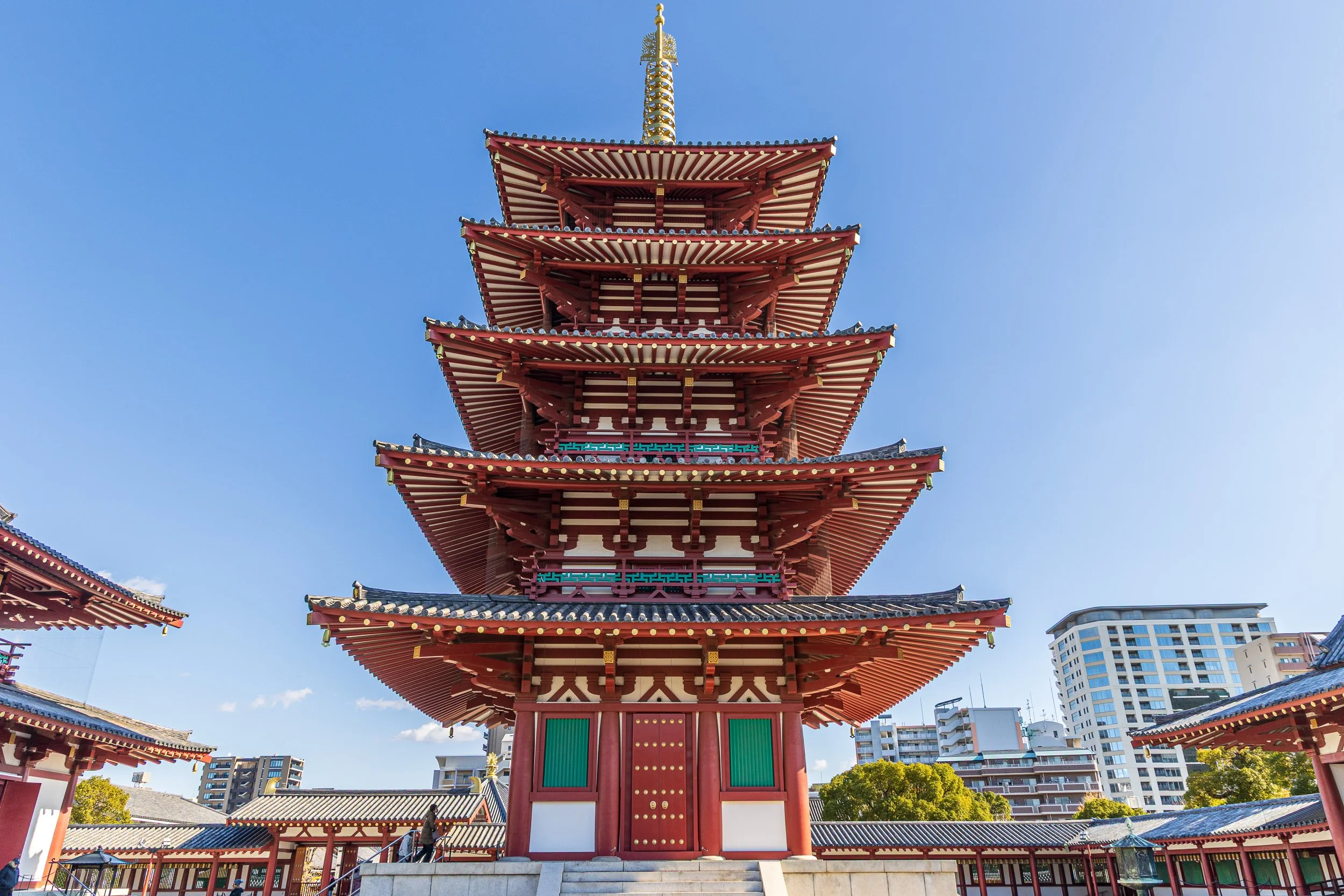
Shitennō-ji is one of Japan’s oldest temples and is considered the first Buddhist temple in Japan to be built by the state. Founded by Prince Shōtoku, one of Japan’s most important historical figures, the temple is known for its ancient architectural style and long history.
Gokuraku-jōdo Garden, located just a short walk from the main temple area, is a serene Pure Land-style garden designed to evoke the Western Paradise. It features a circular pond, arched bridges, maples, and ginkgo trees, making it especially beautiful in autumn, with fall colors typically appearing from mid-to-late November through early December.
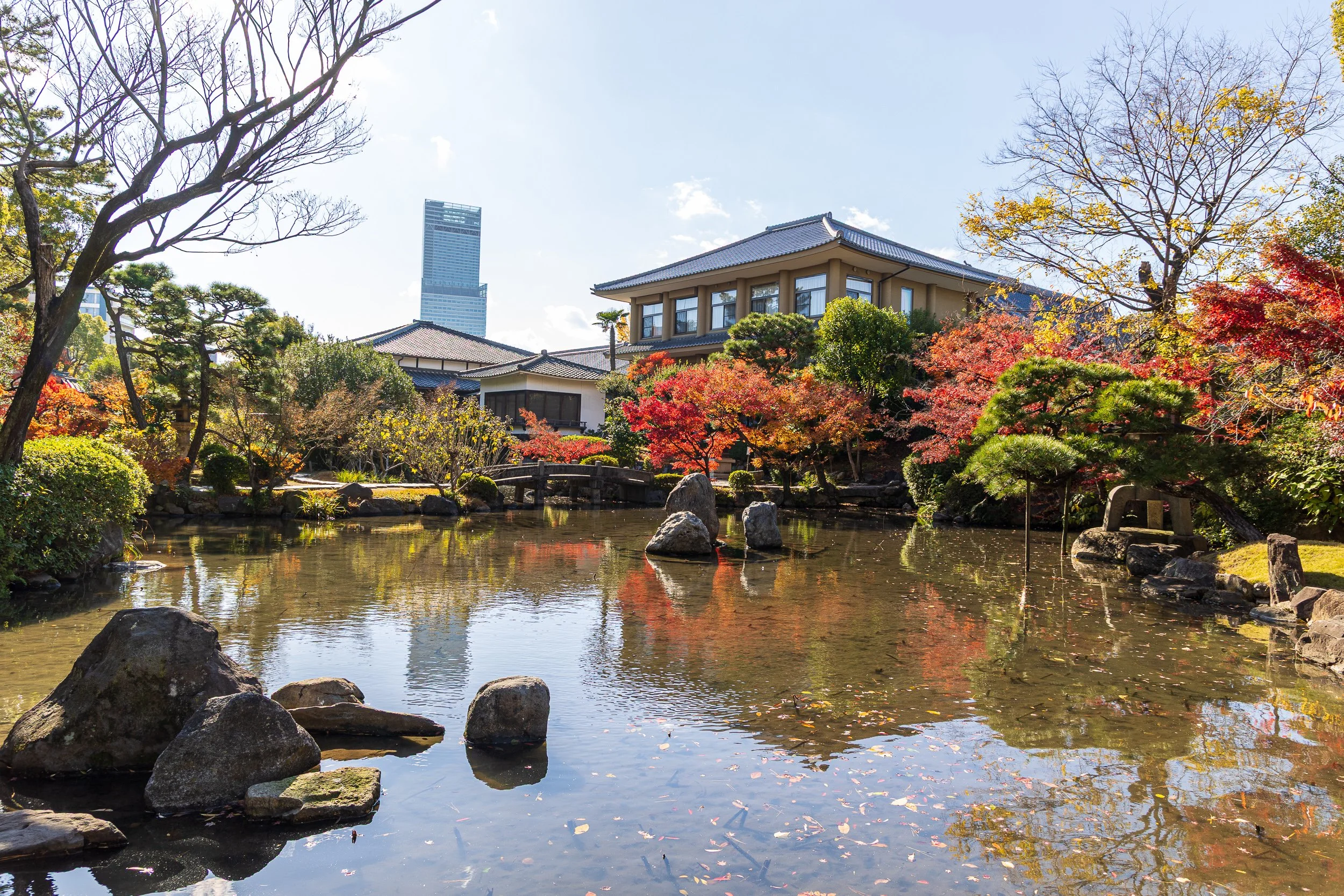
The outer temple grounds are free to visit, while the paid inner areas require separate admission. At the time of my visit, admission was ¥300 for the Central Temple, ¥300 for Gokuraku-jōdo Garden, and ¥500 for the Treasure House. I visited the main temple grounds and Gokuraku-jōdo Garden, but skipped the Treasure House. The paid areas are generally open from 8:30am to 4:30pm from April through September and 8:30am to 4:00pm from October through March.
I arrived around 11:30am and spent about an hour wandering the temple grounds before getting lunch at Okonomiyaki Takara.
Lunch at Okonomiyaki Takara
I left Shitennō-ji around 12:30pm with the intention of heading toward Shinsekai to photograph Tsūtenkaku Tower and wander around the area. I had been planning on getting lunch in Shinsekai, but I wasn’t sure where I wanted to go.
As I started the almost 20-minute walk to Shinsekai, I passed a sign for a restaurant called Okonomiyaki Takara. Realizing how hungry I had gotten, I figured it would make the most sense to just eat there, then wait to get lunch in Shinsekai.
The restaurant has an intimate 12-seat counter, where the dishes are prepared right in front of you. There was only one other person inside when I arrived, and they had an English menu available. Okonomiyaki Takara is a family-run restaurant that has been serving traditional Osaka-style savory pancakes, or okonomiyaki, for over 50 years.
Halfway through my meal, a family from Florida came in for lunch with someone I assumed was a family friend. As I was getting ready to leave, I ended up talking with them and learned that he was actually a tour guide who regularly brings his clients to this restaurant. I hadn’t realized it at first, but it seemed like I had stumbled onto a bit of a hidden gem!
It ended up being the perfect place to finally try a dish I hadn’t had in Japan yet and to rest my feet before continuing on with the rest of the day.
Shinsekai & Tsutenkaku Tower
After lunch, I walked to Shinsekai, a colorful district packed with casual restaurants, inexpensive shops, bold signage, and retro Osaka charm. It was a fun place to wander for a bit.
Shinsekai, which means “New World,” was developed in the early 1900s after the 1903 National Industrial Exposition brought millions of visitors to the area. Its northern section was modeled after Paris, while the southern section was inspired by Coney Island in New York.
At the center of the district stands Tsūtenkaku Tower, the nostalgic symbol of Shinsekai. The original tower was built in 1912 and inspired by the Eiffel Tower, but it was dismantled during World War II. The current tower was rebuilt in 1956 and stands 103 meters tall, with an observation deck offering 360-degree views over Osaka. I didn’t go up to the observation deck, but I was happy just wandering around Shinsekai and photographing the tower from below.
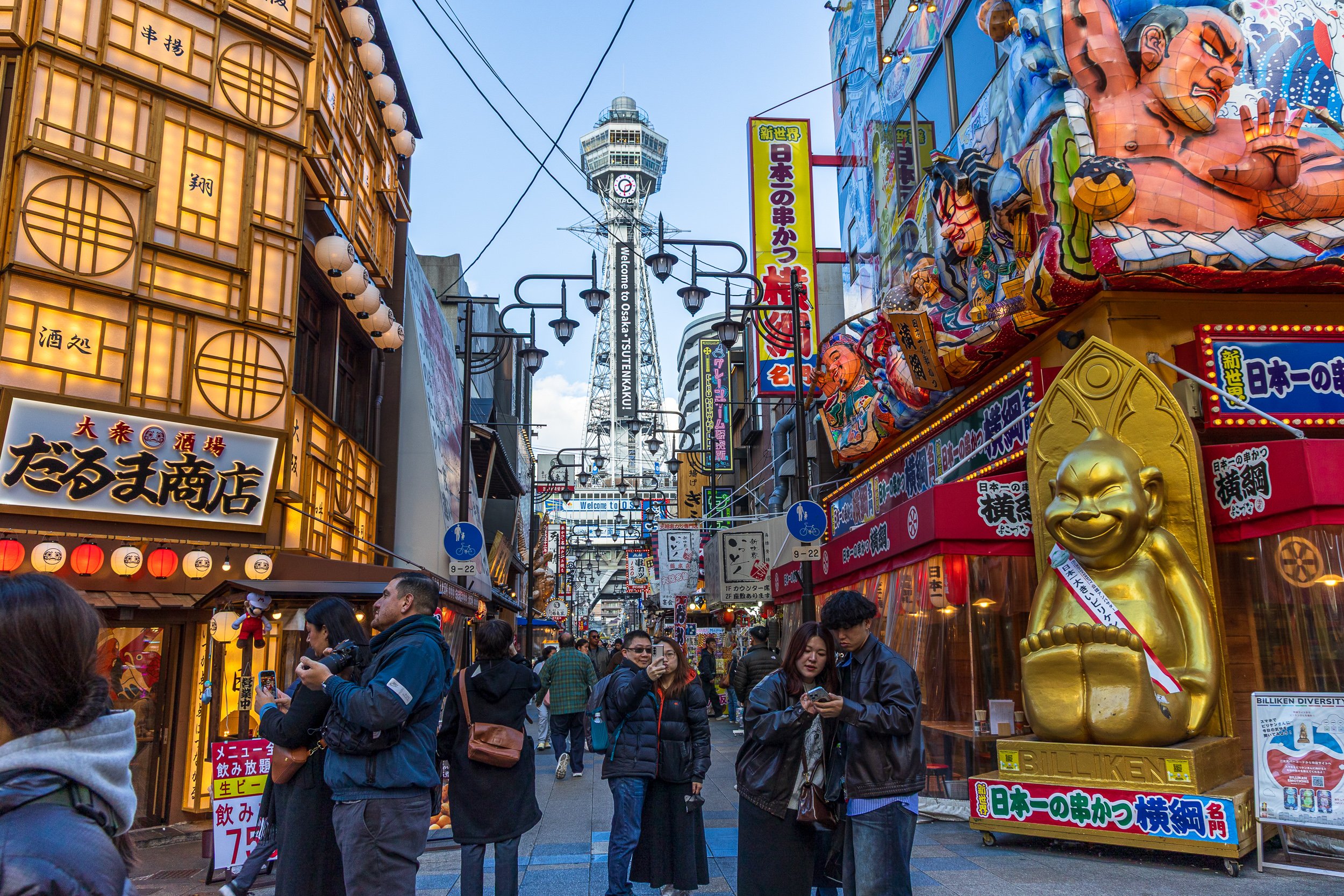
Shinsekai is also known for kushikatsu, one of Osaka’s classic specialties. Kushikatsu consists of skewered, battered, and deep-fried foods, with options ranging from meat and seafood to vegetables and even dessert-style skewers. One of the most famous places to try it is Kushikatsu Daruma, which originally opened in Shinsekai and now has multiple locations throughout Osaka. Since I had already tried kushikatsu the night before at the Dōtonbori location, I mostly treated Shinsekai as a place to wander, take photos, and enjoy the retro atmosphere.
I wandered around the district for about an hour, taking in the views of Tsūtenkaku Tower and the neighborhood’s nostalgic atmosphere, before continuing on to Namba Yasaka Jinja.
Namba Yasaka Jinja
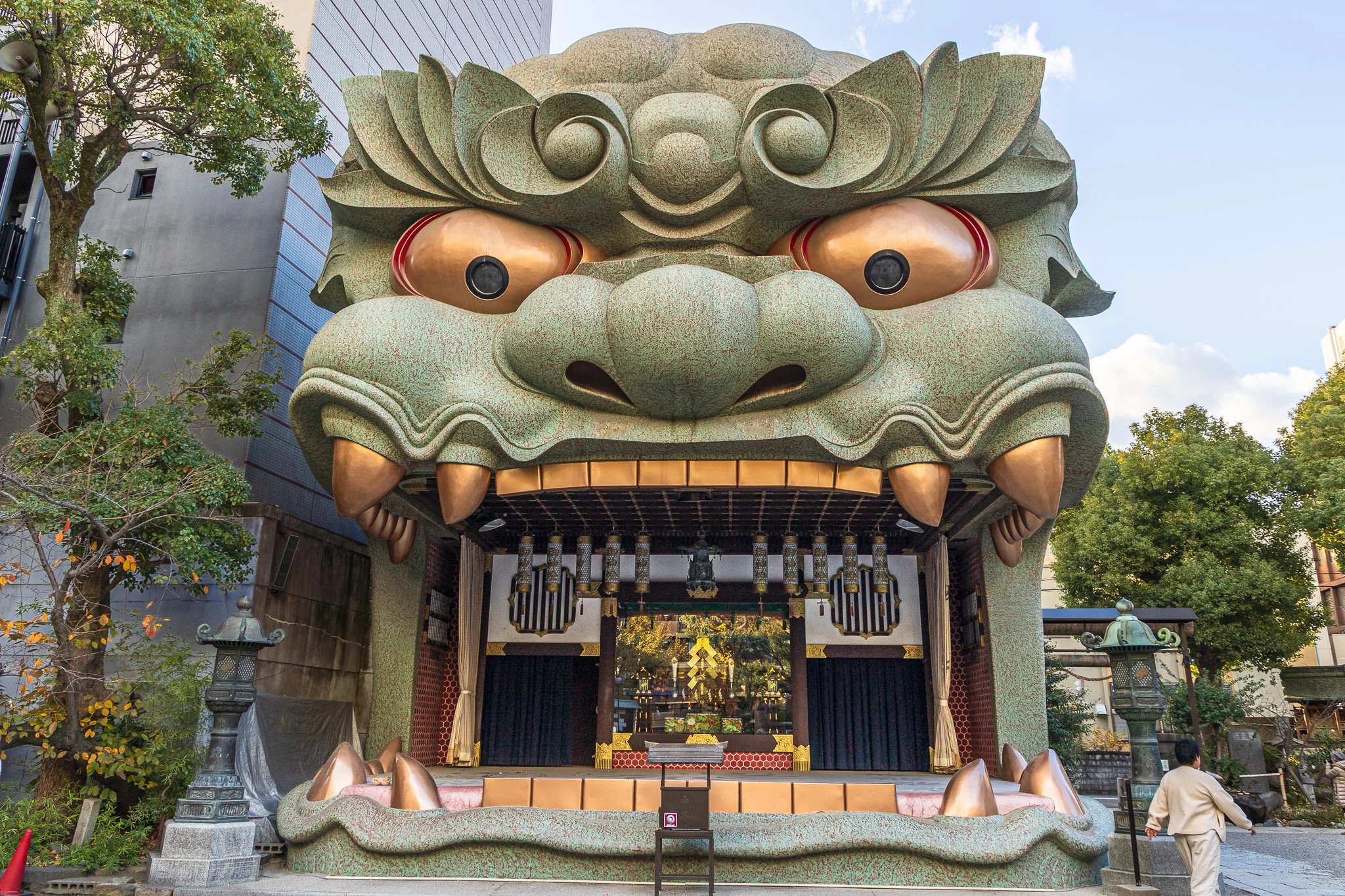
Located in the Namba area, Namba Yasaka Jinja is one of the most unique and photogenic shrines in Osaka, best known for its massive lion-head stage. Built in 1975, the stage stands about 12 meters tall and 7 meters deep. Its large open mouth is believed to swallow evil spirits and bring good luck, especially for school and business success.
Dedicated to Namba’s guardian deity, the shrine was once part of a larger religious complex, though many of the original buildings were destroyed during wartime air raids.
Namba Yasaka Jinja is open daily from 6:00am to 5:00pm, and admission is free. I arrived around 3:00pm and spent about 30 minutes wandering the grounds before continuing toward Amerikamura and Hōzenji Yokochō.
Amerikamura and Hōzenji Yokochō
After leaving Namba Yasaka Jinja, I first walked about 20 minutes north to Amerikamura.
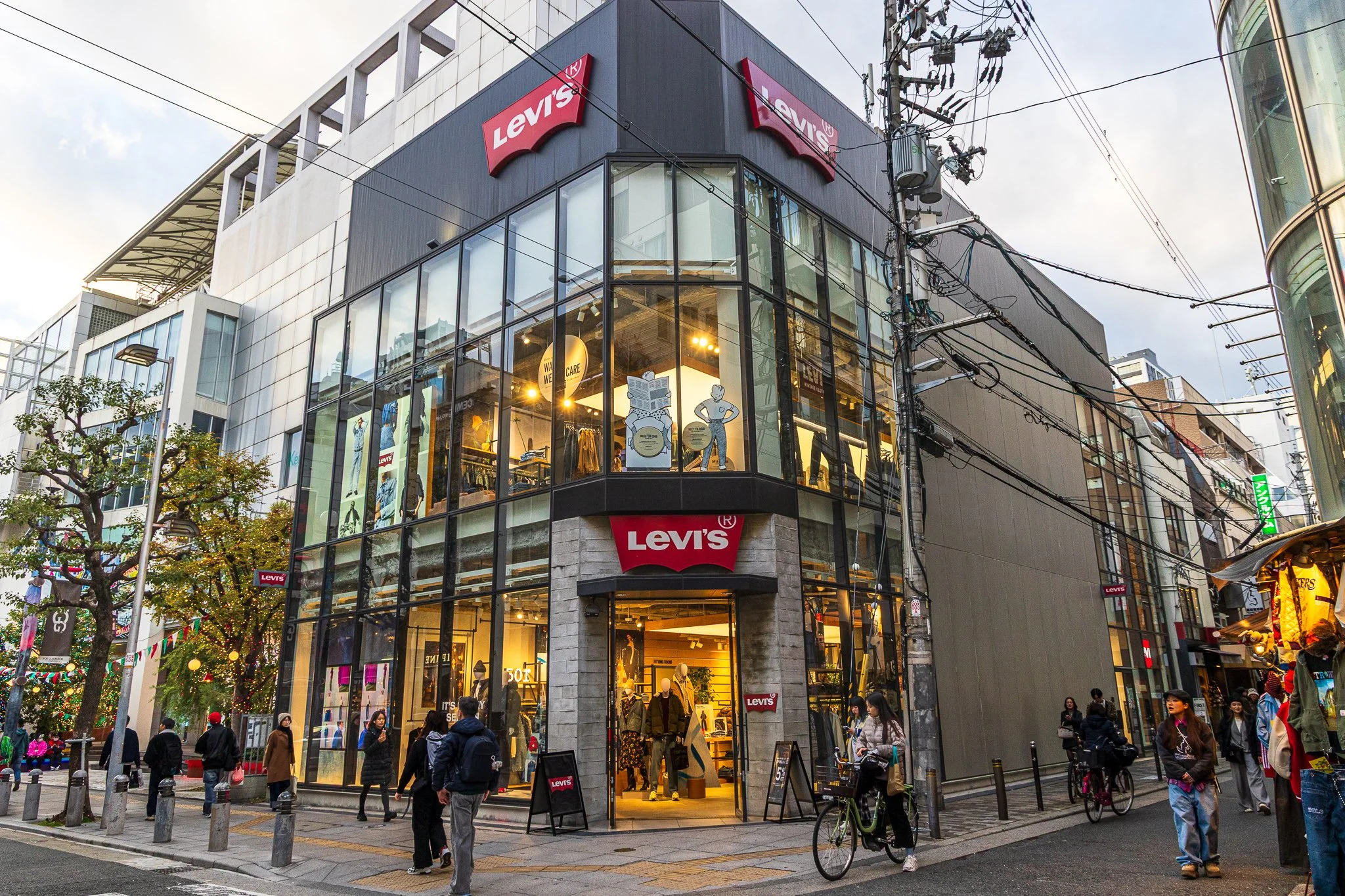
Amerikamura, often called Amemura, is Osaka’s youth culture and street fashion district. It is known for its vintage shops, indie boutiques, street art, casual eateries, and Triangle Park, officially named Mitsu Park, which serves as a main gathering spot for local youth. The neighborhood felt lively, with street food, people hanging around Triangle Park, and the occasional street performance adding to the atmosphere. It was also entertaining to see so many American-inspired shops and signs throughout the area.
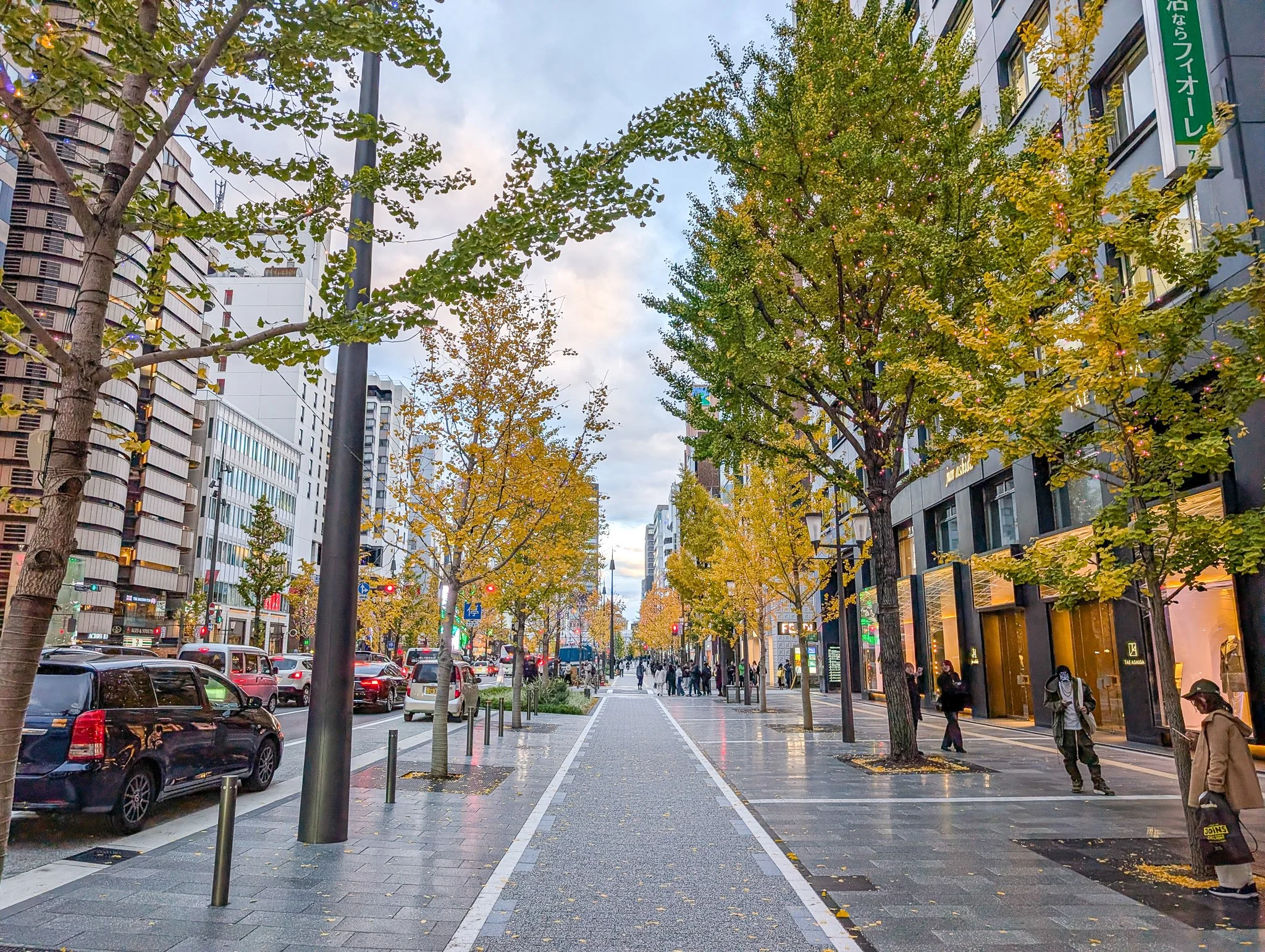
From Amerikamura, I walked about 15 minutes southeast down Midosuji Avenue to get to Hōzenji Yokochō. Midosuji Avenue is one of Osaka’s main boulevards, connecting Namba in the south with Umeda in the north. The street is lined with ginkgo trees, shops, and public art, making it a pleasant route between neighborhoods.
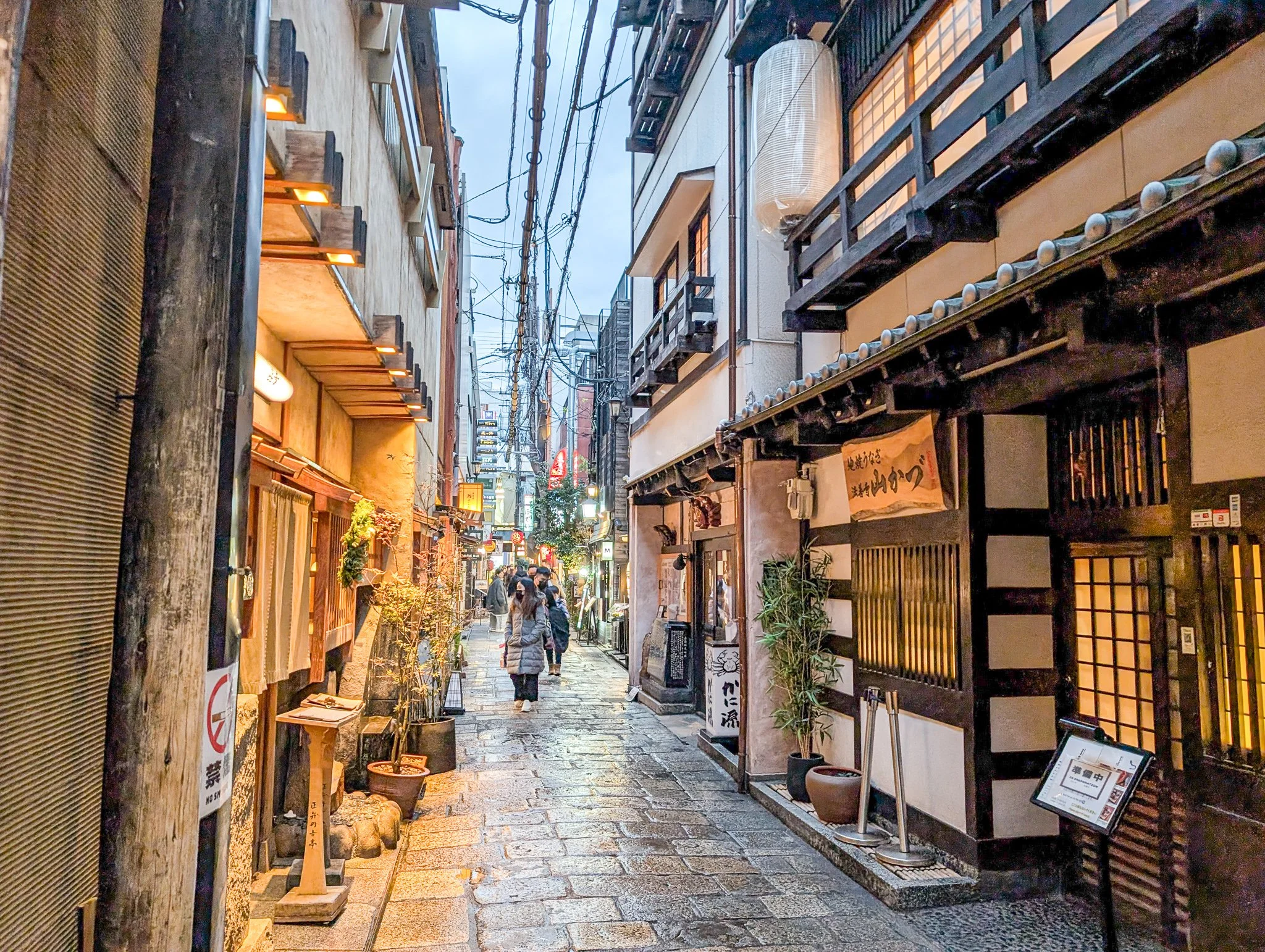
Hōzenji Yokochō is a narrow, stone-paved alley in Osaka’s Namba district, tucked near the busy Dōtonbori area. Lined with traditional restaurants, small bars, and lanterns, it has a nostalgic, old-town atmosphere that feels much quieter than the surrounding streets. It reminded me a bit of Omoide Yokocho, or Memory Lane, in Tokyo.
Around 5:00pm, I doubled back toward Amerikamura to stop at Bar Nayuta for a drink and a much-needed chance to rest my weary feet.
In hindsight, since Hōzenji Yokochō is closer to Namba Yasaka Jinja and Bar Nayuta is closer to Amerikamura, it would have made more sense to visit Hōzenji Yokochō first and then Amerikamura. But after leaving Namba Yasaka Jinja, I still wasn’t sure where I wanted to go for a before-dinner drink, so I didn’t realize until later that I had backtracked a bit. Oh well. It was still fun wandering the streets and seeing both neighborhoods, especially since everything was easy to reach on foot.
Drink at Bar Nayuta
Bar Nayuta is a small hidden cocktail bar in the Nishishinsaibashi/Amerikamura area near Triangle Park.
It can be a little tricky to find because there is no obvious sign outside. The entrance is on the 5th floor of the MARIO Building, and once you get there, you have to duck through a small, low-set door that almost feels like the entrance to a cloakroom.
Inside, the space has a cozy, intimate atmosphere. There is no traditional cocktail menu, but they do have four Nayuta classics: Smokey Express, their take on an Old Fashioned; Rain Drop, their take on a gimlet; The Milk Punch, their take on clarified milk punch; and Tea At Dusk, their take on a Sling cocktail. If none of those sound like what you’re in the mood for, you can tell the bartender what flavors or spirits you like, and they can create something unique based on your preferences.
I arrived just after it opened at 5:00pm and was the first person there. I ordered the Smokey Express and a shochu drink, and both were excellent.
As the evening went on, the small space started to fill with a mix of Japanese and international visitors, which made it a fun place to meet people. I ended up talking with a wonderful couple next to me who were visiting from San Francisco, if I remember correctly. After spending much of the day exploring on my own, it was really nice to have a conversation with other travelers.
I left around 6:30pm to get dinner at Kaiten Sushi Ginza Onodera. By the time I left, the bar was nearly full.
Dinner at Kaiten Sushi Ginza Onodera
Kaiten Sushi Ginza Onodera, a higher-quality conveyor belt sushi restaurant located only about a minute’s walk from Bar Nayuta, was my dinner stop that night. Even though it has a conveyor belt setup, the sushi is freshly made, ordered by tablet, and served directly from the chefs.
The restaurant has a lively, casual atmosphere and serves Edo-style sushi made with aka shari, or red vinegar sushi rice, which gives the sushi a slightly different flavor than standard sushi rice. The menu includes a variety of seasonal toppings, including items like braised eel, castella-style egg, fresh salmon, and sea urchin. Depending on the timing, you may also be able to watch the chefs prepare live shrimp or fillet yellowtail.
There is a 90-minute dining window, but that was plenty of time for dinner. I arrived a little after 6:30pm. After having my fill of sushi and a glass of white wine, I walked back to the hotel, watched a little TV, and headed to bed.