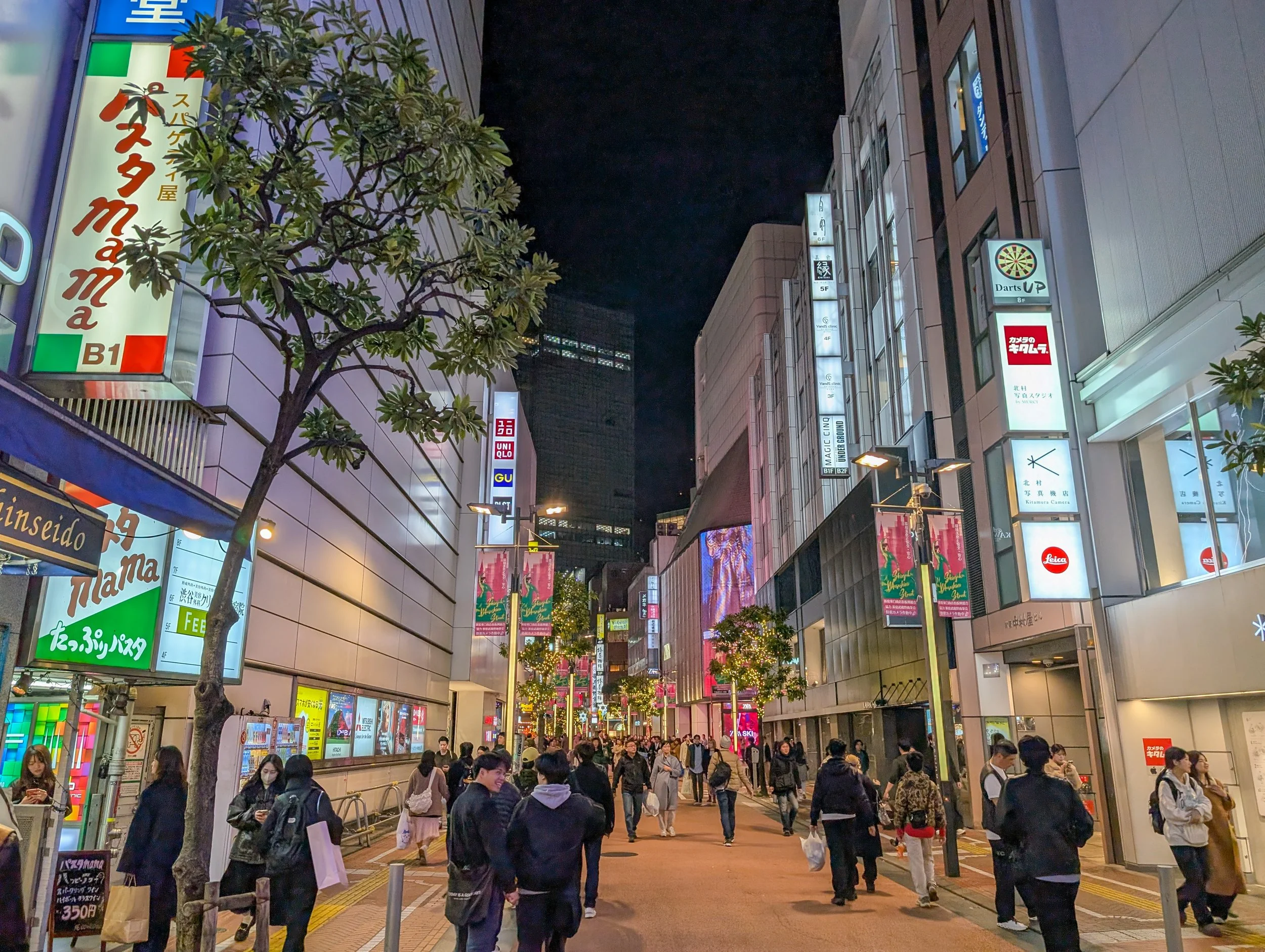
Day 2: Day 1 in Tokyo - Landing in Tokyo and Wandering Around Shinjuku
Landing at Narita Airport
I landed at Narita Airport in Tokyo at 3:00pm on Sunday, November 23, 2025. Prior to boarding my flight, I created an account on Japan Web, which allows you to complete immigration, customs declaration, and tax-free shopping registration online before arrival. The site generates a QR code to speed up airport procedures and replaces paper forms for a faster, more efficient entry.
It made getting through customs incredibly quick. I think I was through in under 15 minutes!
Two of my good friends visited Japan in 2019 and kept their PASMO card, which they gave to me before I left for my trip. PASMO is a prepaid IC card that can be used to pay for train and bus fare, as well as for cashless payments throughout Japan. Suica is another card that works the same way. If I hadn’t already had a card, I would have made sure to get a Welcome PASMO or Welcome Suica card at the airport.
Since I didn’t need to purchase a transit card, I went straight to an ATM to withdraw yen. I use a Schwab Checking Account, which reimburses ATM fees monthly. I had transferred $1,500 into the account before the trip but ultimately only needed about $500 in cash throughout the trip, as many places I went to while in Japan accepted credit cards. That said, cash is still helpful for smaller expenses and for adding money to a physical PASMO card, especially since the PASMO app currently only works on Apple devices (I have a Google Pixel).
As for my phone plan, I have the Verizon Unlimited Ultimate plan, which includes unlimited international data, talk, and text. Because of that, I was able to use my phone like normal in Japan with no issues.
Commuting to Shinjuku
From there, I went to the Airport Limousine Bus counter to buy a ticket for the next bus to take me to Hotel Sunroute Plaza Shinjuku, the hotel I stayed at during my time in Tokyo. I was able to make it onto the bus leaving at 3:40pm.
All in all, it took me about 40 minutes to land, clear customs, withdraw cash, buy a bus ticket, and be on my way to Shinjuku.
I chose to stay in the Shinjuku neighborhood because it’s home to one of Tokyo’s largest train stations (Shinjuku Station), making it incredibly easy to get around Tokyo and head out on day trips, if you so choose The area is also packed with restaurants, bars, and shops. While Shinjuku can feel hectic at times, it’s also vibrant and extremely convenient neighborhood to stay at.
I specifically chose Hotel Sunroute Plaza Shinjuku because it’s under a 10-minute walk from Shinjuku Station, and it’s also a stop on the Airport Limousine Bus route, which made getting from Narita Airport to the hotel simple and stress-free. I also found the hotel to be quite affordable, paying ¥134,550 ($863) for 5 nights.
It took about an hour and 45 minutes to get from Narita Airport to Hotel Sunroute Plaza Shinjuku. It was a pretty drive!
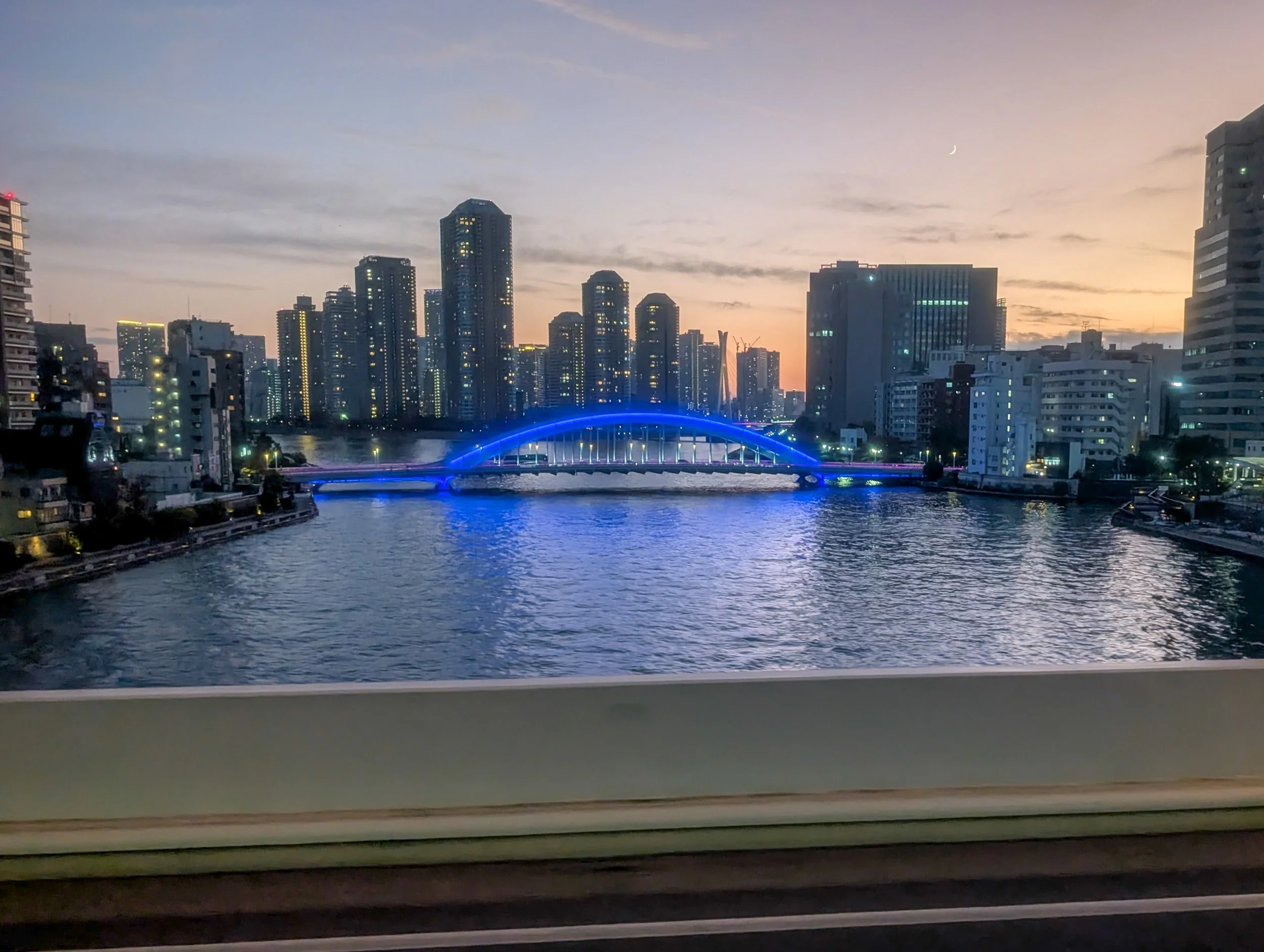
Wandering Around Shinjuku
After checking in and dropping off my bag, it was only 6:15pm. To help adjust to the time change, I knew I needed to stay up for a few more hours, and I still had to find dinner.
I headed straight back out to see the famous 3D Cat Billboard in Shinjuku. The billboard features a larger-than-life calico cat that stretches, meows, and peeks around at people coming and going. The 3D cat debuted in July 2021 and has since become a viral sensation. The animations run daily between 7:00am and 1:00am, looping every few minutes, with special seasonal sequences changing seasonally.
It was such a fun way to kick off my first night in Tokyo! Click here to see the videos of the 3D Cat Billboard!
Next, I headed to ICHIRAN Shinjuku Kabukicho for dinner, only to find a very long line. By that point, I was too hungry to wait and exhaustion was starting to set in, so I decided to save ICHIRAN for another time.
Instead, I walked down the street to Sumibi Yakitori Kushikado Shinjuku Hon Ten for some yakitori, a popular Japanese dish featuring chicken, pork, beef, seafood, and vegetables grilled on skewers. I ordered the chicken thigh skewer, pork skirt skewer, and shiitake mushroom skewer, and treated myself to a beer. Everything was really good.
I then walked through Kabukicho on my way back to the hotel, ready to call it a night and rest up for my first full day in Tokyo.